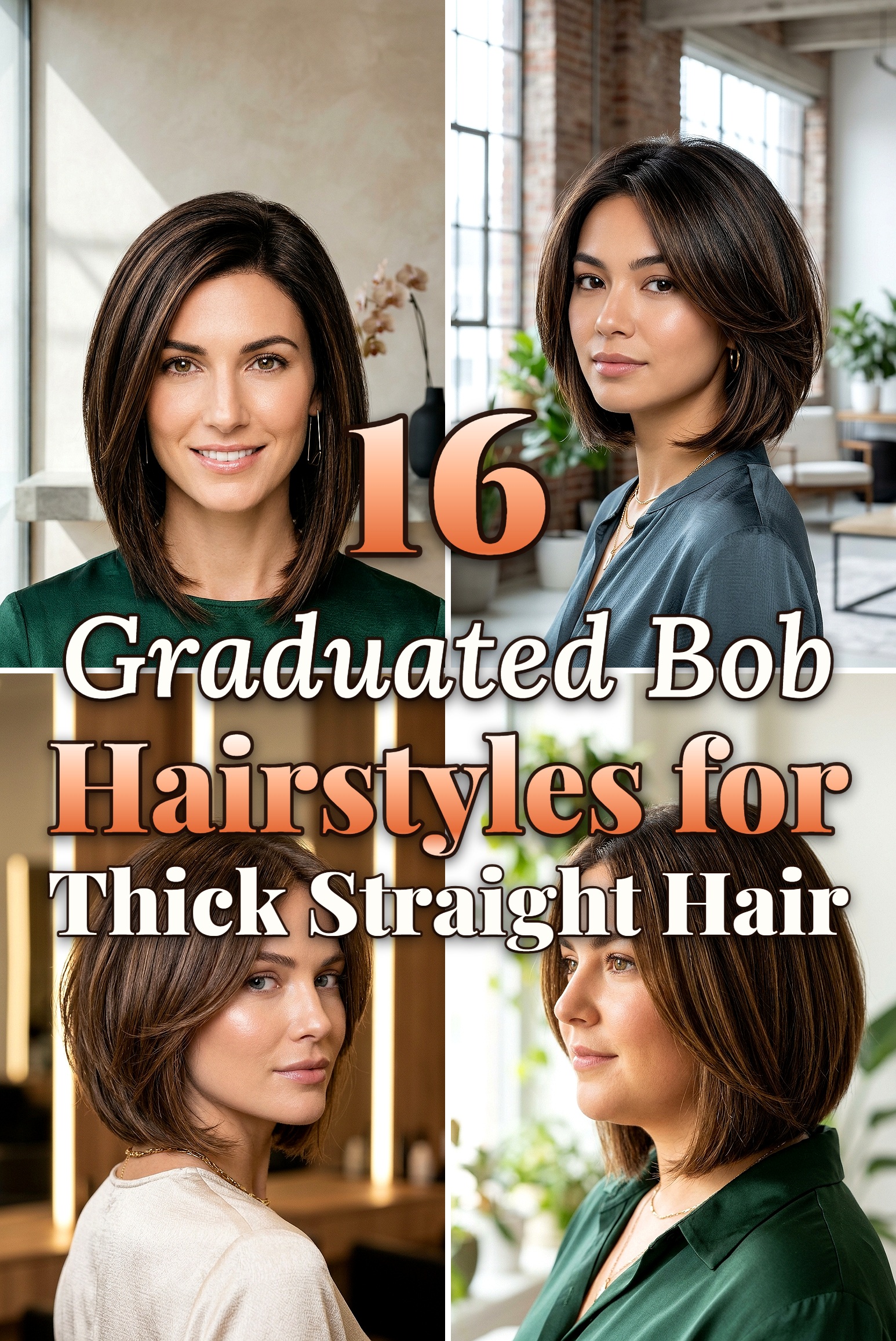
Managing the sheer volume of a graduated bob for thick straight hair requires a strategic approach to weight removal to prevent that unwanted boxy shape.
These techniques provide a custom fit for those seeking chin length blunt bob haircuts for fine hair oval face shapes or even comparisons to chin length blunt bob haircuts for fine hair over 50.
Finding the sweet spot between structural integrity and fluid movement is the goal, and one specific technique near the end of this list changes everything for heavy hair.
1. Steeply Angled Graduated Bob with Deep Layers
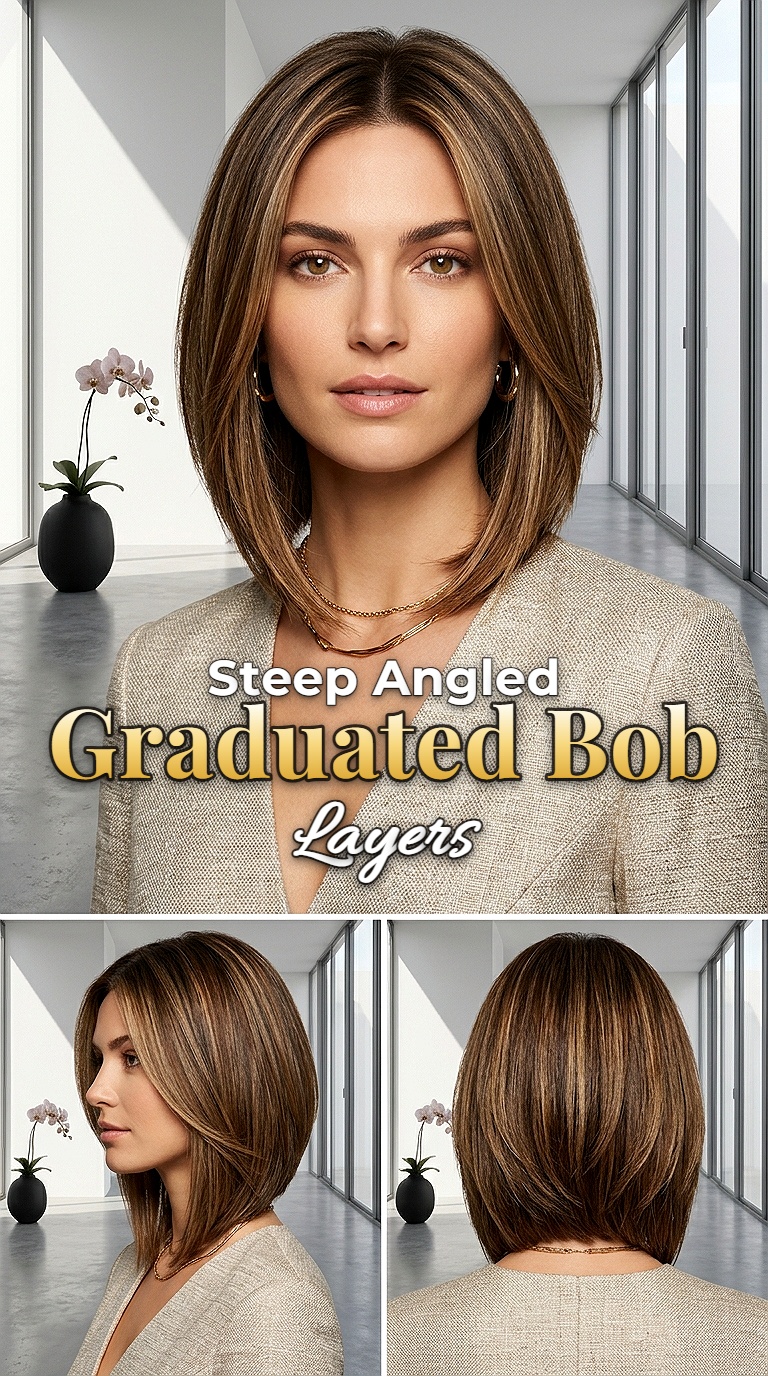
A steep angled graduated bob layers approach is the best way to move weight from the back to the front without losing length. This cut relies on a sharp diagonal line that starts high at the nape and sweeps down toward the collarbone.
For women who find that their hair feels like a heavy curtain, these deep layers allow the hair to swing freely. Unlike chin length blunt bob haircuts for fine straight hair that need density added, this look focuses on carving out space so the hair doesn’t look like a helmet.
When styling at home, a large round brush is your best friend to keep those front pieces polished. If you have an oval face, the steep angle helps to elongate the neck, providing a very sophisticated and intentional silhouette that works well in professional settings.
2. Soft Internal Layers for Dense Hair
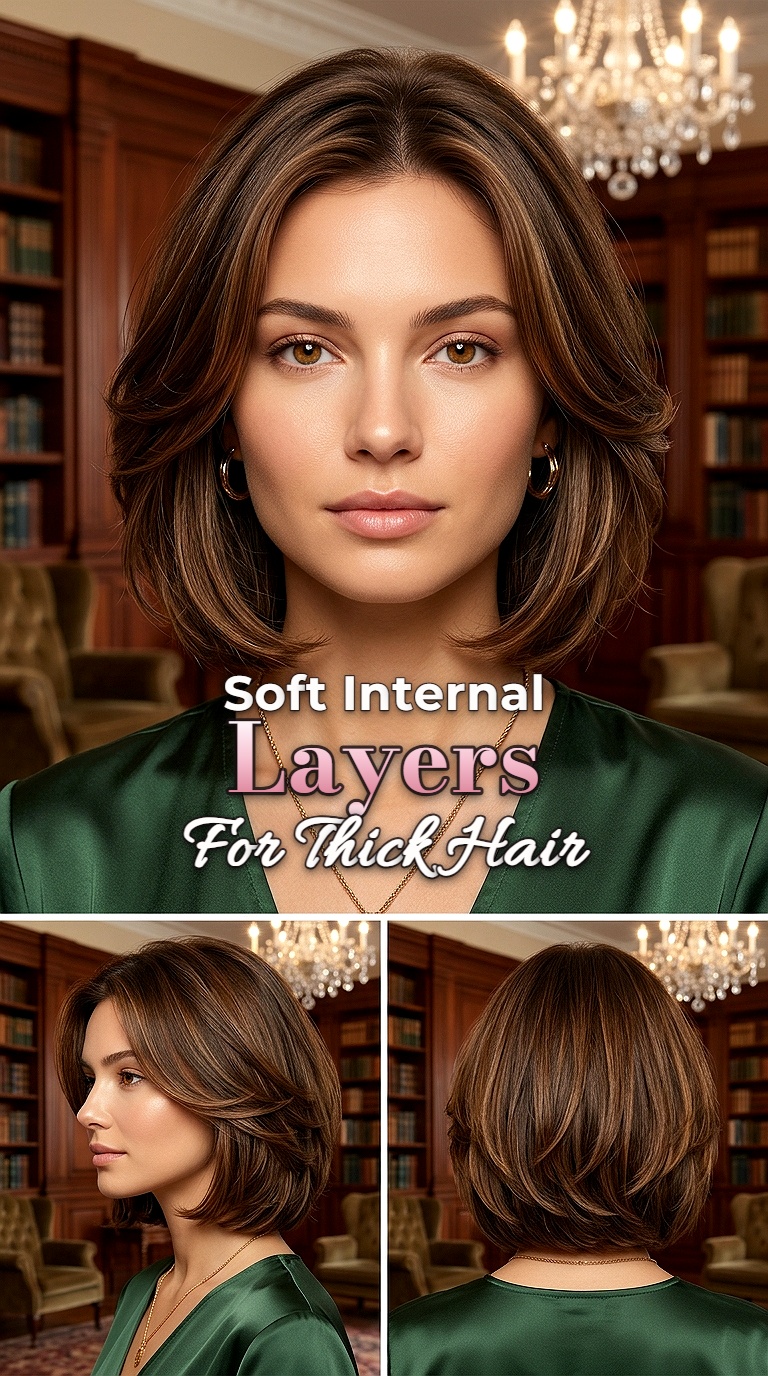
Using soft internal layers for thick hair ensures that the exterior looks smooth while the “engine room” of the haircut is significantly lightened. This technique involves taking weight out from the middle sections of the hair rather than the surface.
This is a great alternative for those who like the look of chin length blunt bob haircuts for fine hair no bangs but have triple the hair density. It allows the bob to lay flat against the head instead of poofing out at the sides, which is a common struggle for straight, thick textures.
More Amazing Ideas
 19 Sleek Stacked Angled Bob Hairstyles Thick Hair — Read more
 18 Angled Bob Hairstyles with Side Bangs Thick Hair — Read more
 15 Blunt Box Bob Hairstyles for Straight Hair — Read more
 19 Blunt Bob Hairstyles with Bangs for Thick Hair — Read more
 18 Blunt Bob Hairstyles for Fine Straight Hair — Read more
I often recommend this for clients over 50 who want a modern look that isn’t too “shaggy.” It keeps the perimeter looking sharp and crisp while making the morning blowout significantly faster because there is simply less hair to dry.
3. Graduated Bob with Delicate Face Framing Layers
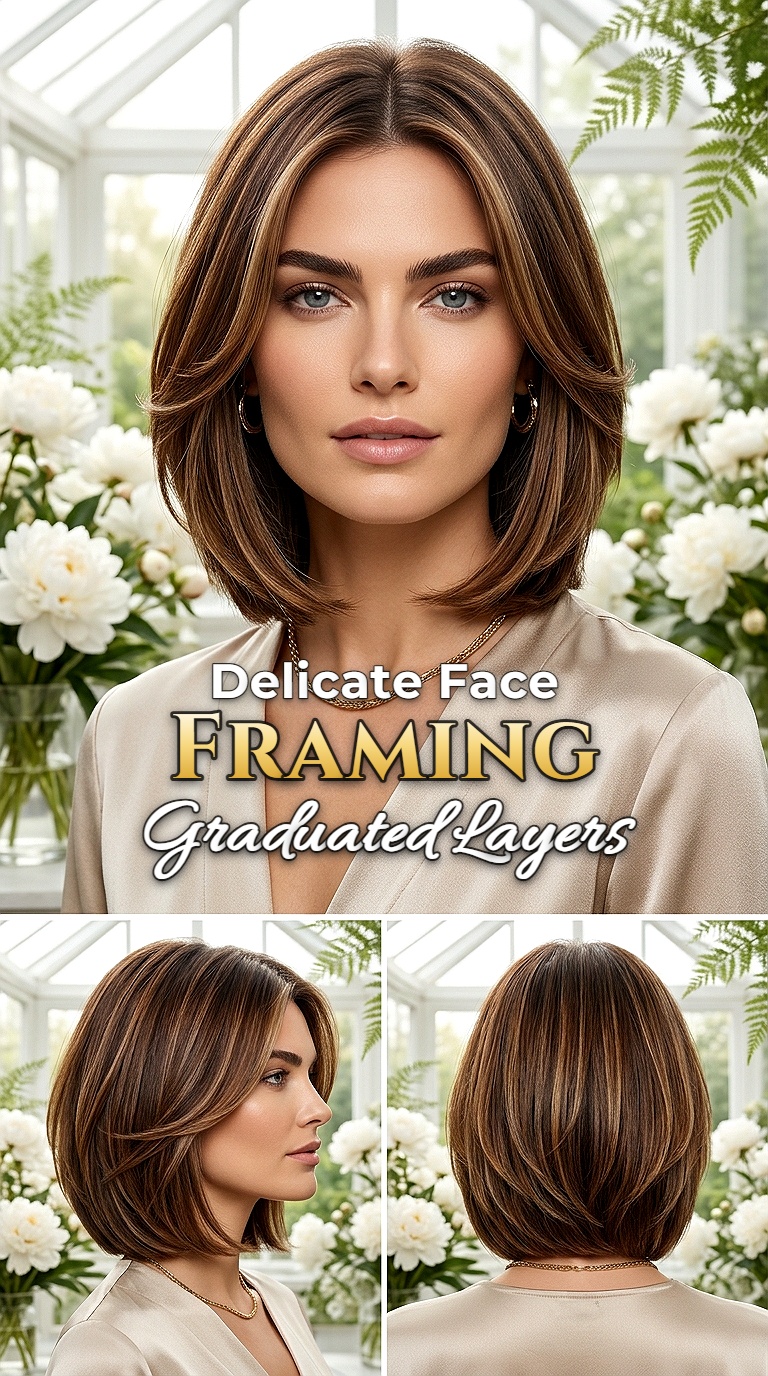
Adding delicate face framing graduated layers helps to soften the transition between the shorter back and the longer front. For thick hair, these frames should be sliced into rather than cut bluntly to ensure they blend seamlessly into the rest of the style.
While chin length blunt bob haircuts for fine wavy hair rely on bluntness for thickness, your thick hair needs these soft edges to avoid looking too harsh. The framing starts around the cheekbones to draw attention to the eyes and lift the overall appearance.
This variation is particularly flattering for those with round faces as it breaks up the width of the hair. It provides a more approachable and “lived-in” feel to the classic graduated bob, making it feel less like a rigid uniform and more like a custom style.
4. High Stacked Nape with Precision Layers
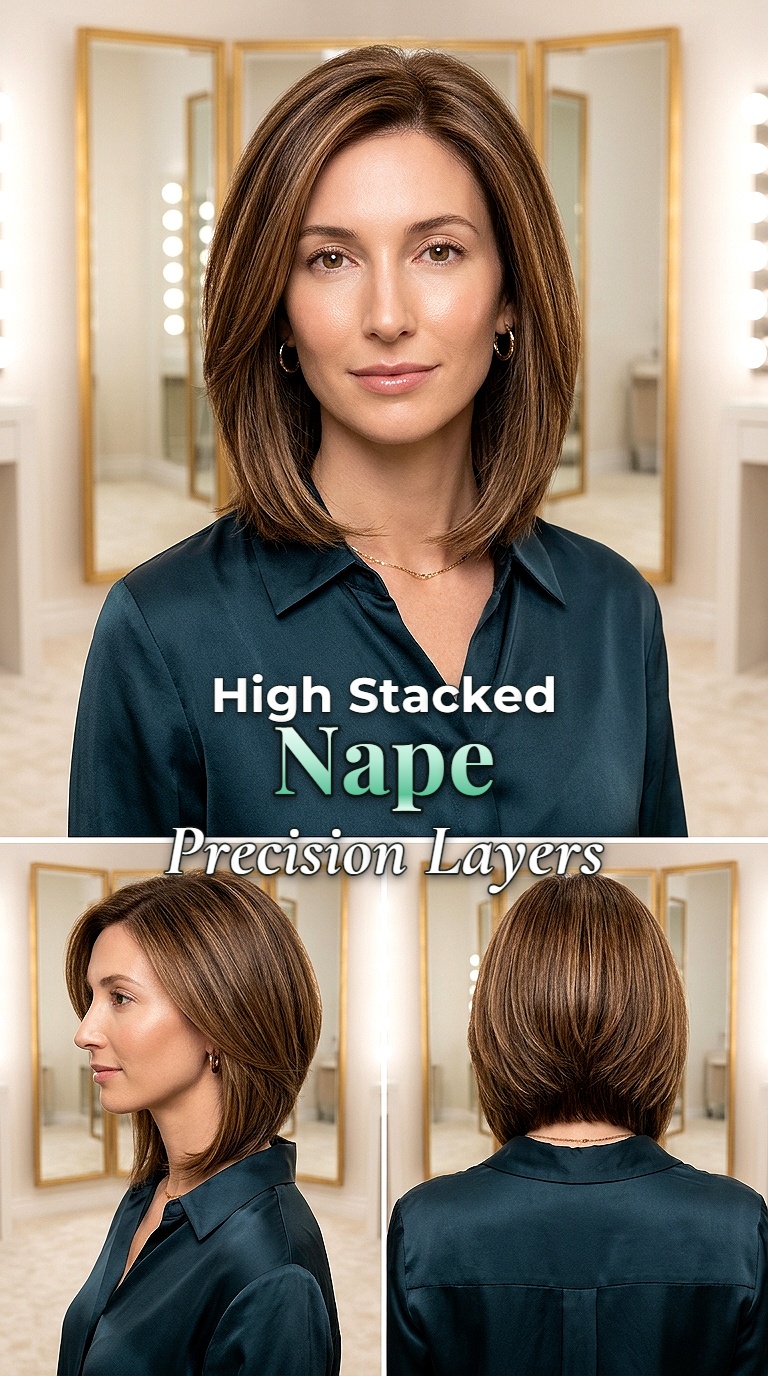
A high stacked nape precision layers cut is the “gold standard” for managing extreme density at the base of the skull. By stacking the layers tightly at the back, we create a beautiful shelf of volume that stays put all day.
This look is often what people are searching for when they want a clean, architectural finish. It contrasts beautifully with chin length blunt bob haircuts for fine hair over 60, which usually require more height at the crown; here, the height is built into the graduation itself.
To keep this looking sharp, you will need a trim every six weeks to maintain that crisp nape line. It is a power move for straight hair, showing off the natural shine of your locks while keeping the weight off your neck during warmer months.
More Amazing Ideas

5. Blunt Perimeter with Soft Surface Layers
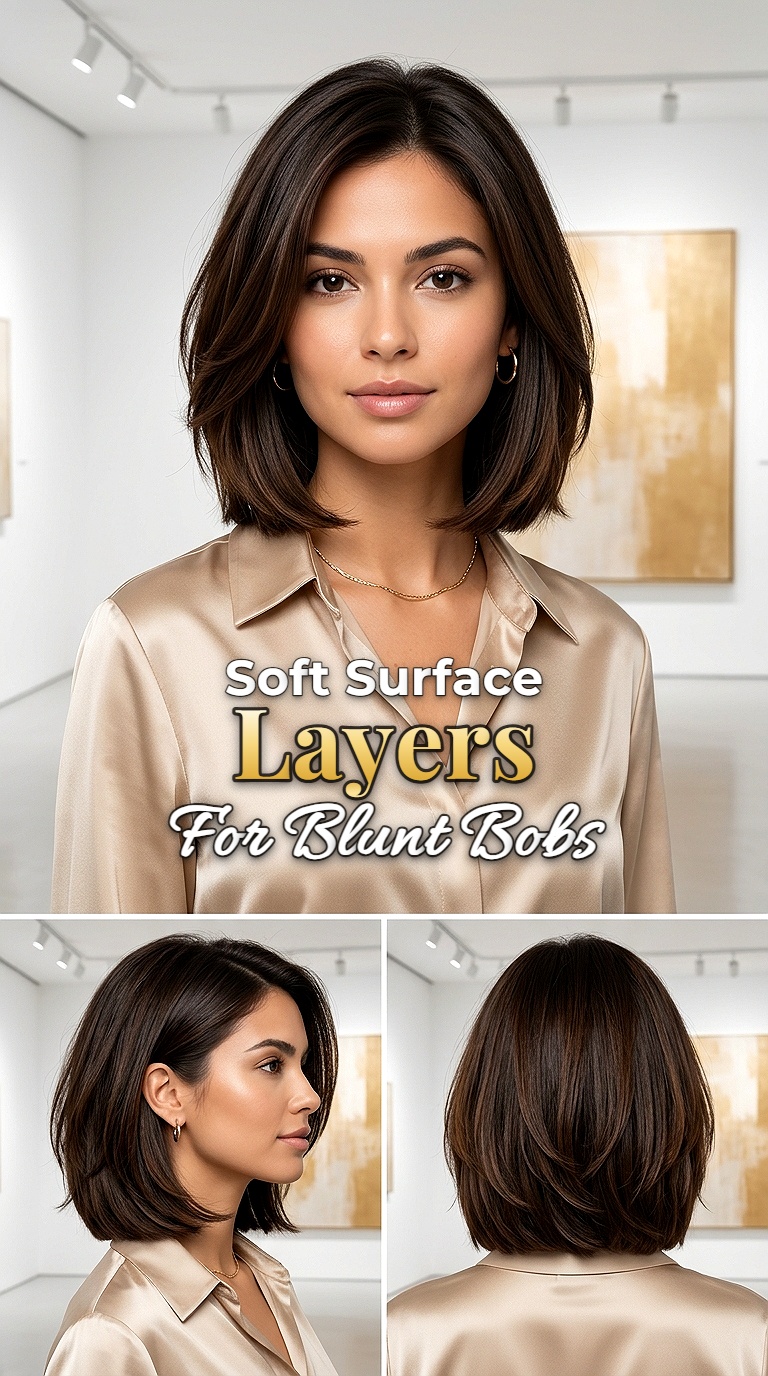
Choosing soft surface layers for blunt bobs allows you to keep that heavy, fashionable bottom edge while adding movement to the top. The “blunt” part refers to the very bottom of the hair, while the surface is lightly texturized.
This look mimics the popular chin length blunt bob haircuts for fine hair round face styles but adapts them for the weight of thick hair. By texturizing only the top layer, we prevent the “triangle” effect where the bottom of the hair flares out wider than the top.
I love this look for women who want a high-fashion aesthetic. It works perfectly with a middle part, letting the thick hair fall naturally while the surface layers catch the light and prevent the style from looking stagnant or flat.
6. Airy Tapered Layers for Natural Volume
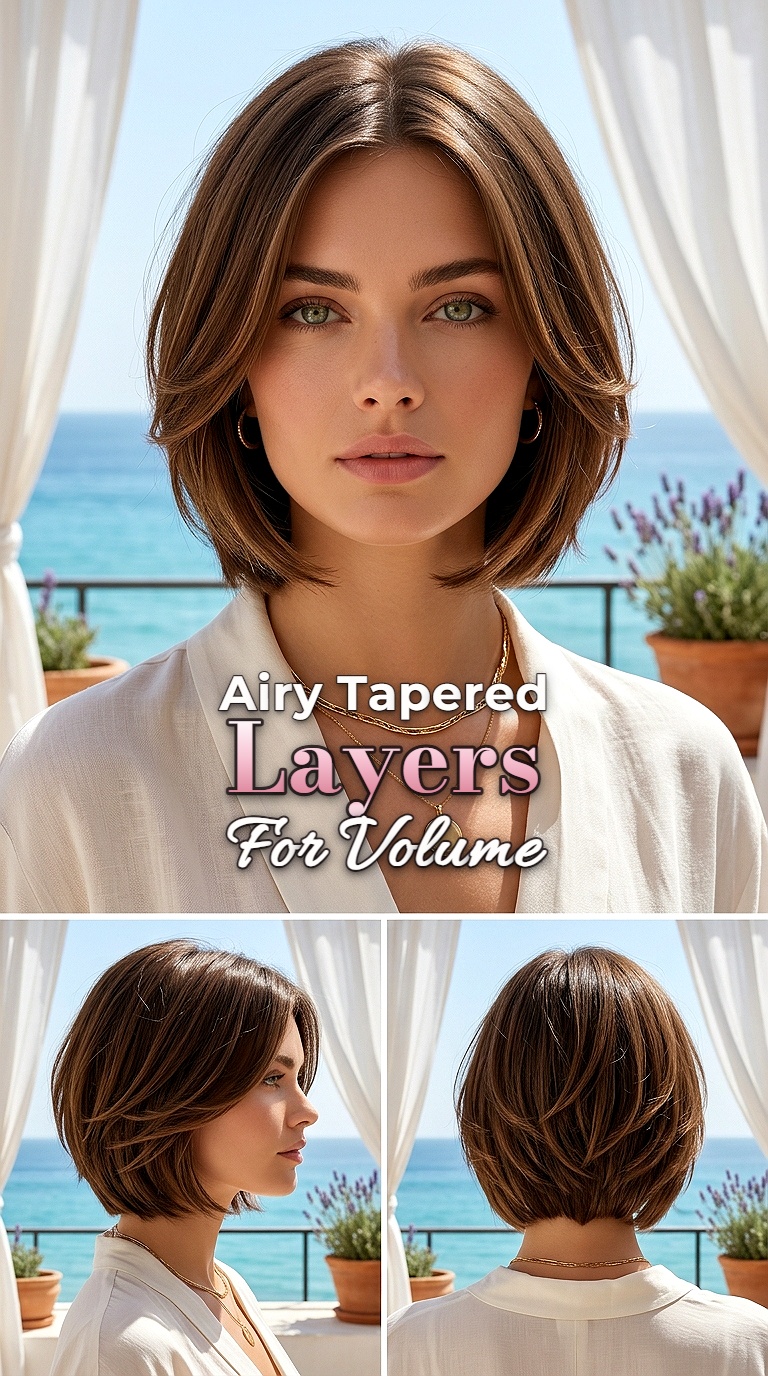
Applying airy tapered layers for volume involves using thinning shears or a razor to create “channels” of air within the thickest parts of the hair. This makes the hair feel lighter than air, even if it is naturally very dense.
This approach is different from chin length blunt bob haircuts for fine hair over 50, which need products to create the illusion of lift. Here, the lift is structural, coming from shorter hairs underneath that push up the longer hairs on top for a bouncy effect.
If you have a busy lifestyle, this is a very low-maintenance way to wear a bob. It doesn’t require a lot of product to look “finished” because the tapering does most of the work for you, allowing the hair to settle into a perfect shape as it dries.
7. Seamless Blended Layers for Weightless Movement
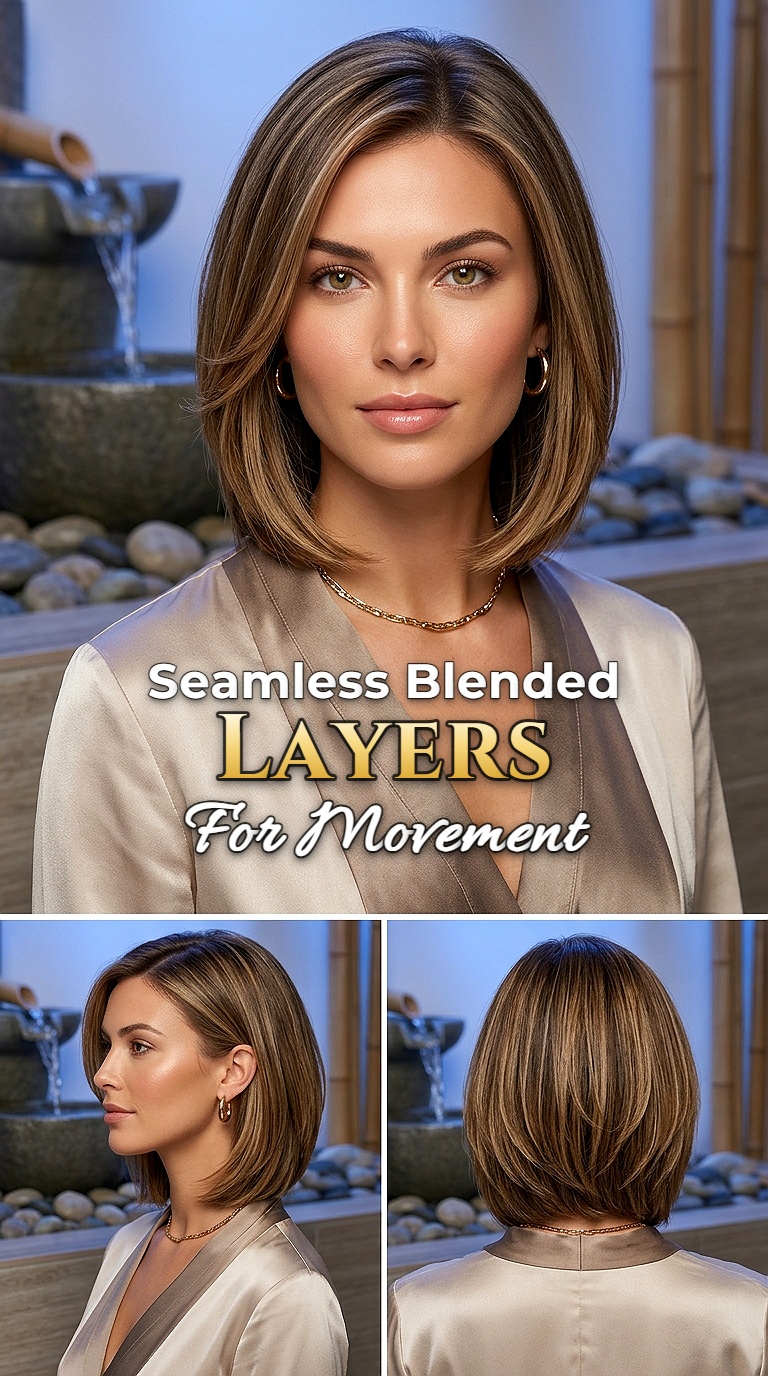
Creating seamless blended layers for movement is all about ensuring there are no visible “steps” in the haircut. For thick, straight hair, any mistake in graduation will show, so these layers are meticulously blended from top to bottom.
More Amazing Ideas


This style offers a much sleeker finish than chin length blunt bob haircuts for fine wavy hair. It results in a “sheet” of hair that moves as one unit but feels incredibly light when you run your fingers through it, which is the ultimate goal for thick-haired clients.
I suggest using a light smoothing serum with this look to emphasize the blending. It is a sophisticated, timeless version of the bob that never goes out of style and works beautifully for both casual and formal occasions.
8. Wispy Graduated Ends with Long Layers
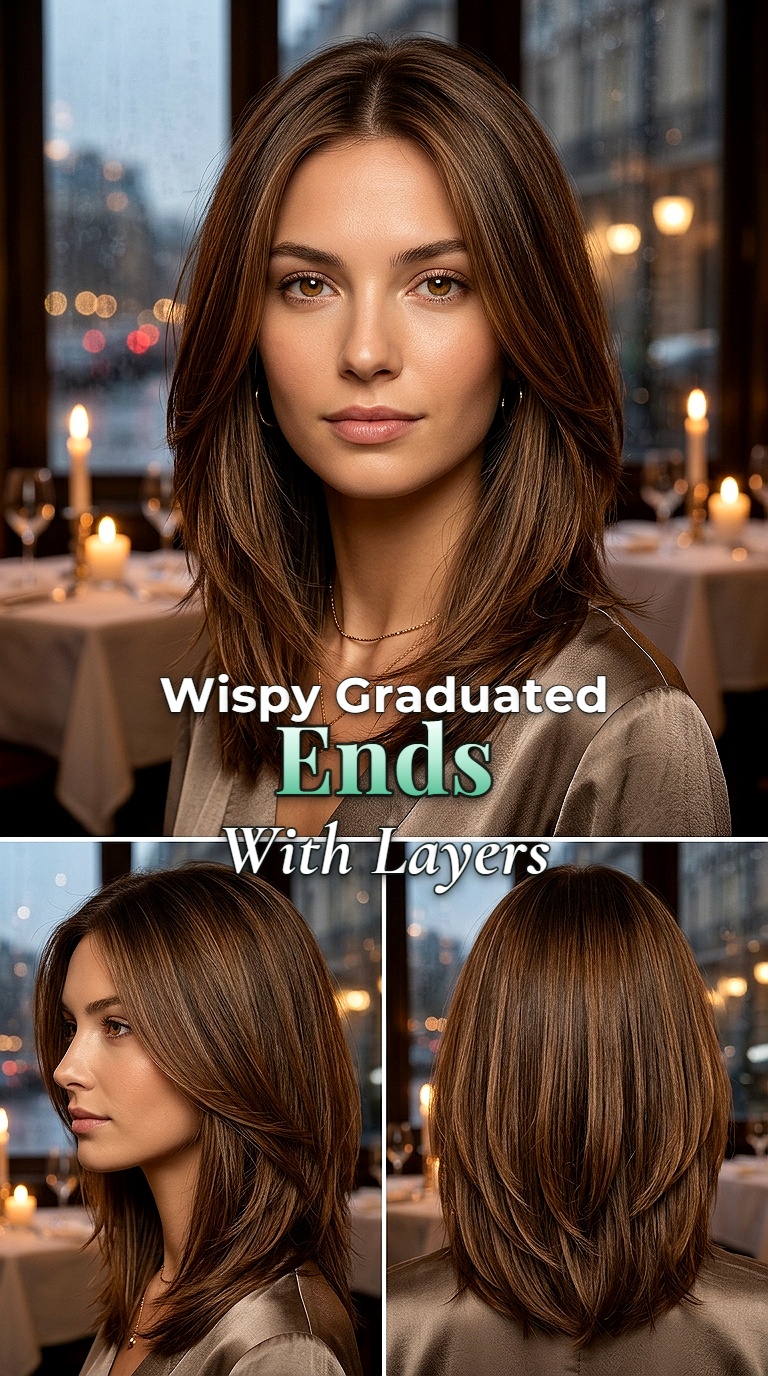
Opting for wispy graduated ends with layers gives the bob a more ethereal, soft finish. Instead of the back being a solid block of hair, the ends are point-cut to create a feathered, softer appearance that looks great from every angle.
This is an excellent choice for those who are transitioning from a longer style and are nervous about the “bulk” of a shorter cut. It feels much less “done” than chin length blunt bob haircuts for fine hair no bangs, offering a bit more texture and playfulness.
Maintenance is key here; using a bit of wax or texturizing spray on the ends will help define those wispy pieces. It’s a great way to show off your hair’s thickness without it feeling overwhelming or too heavy around the jawline.
9. Tucked Behind the Ear Layers
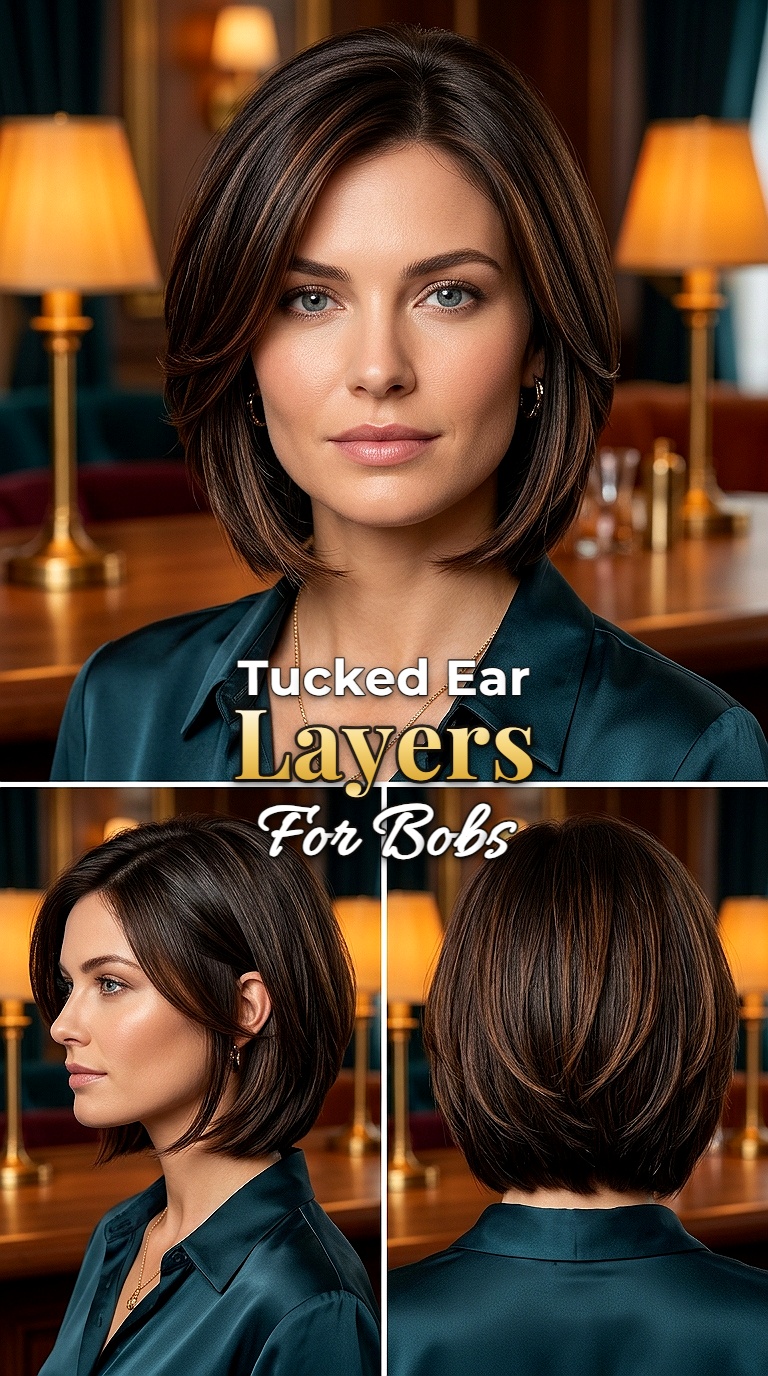
Strategic tucked ear layers for bobs involve cutting specific shorter sections around the ears to allow the hair to be tucked back without creating a massive bulge. This is a game-changer for thick-haired women who constantly find themselves tucking their hair away.
This technique creates a slim profile that resembles chin length blunt bob haircuts for fine hair oval face shapes. By removing the bulk right behind the ear, the rest of the hair sits closer to the head, creating a much more streamlined and flattering silhouette.
I often cut these layers dry so I can see exactly how the hair reacts when tucked. It’s a small detail that makes a massive difference in how the haircut functions in real life, especially if you wear glasses or like to show off earrings.
More Amazing Ideas

10. Graduated Bob for Round Faces with Slenderizing Layers
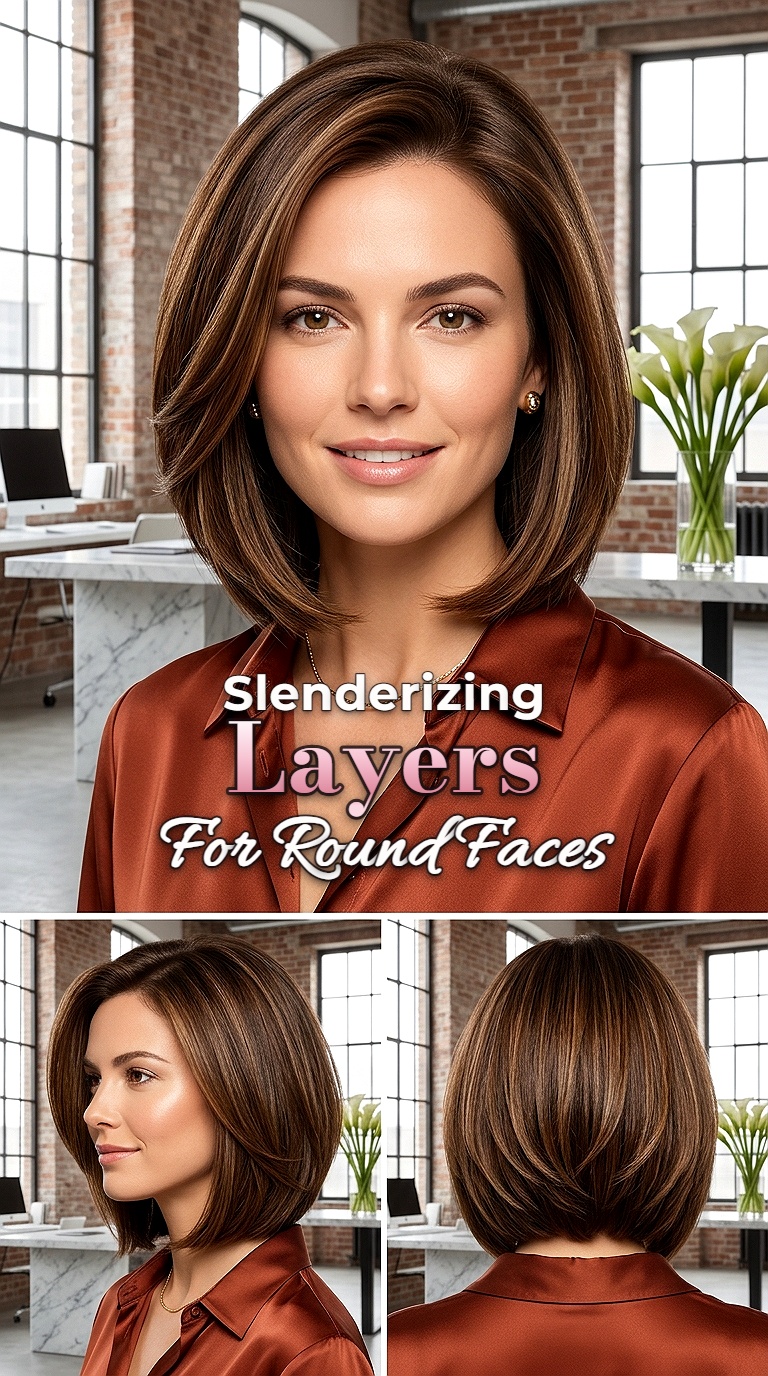
Designing slenderizing layers for round faces means keeping the graduation elongated rather than short and squat. By starting the graduation lower down, we create a vertical line that helps to slim the appearance of the cheeks.
This is a specific modification that addresses common concerns for those looking at chin length blunt bob haircuts for fine hair round face options. For thick hair, the weight is kept away from the widest part of the face, ensuring the cut doesn’t add any unnecessary width.
I recommend keeping the front pieces slightly longer than the jawline to further enhance the lengthening effect. It is a very deliberate way to use the hair’s natural thickness to create a structured frame that highlights your best features.
11. Feathered Side Layers with No Bangs Finish
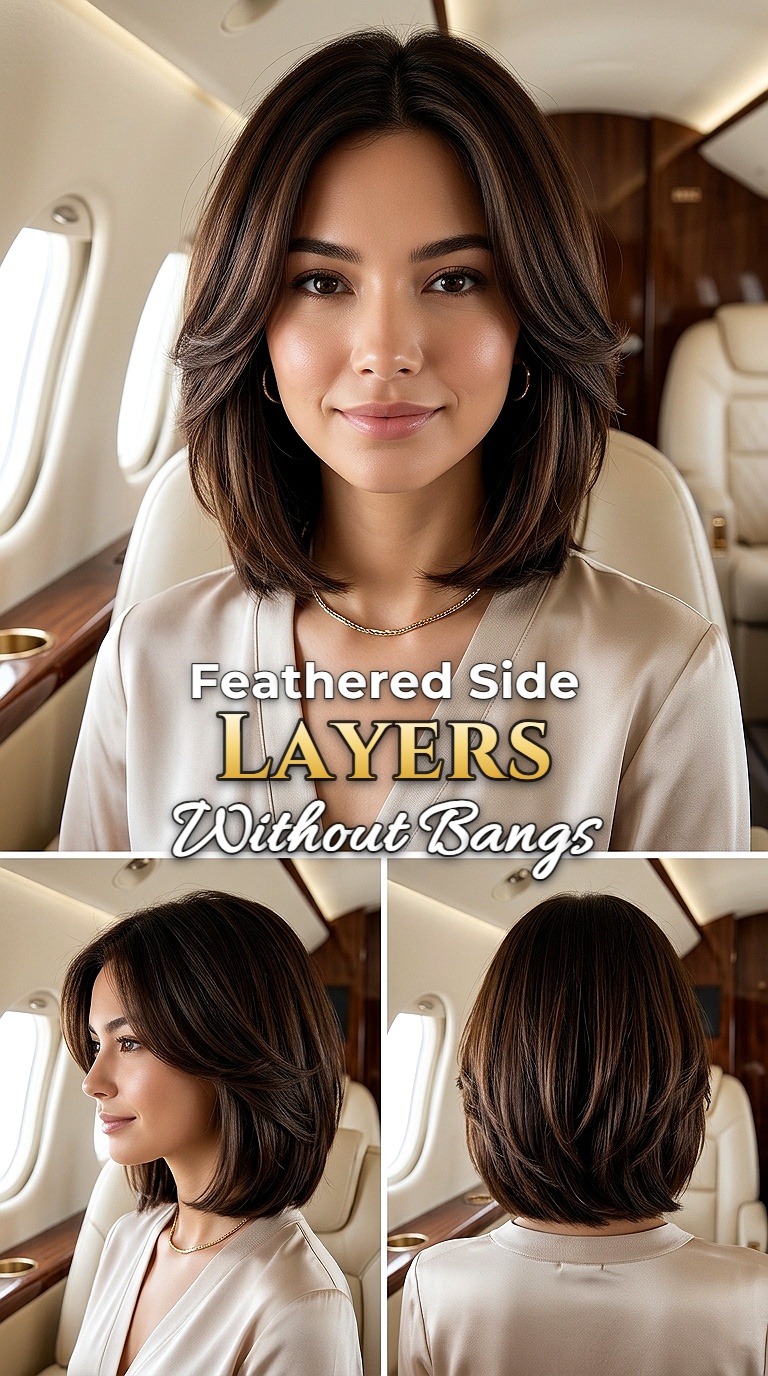
A feathered side layers without bangs style is perfect for women who want an open, clear face but need the movement of layers. The hair is swept away from the face, with layers starting near the cheekbones and flowing toward the back.
This mirrors the elegance of chin length blunt bob haircuts for fine hair over 60 while keeping the density that thick hair provides. It is a classic look that feels very “old Hollywood” yet is entirely practical for modern life, especially for those who prefer not to have hair in their eyes.
To get this look right, blow-dry the hair away from the face using a medium round brush. This creates a soft “wing” effect that looks incredible on straight hair and keeps the thick volume directed toward the back of the head.
12. Heavy Nape Graduation with Softened Edges
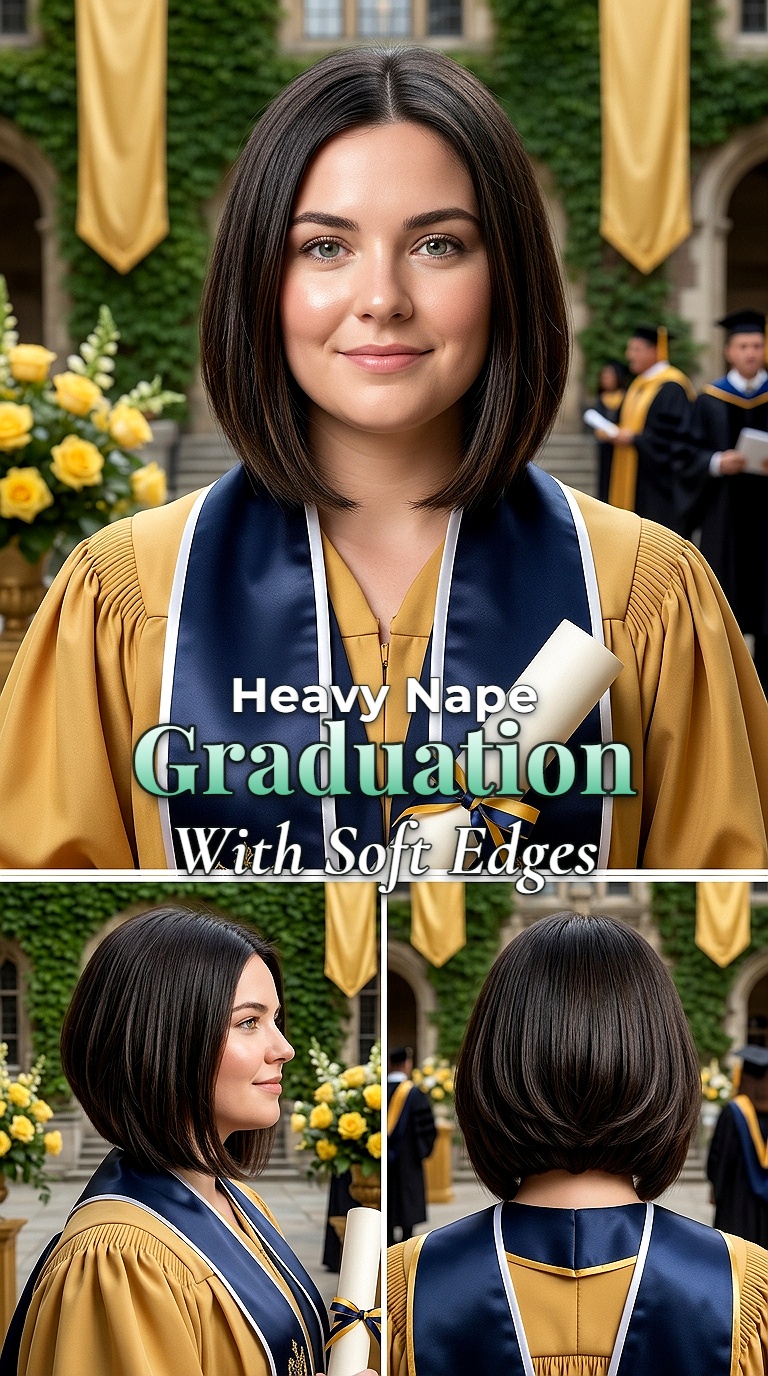
Utilizing heavy nape graduation with soft edges allows for a very dramatic, steep look that still feels feminine. The weight is concentrated at the back of the head, but the perimeter is softened with a razor so it doesn’t look like a hard line.
More Amazing Ideas
 19 Wavy Choppy Bob Hairstyles for Straight Hair — Read more
 16 Medium Inverted Bob Hairstyles for Thick Hair — Read more
 15 Choppy Bob Hairstyles with Bangs for Thick Hair — Read more
 17 Inverted Lob Hairstyles for Thick Straight Hair — Read more
 16 Jawline Bob Hairstyles for Fine Straight Hair — Read more
This style provides a lot of “swing” and is the opposite of chin length blunt bob haircuts for fine straight hair which can sometimes look limp. Here, the hair feels substantial and healthy, with the softened edges providing a contemporary, fashion-forward vibe.
This is a great option for women over 50 who want a cut with a lot of personality. It’s a very confident look that says you know how to handle your hair’s natural power without letting it overwhelm your features.
13. Precision Cut Layers for Maximum Control
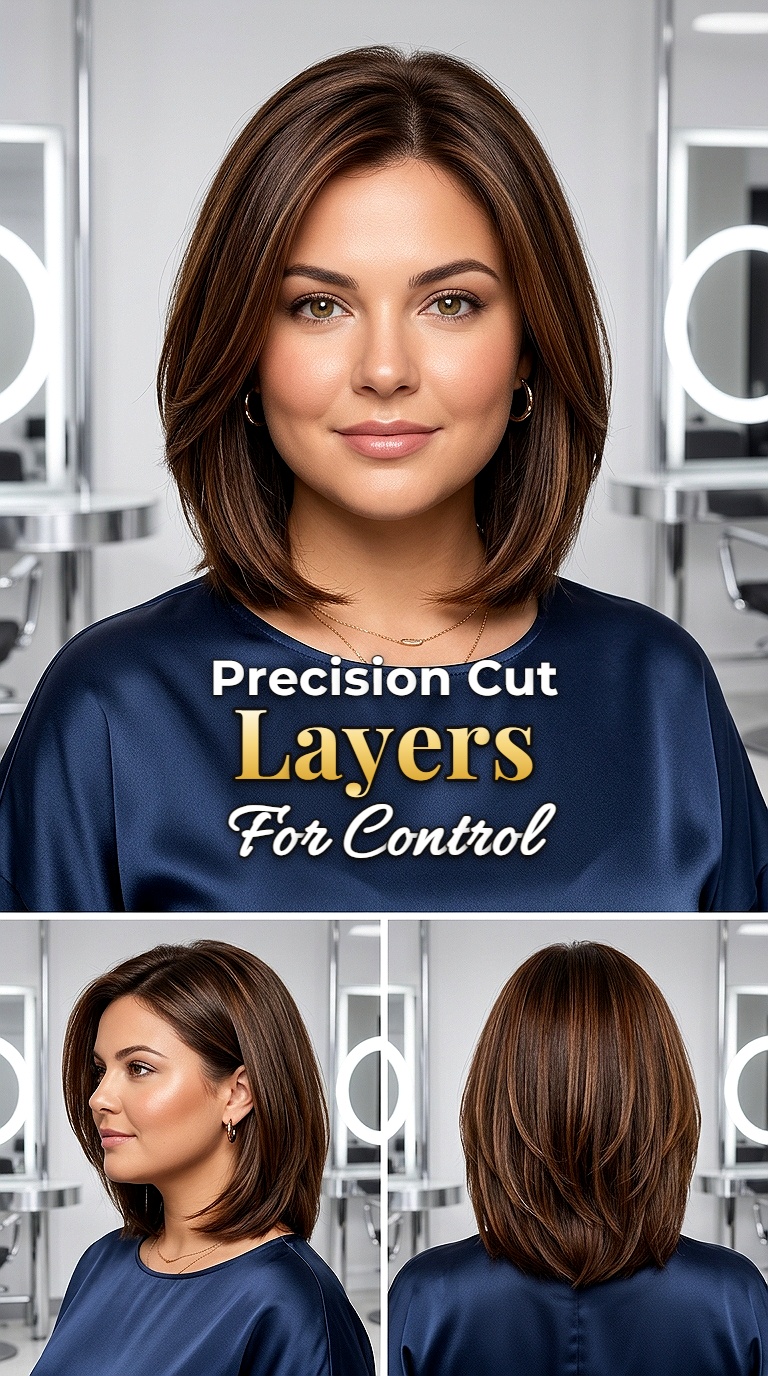
Focusing on precision cut layers for control is essential for thick hair that tends to have a mind of its own. Every section is cut with mathematical accuracy to ensure that the hair falls into place without the need for constant styling.
This provides the kind of sleekness often seen in chin length blunt bob haircuts for fine hair oval face searches. The goal is to make the hair behave, using the graduation to “anchor” the style so it doesn’t puff out when the humidity hits or when it dries naturally.
I tell my clients that a precision cut is an investment in their time. While the appointment might take a little longer, the daily styling time is cut in half because the hair is physically shaped to sit exactly where it should.
14. Vertical Sliced Layers for Bulk Removal
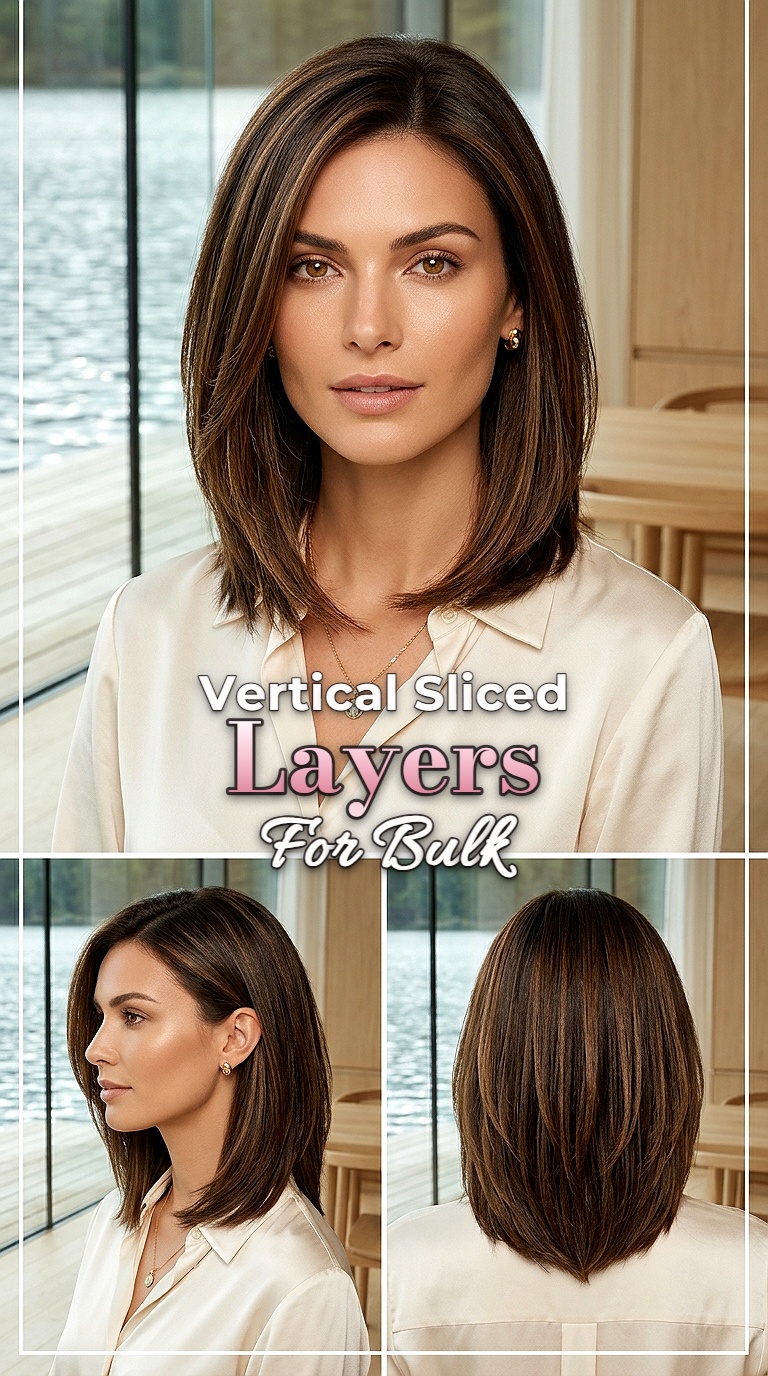
The use of vertical sliced layers for bulk is a technique where the stylist cuts into the hair vertically rather than horizontally. This removes weight from the “inside” of the hair, allowing it to lay much flatter than traditional layers would.
This is the secret weapon for managing the “triangular” shape that many thick-haired women fear. It provides a look that is as slim and manageable as chin length blunt bob haircuts for fine hair no bangs, but with the rich texture only thick hair can provide.
More Amazing Ideas

Because the weight is removed from the interior, you won’t see any “frizzy” short layers on the surface. It’s a clean, professional, and very modern way to wear a bob that feels weightless even if you have a lot of hair.
15. Razored Back Layers for Effortless Lift
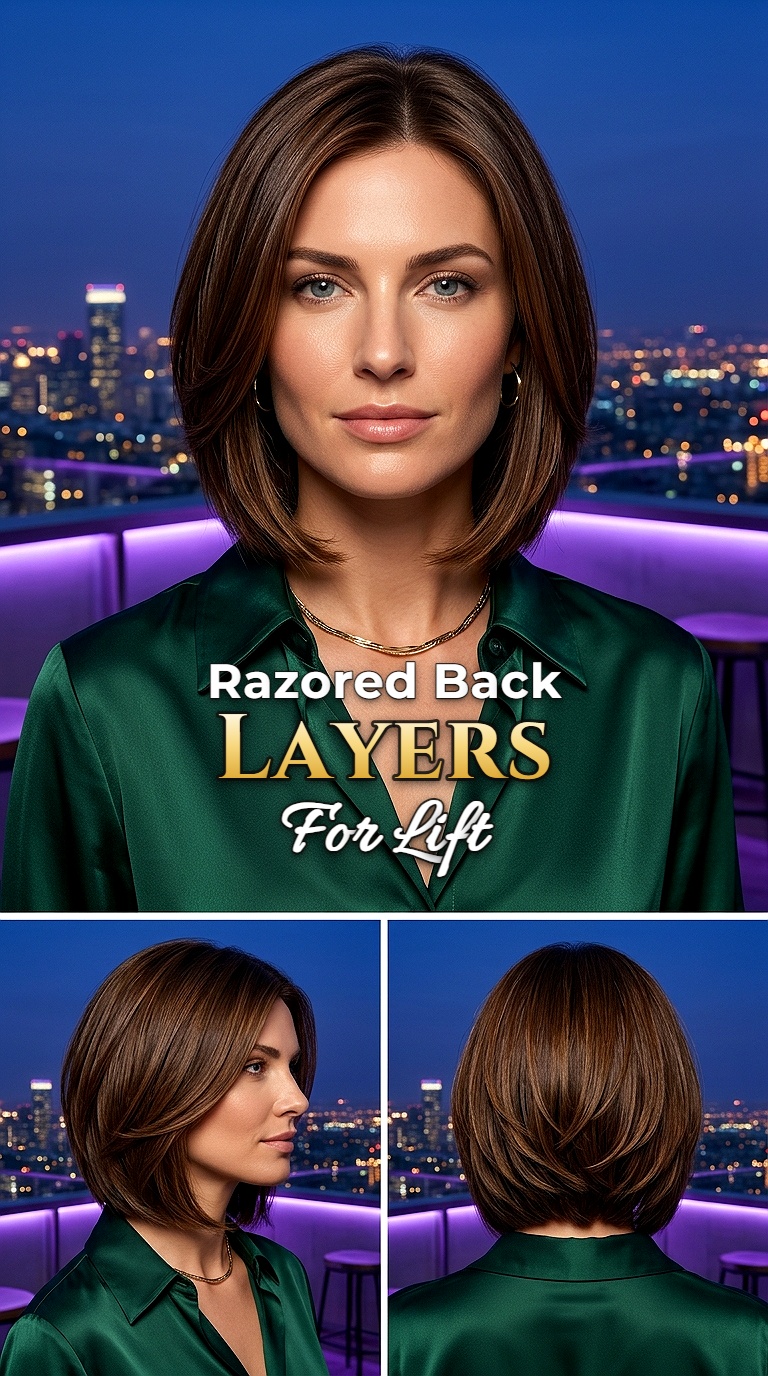
Using razored back layers for lift gives the graduated bob a more “undone” and textured feel. The razor creates varied lengths within the graduation, which helps the hair to stand up a bit more at the crown for natural volume.
This is a wonderful alternative to chin length blunt bob haircuts for fine hair over 60, which often rely on teasing for lift. With thick hair, the razor does the work for you, creating a built-in “pouf” that looks natural and effortless rather than forced.
I love this look for a more casual, beachy vibe. Even on straight hair, the razored edges add a bit of grit and personality, making the bob feel less like a “mom cut” and more like a stylish, edgy statement.
16. Long Front Layers with Tapered Ends
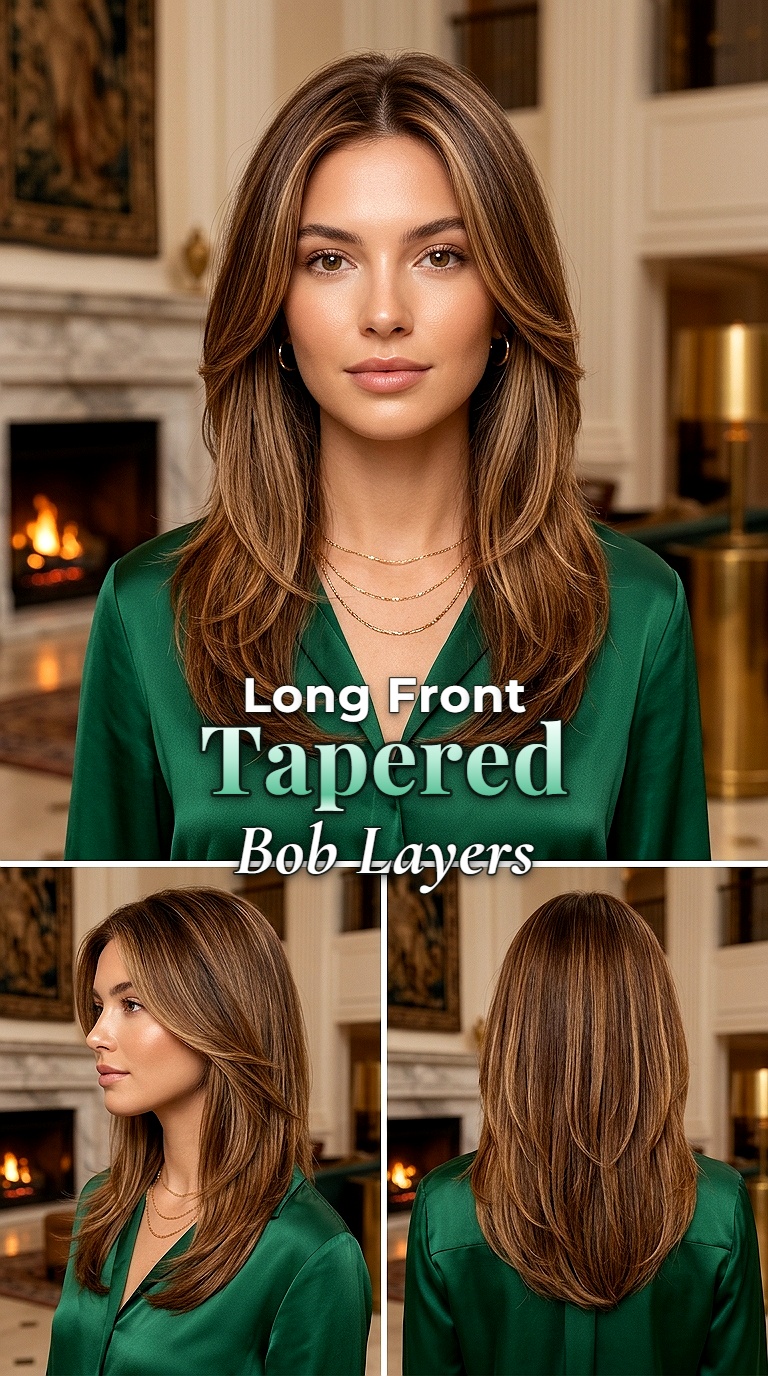
Finally, long front tapered bob layers keep the drama at the front of the face while the back remains short and easy to manage. The taper ensures that the very ends of the hair are thin and sharp, which prevents a “heavy” look around the chin.
This style is perfect for those who like the look of chin length blunt bob haircuts for fine hair over 50 but want to keep their natural thickness. The tapering provides a very elegant finish that follows the line of the jaw, drawing the eye upward and giving a youthful lift.
This is often the most requested look in the salon because it is so versatile. You can wear it perfectly straight for a glass-like finish or add a tiny bit of bend to the front layers for a more relaxed, day-to-day appearance that always looks polished.