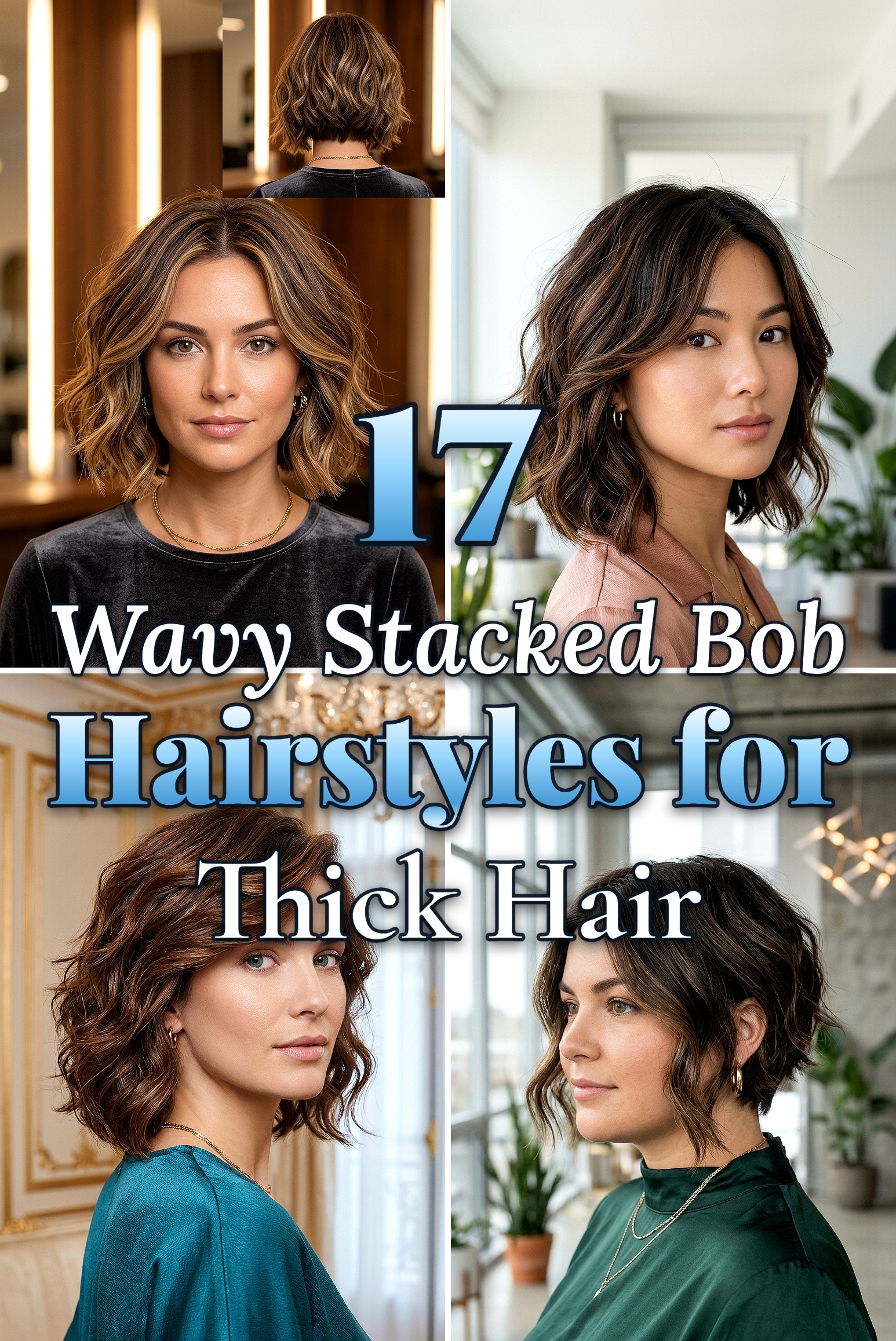
Wrestling with dense, heavy strands often feels like a constant battle against bulk and unwanted volume, especially when you are craving a shorter, more manageable length.
These styles offer the necessary structure for weight management, providing options that flatter an oval face or no-bangs preferences while keeping your daily routine quick and easy.
Finding the right balance of texture and taper is the secret to a cut that feels light rather than heavy. One of these shapes might even change your morning routine.
1. Tapered Nape Layers
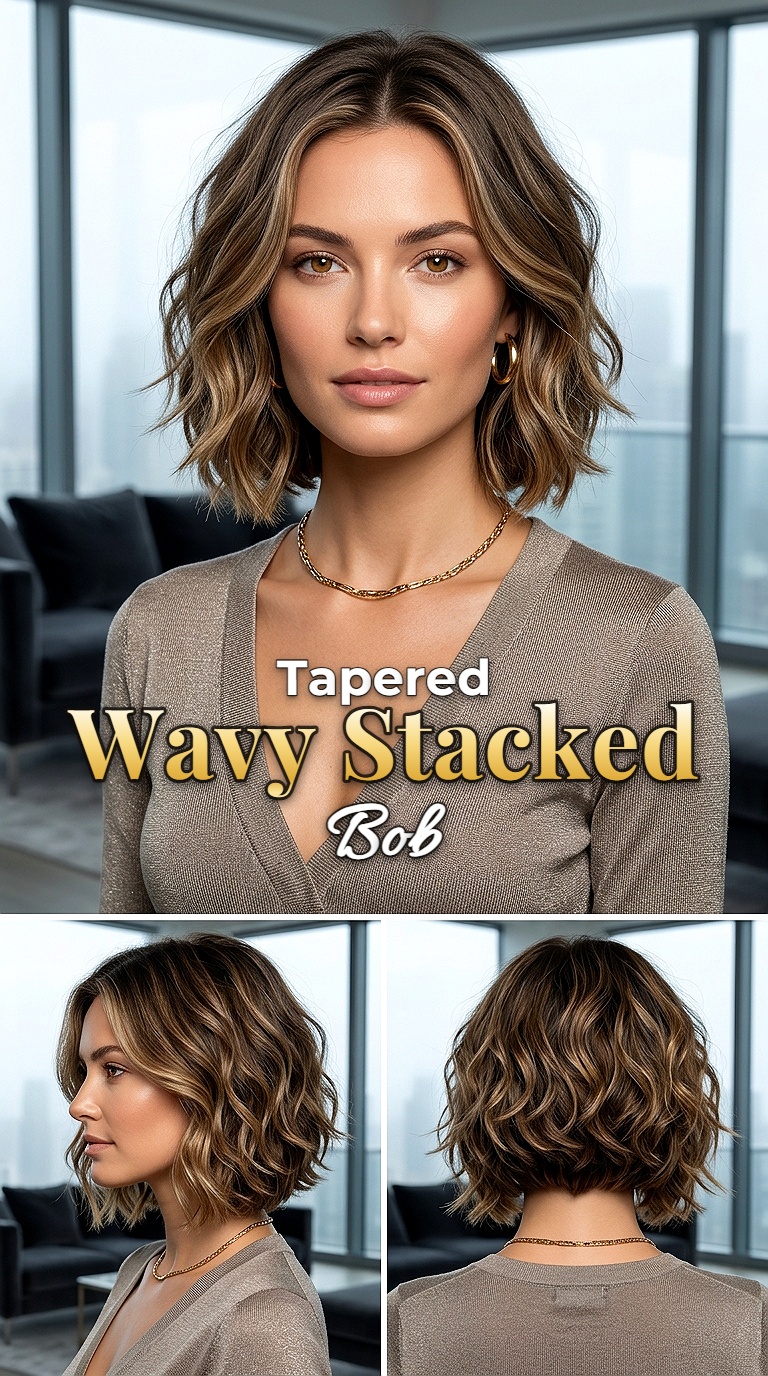
A tapered wavy stacked bob is the ultimate solution for removing significant weight from the back of the head where thick hair tends to bunch up. By closely cropping the hair at the neckline and building the stack upwards, you create a sleek silhouette that doesn’t feel like a heavy helmet.
While many women search for chin length blunt bob haircuts for fine straight hair, those with thicker textures require this graduated approach to avoid the dreaded triangle shape. The taper allows the natural wave to sit flat against the neck while the top layers bounce with healthy movement.
This specific variation is ideal for anyone who wants a clean look without the fuss of constant tucking. It keeps the bulk at bay and highlights the natural curve of the neck, making it a sophisticated choice for professional settings.
2. Soft Face Framing Layers
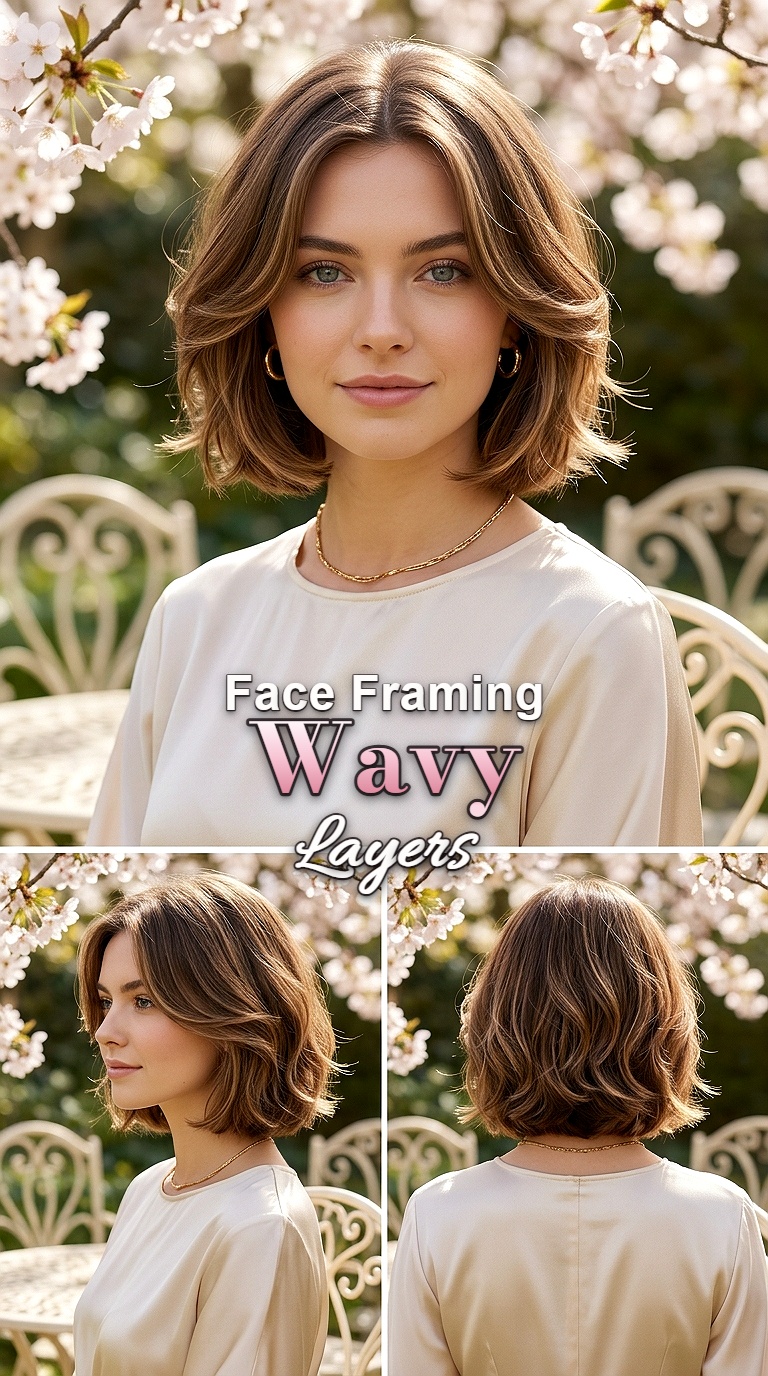
Choosing face framing wavy layers ensures that your thick hair doesn’t overwhelm your features or hide your jawline behind a wall of hair. By starting the layers around the cheekbones, you break up the density and allow the waves to curve inward towards the face.
This technique is often a better alternative to chin length blunt bob haircuts for fine hair round face because the layers create vertical lines that elongate the appearance of the head. It provides a softness that balances out the strong structure of a stacked back.
More Amazing Ideas
 19 Sleek Stacked Angled Bob Hairstyles Thick Hair — Read more
 18 Angled Bob Hairstyles with Side Bangs Thick Hair — Read more
 18 Butterfly Bob Hairstyles for Thick Wavy Hair — Read more
 16 Wavy Shaggy Bob Hairstyles for Thick Hair — Read more
 15 Wavy Asymmetrical Bob Hairstyles for Thick Hair — Read more
I recommend this for women who want to keep some length in the front while reaping the benefits of a shorter cut behind. It feels feminine and breezy, especially when you let the natural waves do the work with just a bit of sea salt spray.
3. Feathered Crown Layers
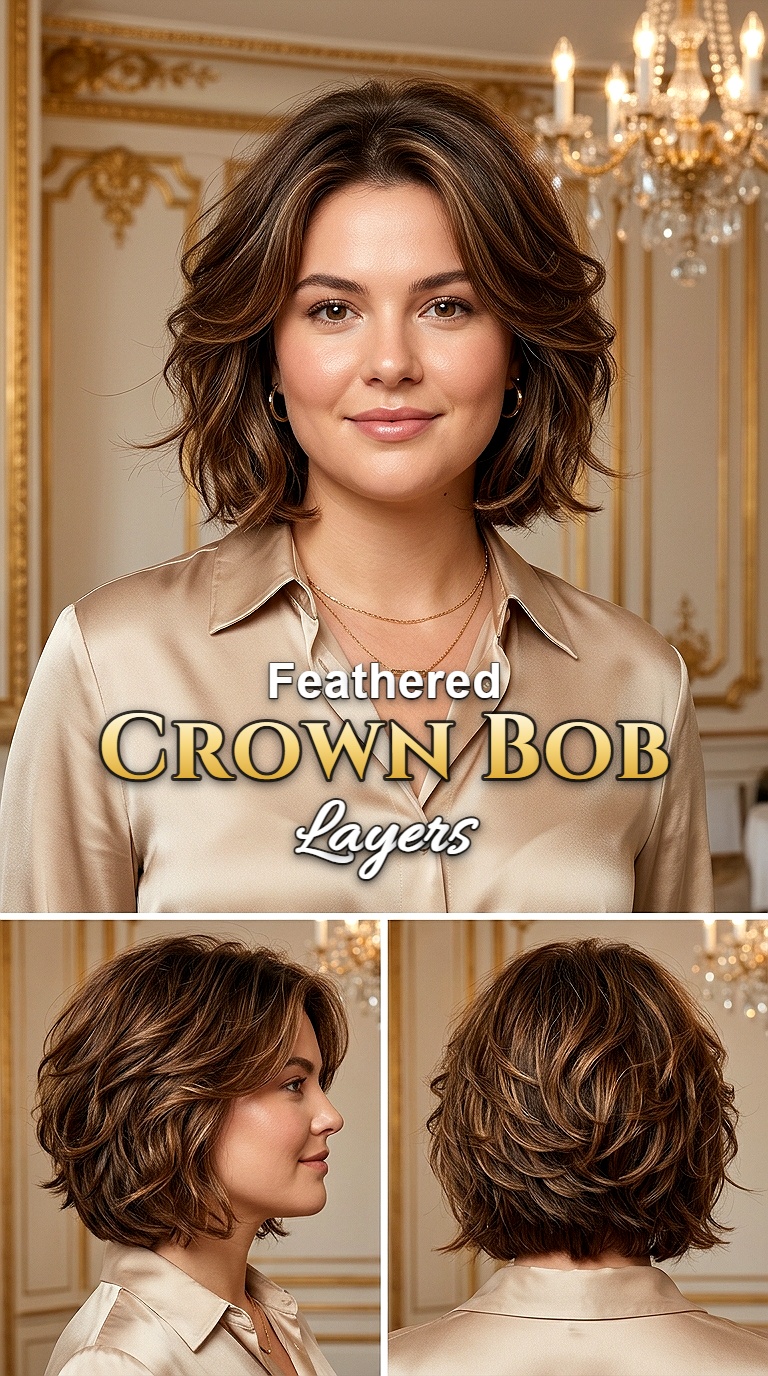
Incorporating feathered crown bob layers gives thick hair the vertical lift it needs to prevent the style from looking flat or weighted down at the roots. By texturizing the very top sections, we create a “shattered” effect that catches the light and adds a sense of airiness.
This approach is a great pivot for those who have previously looked at chin length blunt bob haircuts for fine hair over 50 but found their own thick hair too stubborn for a blunt finish. The feathering allows for effortless volume that stays all day without excessive hairspray.
Styling this is a dream because the layers are designed to be messy. Simply scrunching your waves with a bit of lightweight mousse will emphasize the height at the crown and provide a modern, youthful energy to the overall silhouette.
4. Choppy Undercut Layers
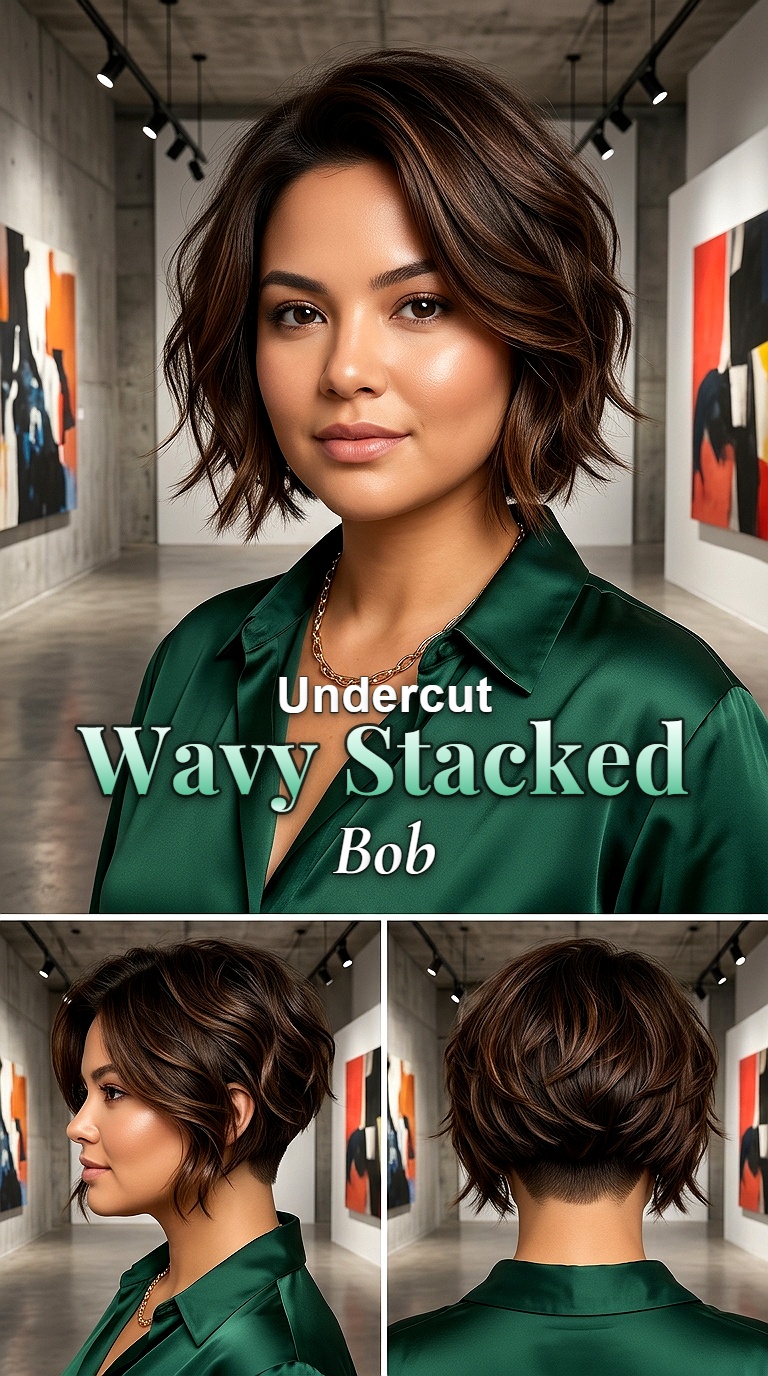
Using an undercut wavy stacked bob is a “secret weapon” technique where the stylist shaves or clips a small section at the base of the skull. This removes the “shelf” of hair that often pushes the top layers out too far in thick-haired clients.
While it sounds edgy, the result is surprisingly polished and helps achieve that slim profile often seen in chin length blunt bob haircuts for fine wavy hair. It allows the wavy top sections to fall smoothly over the stack without any hidden bulk pushing them out.
If you struggle with “sweaty neck” syndrome during the summer, this is your best friend. It provides instant relief and makes styling the remaining hair significantly faster since you are dealing with about twenty percent less mass overall.
5. Whisper Soft Side Layers
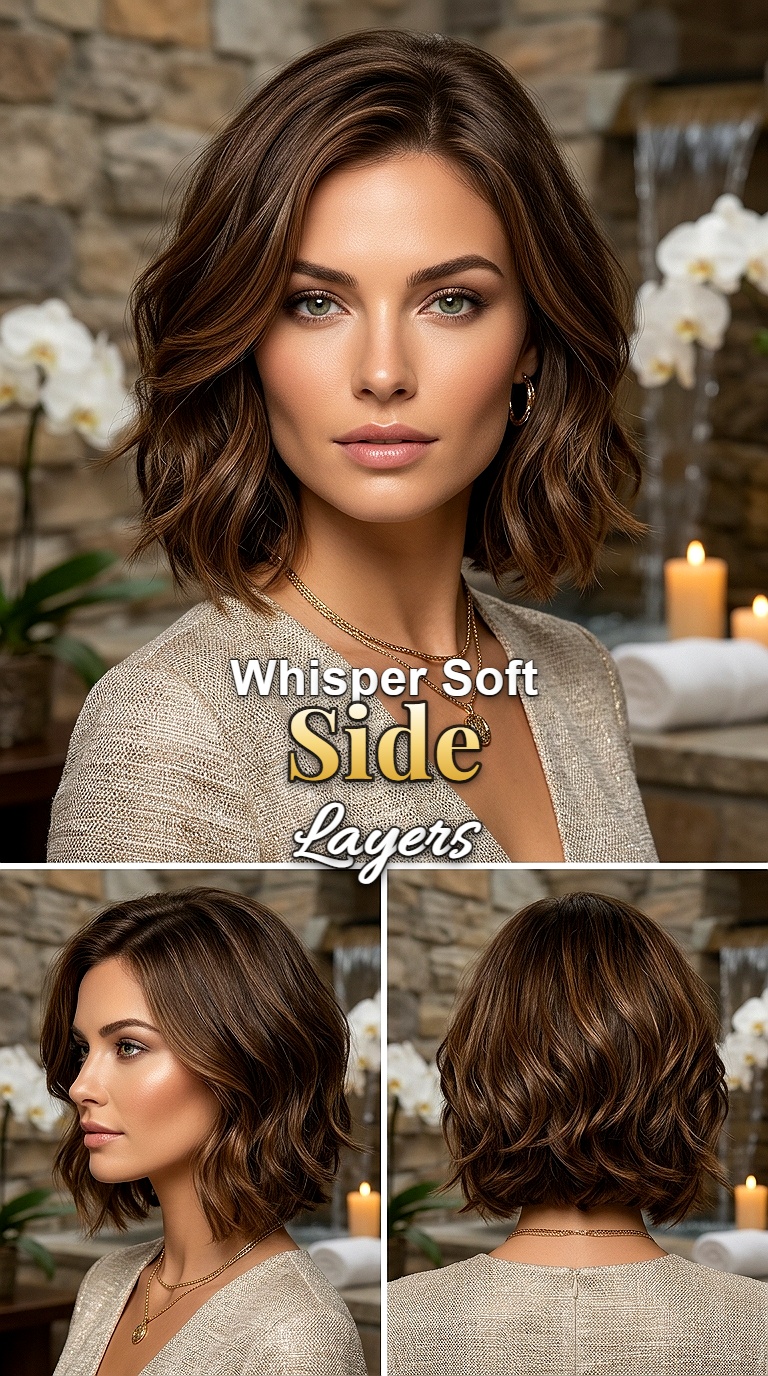
Developing whisper soft side layers helps to blend the transition from the stacked back to the longer front sections seamlessly. These thin, delicate layers are cut into the sides of the hair to prevent the “blocky” look that often plagues dense hair types.
More Amazing Ideas
This is a beautiful choice for an oval face shape with waves because it frames the eyes without closing off the forehead. It offers a more diffused look than the harsh lines sometimes found in traditional bob shapes, creating a romantic and approachable vibe.
Maintenance is straightforward here, as the layers are meant to be subtle. You won’t have to worry about awkward grow-out phases because the wispy ends blend naturally into the rest of the hair as it gets longer.
6. Blunt Cut Surface Layers
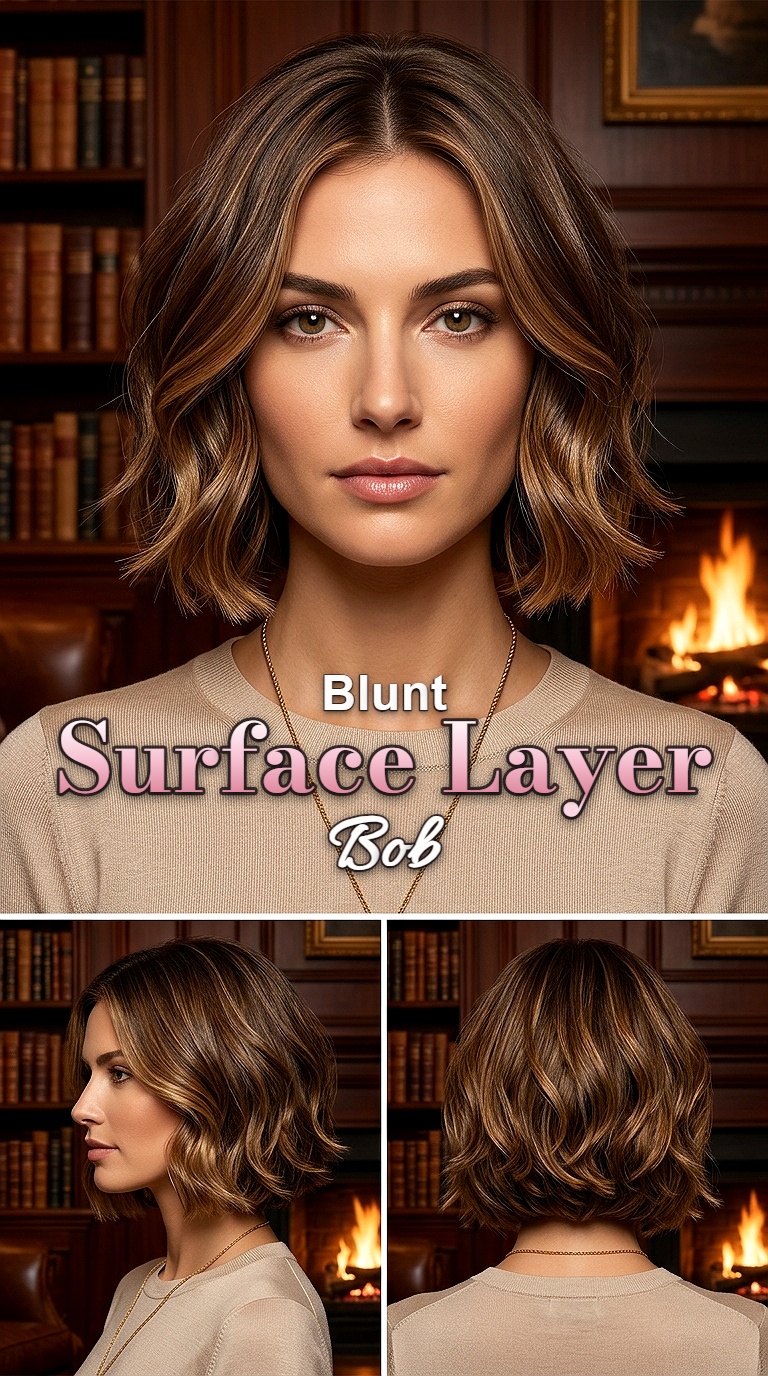
A blunt surface layer bob creates a striking visual contrast by keeping the very top layer at a uniform length while the interior is heavily texturized. This gives the illusion of a thick, healthy weight while the hidden layers underneath do the work of thinning things out.
For women searching for chin length blunt bob haircuts for fine hair over 60, this version offers that same classic elegance but adapts it for the reality of high-density strands. It looks expensive and intentional, especially when styled with a slight bend in the middle.
This cut is particularly effective for those who prefer a “no bangs” finish. The solid surface layer falls cleanly away from the face, providing a sophisticated frame that works exceptionally well with statement glasses or bold jewelry.
7. Deconstructed Interior Layers
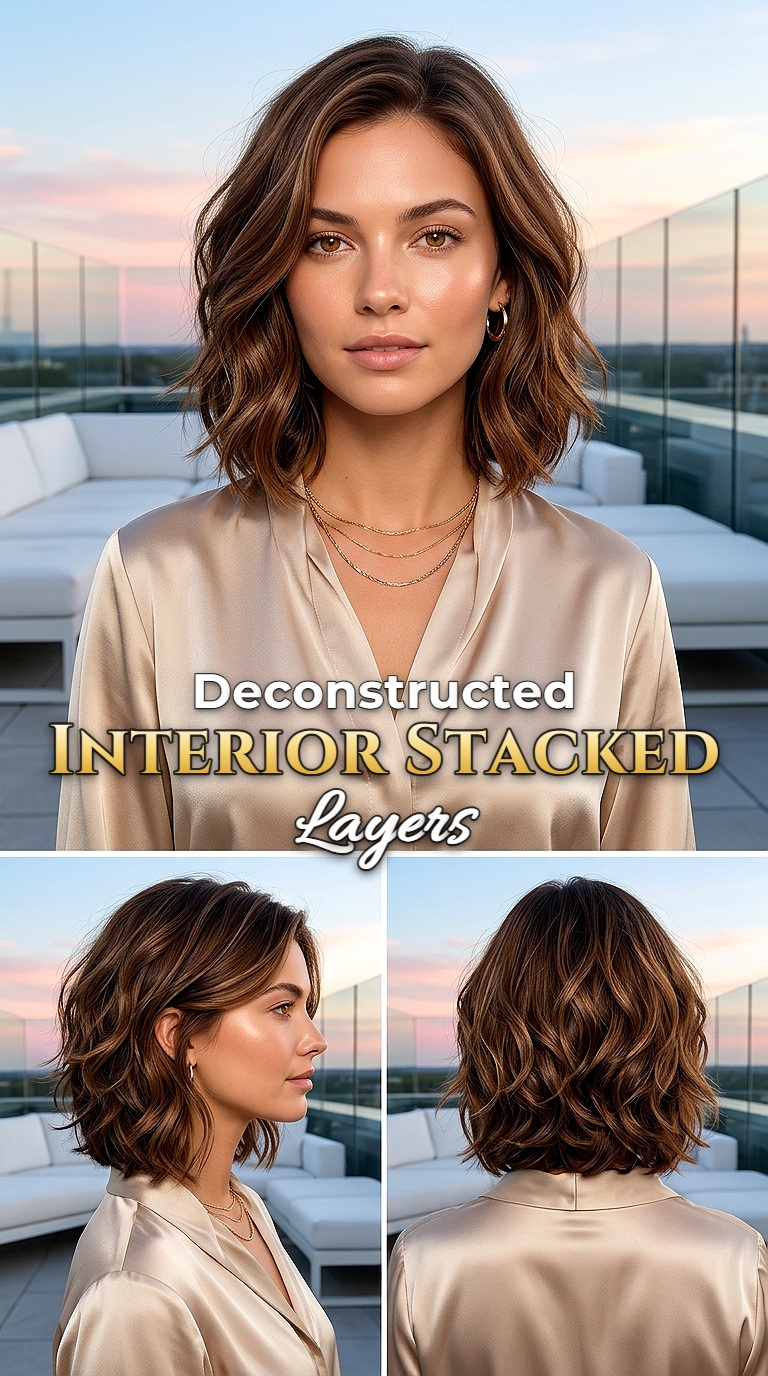
Applying deconstructed interior stacked layers involves “carving” into the middle sections of the hair to remove internal weight without changing the external length. This creates little “pockets” of air that allow the waves to move independently of one another.
This technique helps thick hair achieve the movement usually found in chin length blunt bob haircuts for fine hair no bangs styles. Instead of moving as one solid unit, your hair will have a rhythmic, bouncy quality that feels much lighter on the head.
I love this for the low-maintenance woman. Since the work is done on the inside of the cut, it looks great even if you just air-dry. It’s about working with the hair’s natural density rather than fighting against it every single morning.
More Amazing Ideas
 19 Blunt Bob Hairstyles with Bangs for Thick Hair — Read more
 16 Stacked Angled Bob Hairstyles for Fine Hair — Read more
 19 Wavy Choppy Bob Hairstyles for Straight Hair — Read more
 16 Medium Inverted Bob Hairstyles for Thick Hair — Read more
 15 Choppy Bob Hairstyles with Bangs for Thick Hair — Read more
8. Angled Inverted Layers
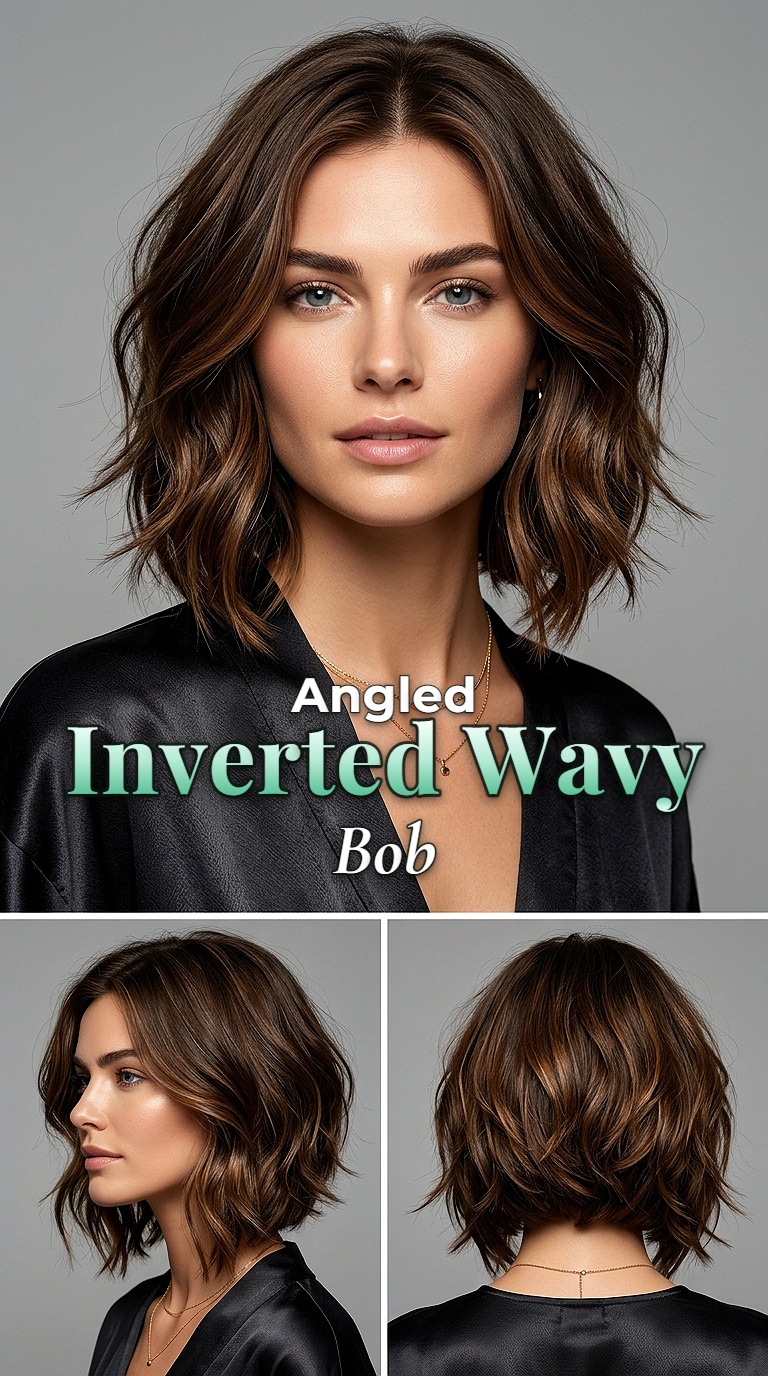
The angled inverted wavy bob features a steep slope from a short, stacked back to a longer front, which naturally pulls the weight forward and down. This is an excellent way to manage volume because it uses the hair’s own weight to keep the style close to the face.
While someone might look for chin length blunt bob haircuts for fine straight hair, a thick-haired individual needs this angle to prevent the hair from puffing out sideways. The “V” or “U” shape at the bottom creates a flattering line for the shoulders.
This look is inherently dramatic and stylish. It works well if you have a natural wave that tends to be a bit unruly, as the length in the front helps “weight down” the curls so they don’t bounce up too high and lose their shape.
9. Shattered Ends Layers
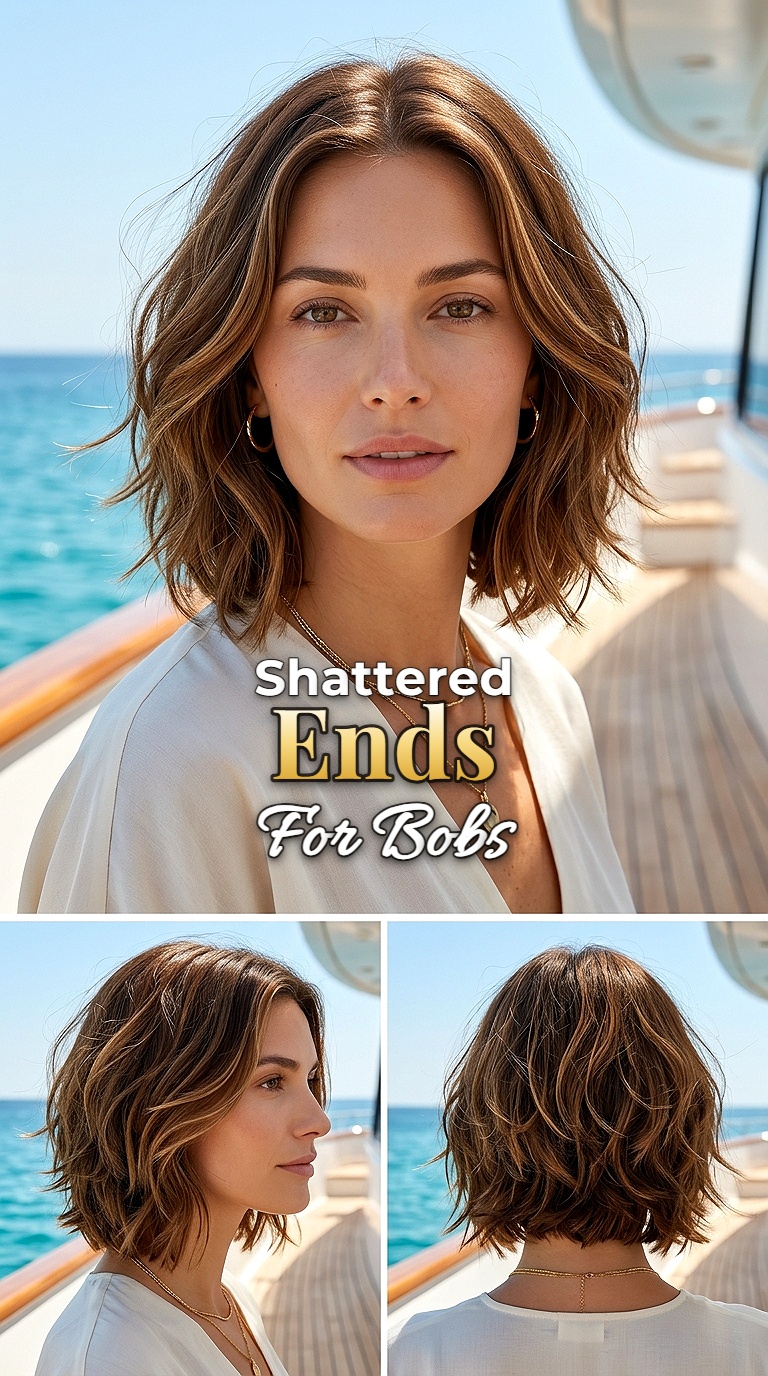
Choosing shattered ends for bobs removes the bluntness from the bottom of the cut, which is where thick hair often looks the most heavy and dated. By using a razor or point-cutting technique, the stylist creates a jagged, airy perimeter that feels incredibly modern.
This is a fantastic option for thick hair over 50 because it adds a bit of edge and prevents the hair from looking too “set” or stiff. It breaks up the density around the chin, which can help to soften the appearance of the jawline and neck.
To style, use a small amount of texturizing paste on the tips. It emphasizes the “shattered” look and gives the waves a piecey, beachy quality that looks effortless and cool without requiring a lot of heat styling.
10. Subtle Graduation Layers
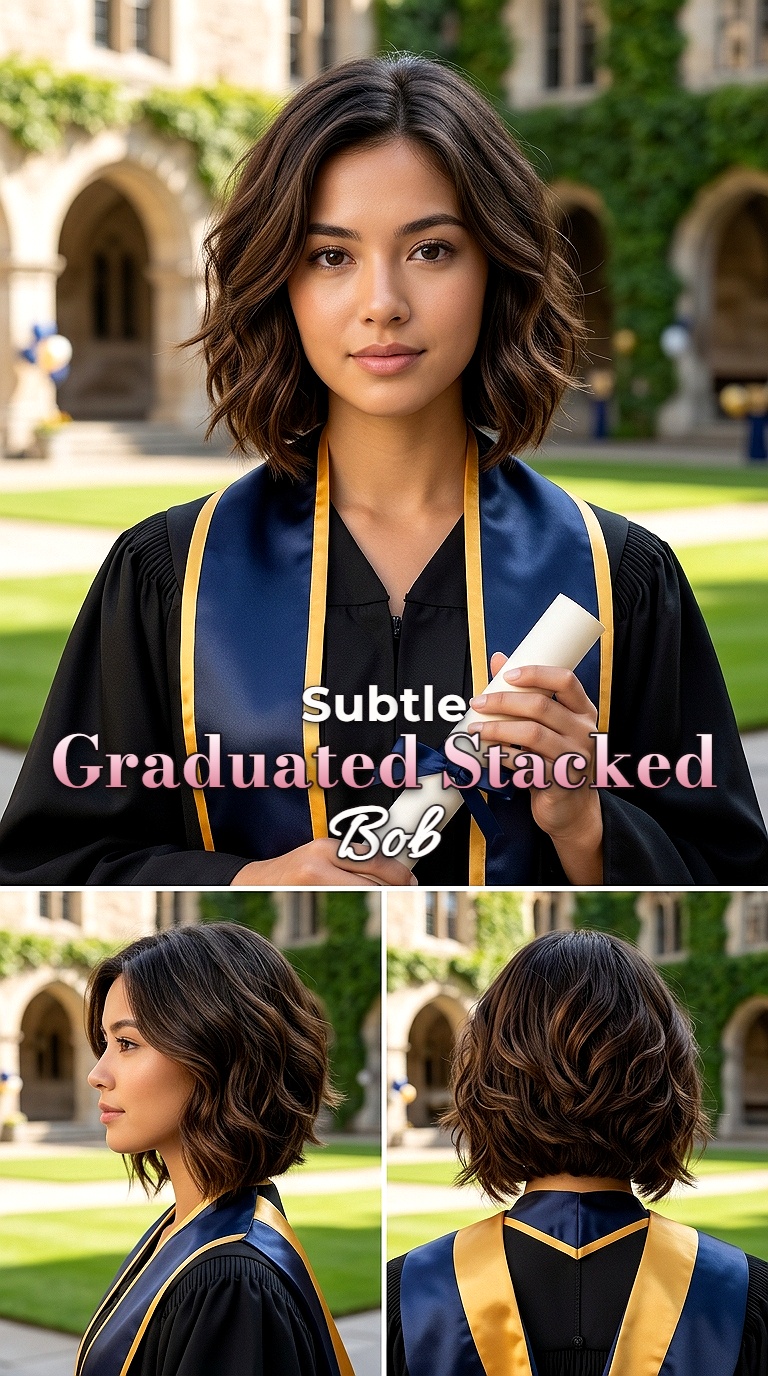
A subtle graduated stacked bob is the “quiet luxury” of haircuts, featuring very fine, incremental layers that build volume slowly rather than all at once. This creates a soft, rounded shape at the back that looks incredibly professional and polished.
More Amazing Ideas
This cut is often confused with chin length blunt bob haircuts for fine hair oval face, but the graduation is specifically designed to support the weight of thick hair. It provides a structured foundation that won’t collapse under its own density.
If you work in a corporate environment or prefer a more “classic” aesthetic, this is the winner. It looks perfectly coiffed with a quick blow-dry and a round brush, giving you a sleek, reliable look that lasts from the morning meeting to dinner.
11. Texturized Mid Length Layers
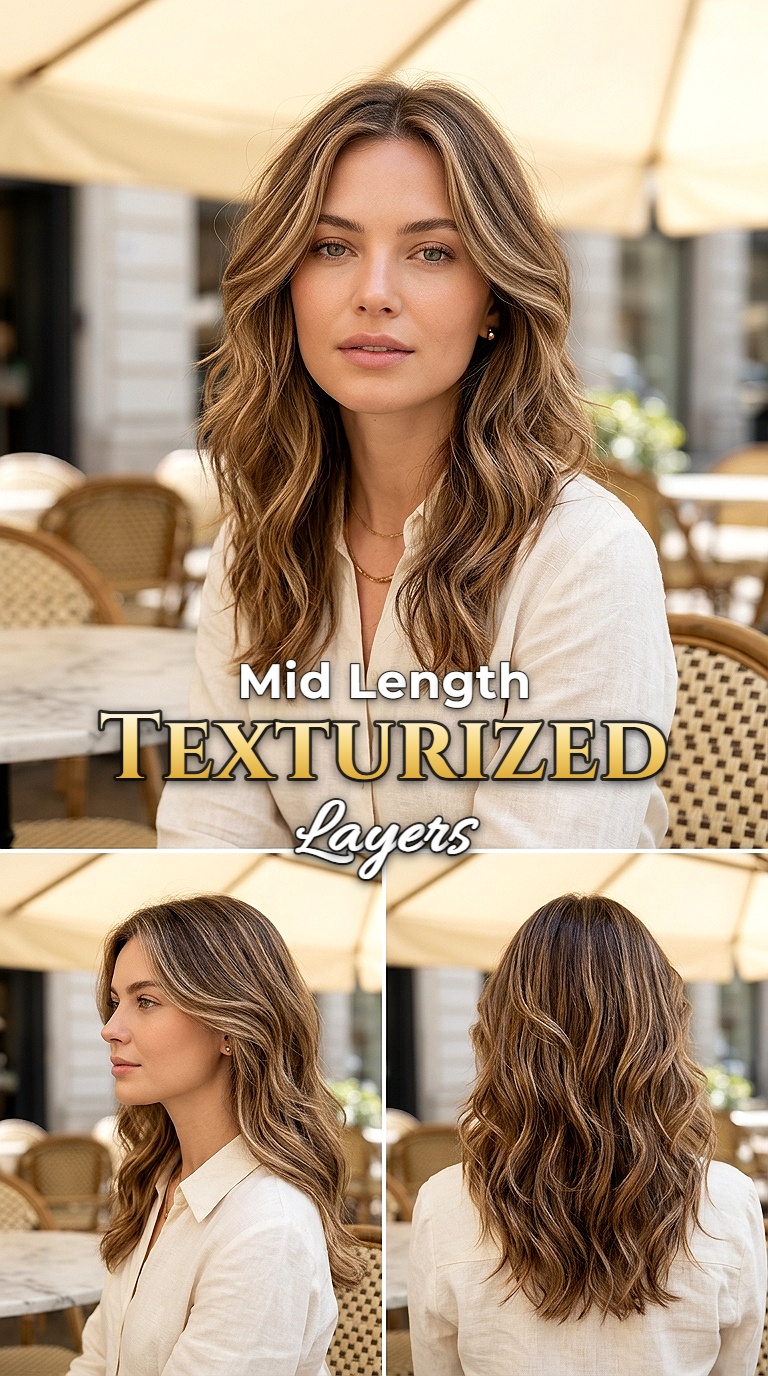
Implementing mid length texturized layers means the bulk of the shaping happens between the roots and the ends. For thick hair, this is the “danger zone” where hair tends to widen too much, so texturizing here is key to keeping the bob slim.
This approach mimics the light, airy feel of chin length blunt bob haircuts for fine hair over 60 but maintains the necessary volume for someone with more hair to manage. It keeps the “heart” of the haircut from becoming too round or “puffy.”
I recommend this for people who have a mix of waves and curls. The mid-length layers allow the different textures to nestle into each other rather than stacking on top of each other, resulting in a cohesive and controlled silhouette.
12. Piecey Surface Layers
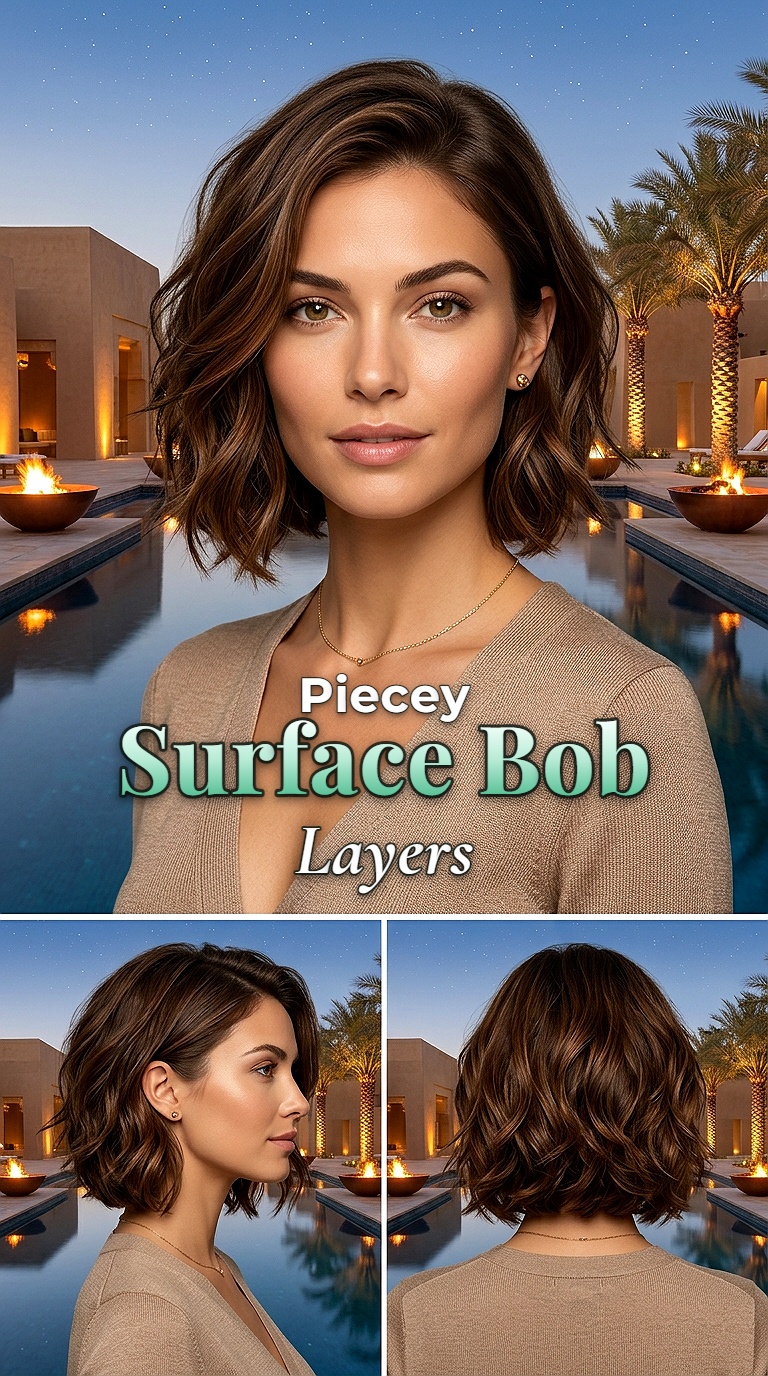
Focusing on piecey surface bob layers involves cutting shorter bits into the very top layer of hair to create visible definition. For thick hair, this breaks up the solid mass of color and texture, making the style look more dynamic and less like a single block.
This is a great style for those who want a no bangs bob for thick hair. Without a fringe to break up the face, these surface layers provide the necessary visual interest and movement around the forehead and eyes to keep the look engaging.
You can easily enhance this with a bit of shine spray or light oil. By defining just a few of these surface pieces, you give the entire haircut a “finished” look that looks like you just stepped out of the salon.
More Amazing Ideas
 17 Medium Textured Bob Hairstyles for Thick Hair — Read more
 20 Classic Stacked Bob Hairstyles for Straight Hair — Read more
 19 Stacked Bob Hairstyles with Bangs for Fine Hair — Read more
 18 Stacked Bob Hairstyles for Thin Hair Over 50 — Read more
 19 Textured Bixie Bob Hairstyles for Thick Hair — Read more
13. Soft Internal Thinning Layers
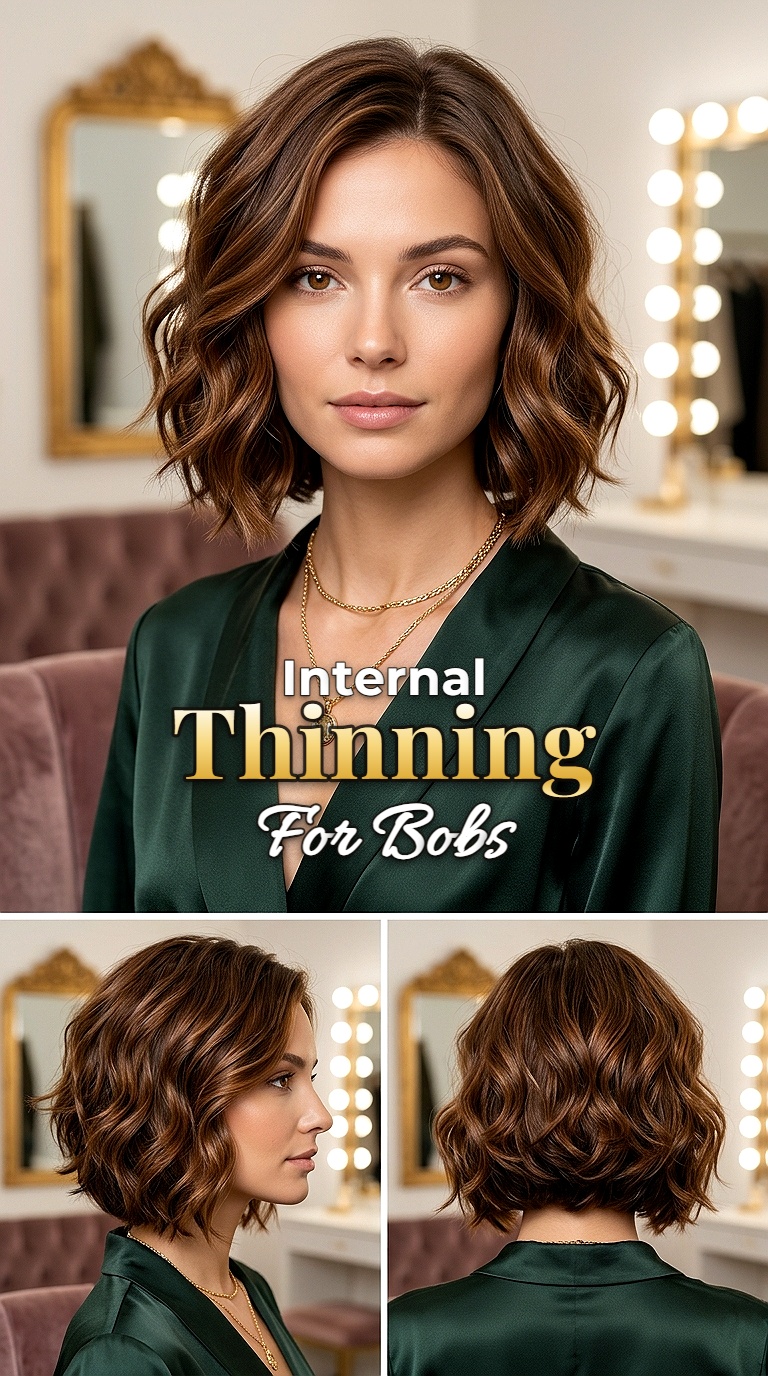
Using internal thinning for bobs is more of a technical move than a visual one, where the stylist removes mass from the very middle of the hair shaft. This allows the hair to lay flatter against the head without losing the “stacked” look at the back.
This is often the missing link for people who try to replicate chin length blunt bob haircuts for fine straight hair but find their hair is simply too thick to cooperate. It gives you that desired flatness and control while keeping your natural volume intact.
The best part about this technique is that no one can see where the hair was thinned. It’s a custom-tailored experience that makes your thick hair feel like it’s “behaving” for the first time in years, reducing drying time significantly.
14. Razor Cut Pointed Layers
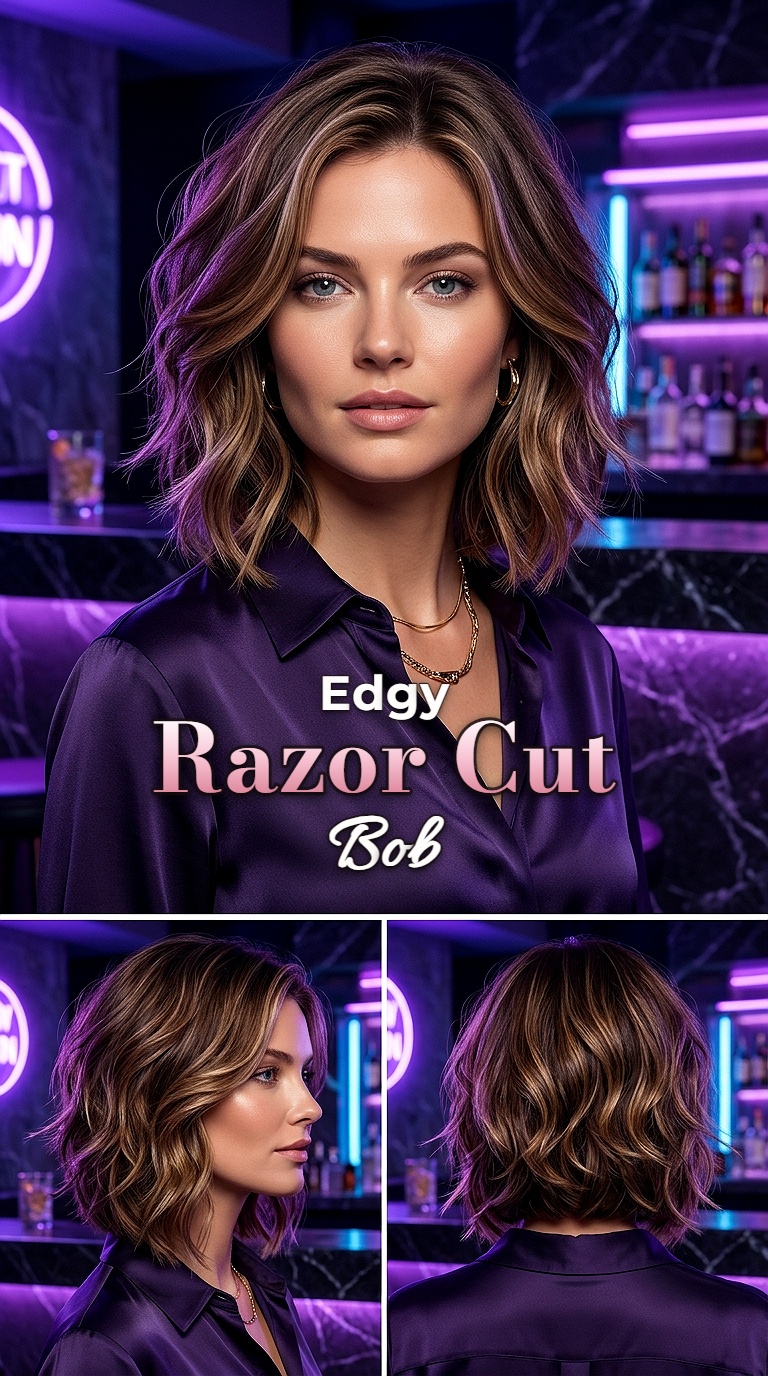
An edgy razor cut bob uses a straight edge to thin out the ends into sharp, pointed tips. This is exceptionally effective for thick hair because it removes the “blunt” resistance of the hair, allowing waves to fall into a more vertical, elongated pattern.
This is a bold choice for an oval face shape because it adds sharp angles to a balanced face. It’s a departure from the softer looks and provides a bit of rock-and-roll energy to an otherwise traditional stacked bob shape.
Keep in mind that razor cuts require a bit more maintenance to keep the ends looking sharp. However, the way it makes thick hair feel “weightless” at the bottom is a sensation that many women find well worth the extra trip to the stylist.
15. Long Blending Layers
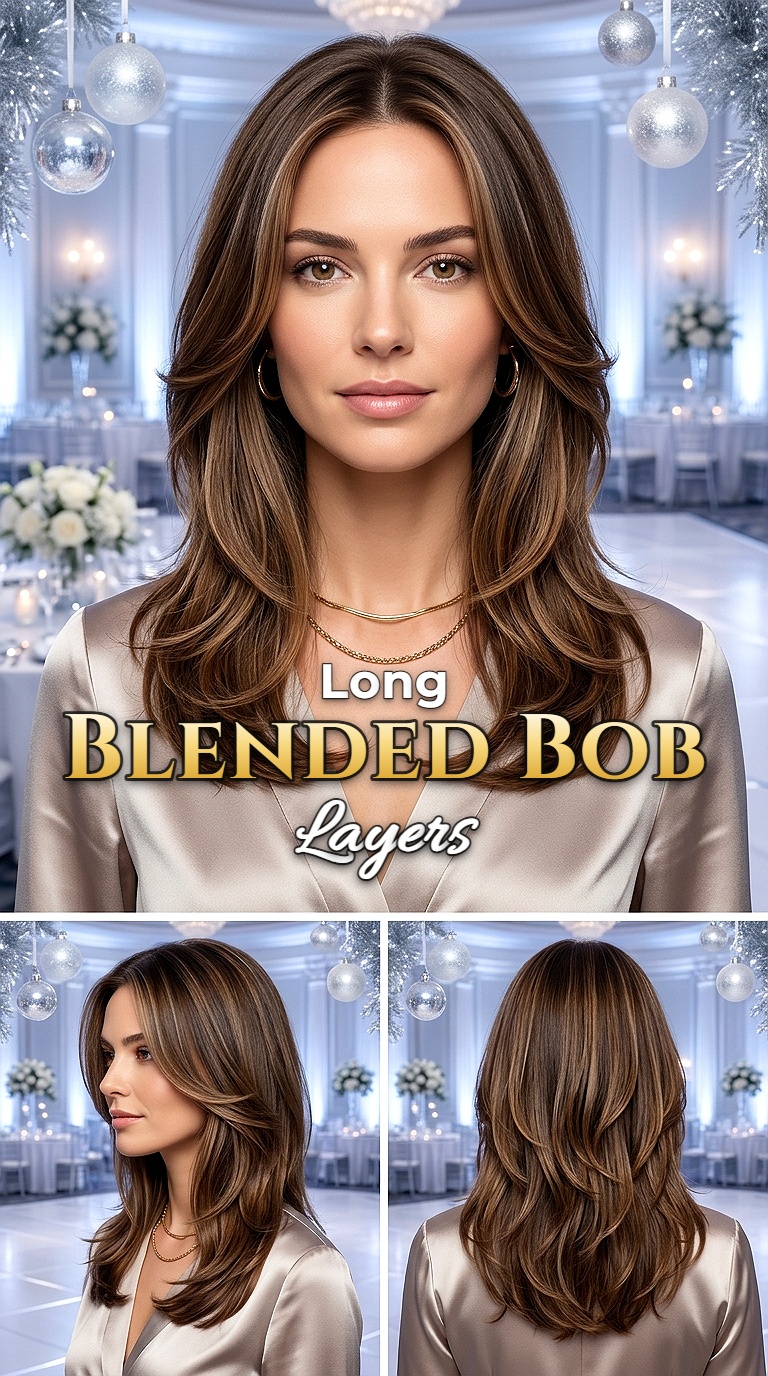
Opting for long blended bob layers ensures that there are no harsh “steps” in your haircut. For thick hair, harsh layers can look dated and heavy, so blending them from the stack to the front creates a smooth, waterfall-like effect for your waves.
More Amazing Ideas
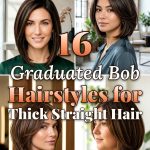
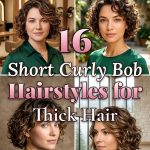
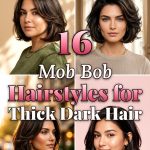
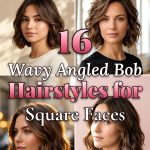
This is a sophisticated option for those who might have considered chin length blunt bob haircuts for fine hair over 50 but want something with more flow. The blending creates a cohesive look that moves beautifully when you walk.
To style this, a large barrel curling iron or a flat iron can be used to emphasize the long, sweeping lines. It’s a very “glamour” version of the bob that works well for special occasions while remaining practical for the day-to-day.
16. Airy Crown Volume Layers
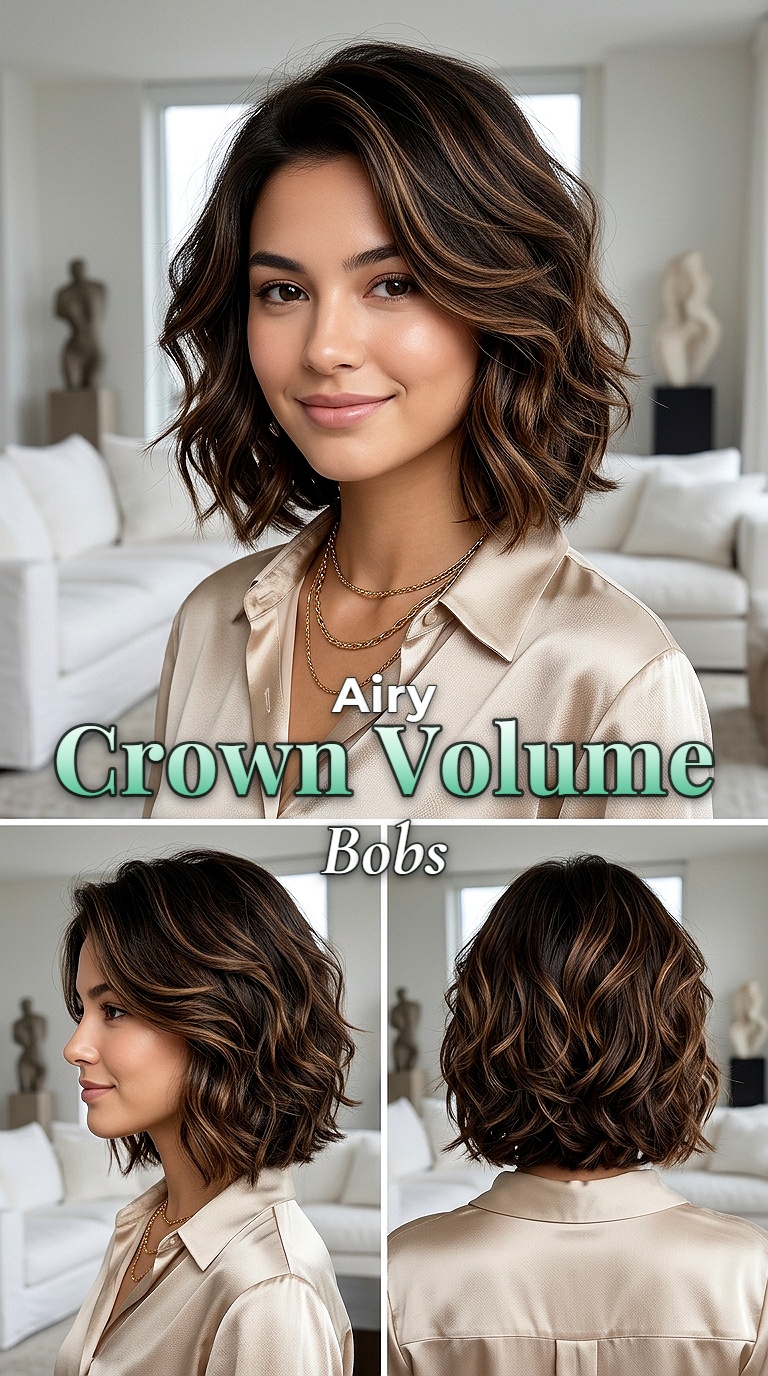
Focusing on airy crown volume bobs involves creating very short, vertical layers at the top of the stack. This pushes the hair up rather than out, which is the key to making thick hair look intentional and styled rather than just “big.”
This technique provides the same lift found in chin length blunt bob haircuts for fine hair over 60, giving the face a natural “lifted” appearance. It draws the eye upward to the eyes and cheekbones, which is always a flattering focal point.
You’ll find that you don’t need much “teasing” or backcombing with this cut. The layers are literally built to support each other, meaning your volume stays consistent throughout the day, even if you are running errands or at the gym.
17. Tucked Back Layers
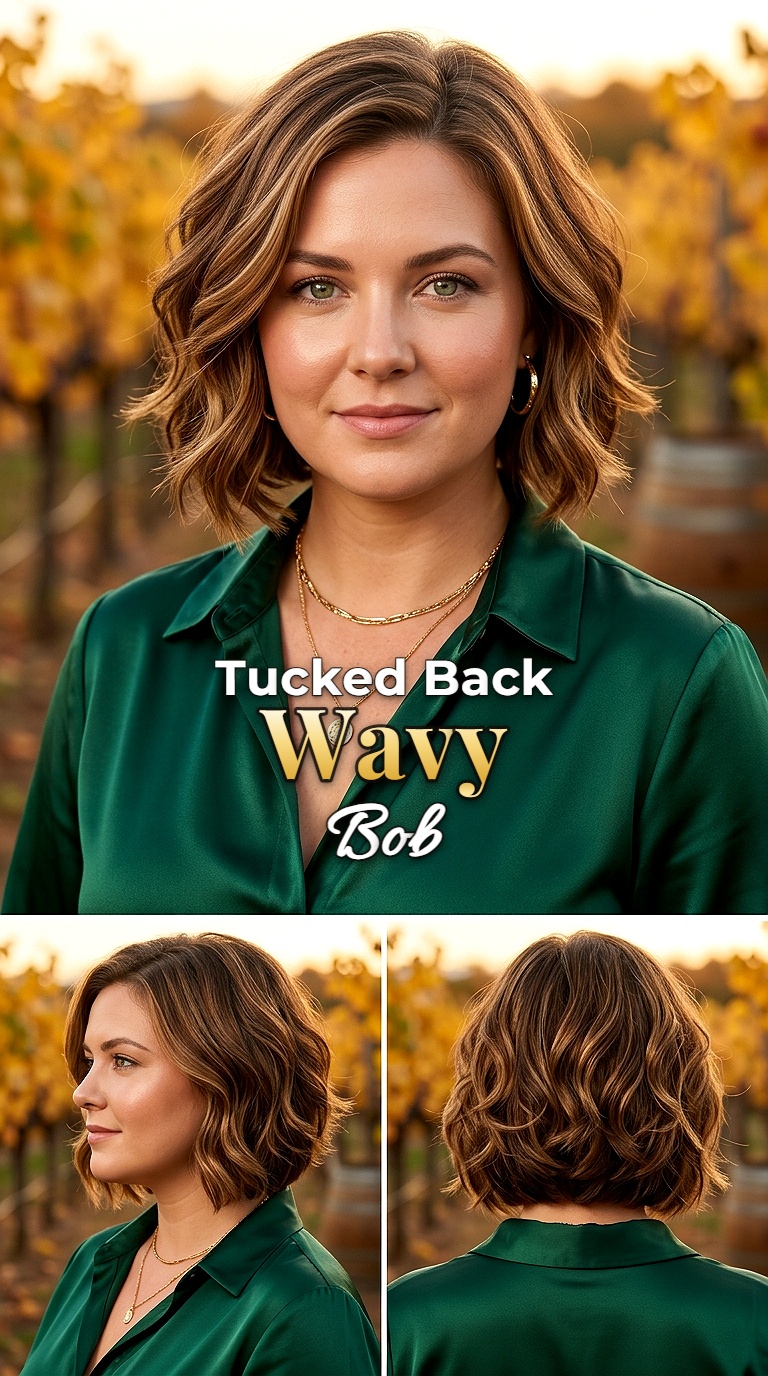
The tucked back wavy bob is specifically cut to allow the side sections to be tucked behind the ears without creating a massive bulge. Stylists achieve this by thinning out the area directly behind the ear, a common “trouble spot” for thick hair.
This is the ultimate practical bob for thick hair. It allows you to keep the hair out of your face for work or cooking, while still looking like a deliberate, stylish choice when you let the waves hang loose in the evening.
It bridges the gap for someone looking for chin length blunt bob haircuts for fine hair no bangs because it offers that same clean-fronted utility. It’s the perfect end-of-the-list discovery for the woman who needs her hair to be as hardworking as she is.