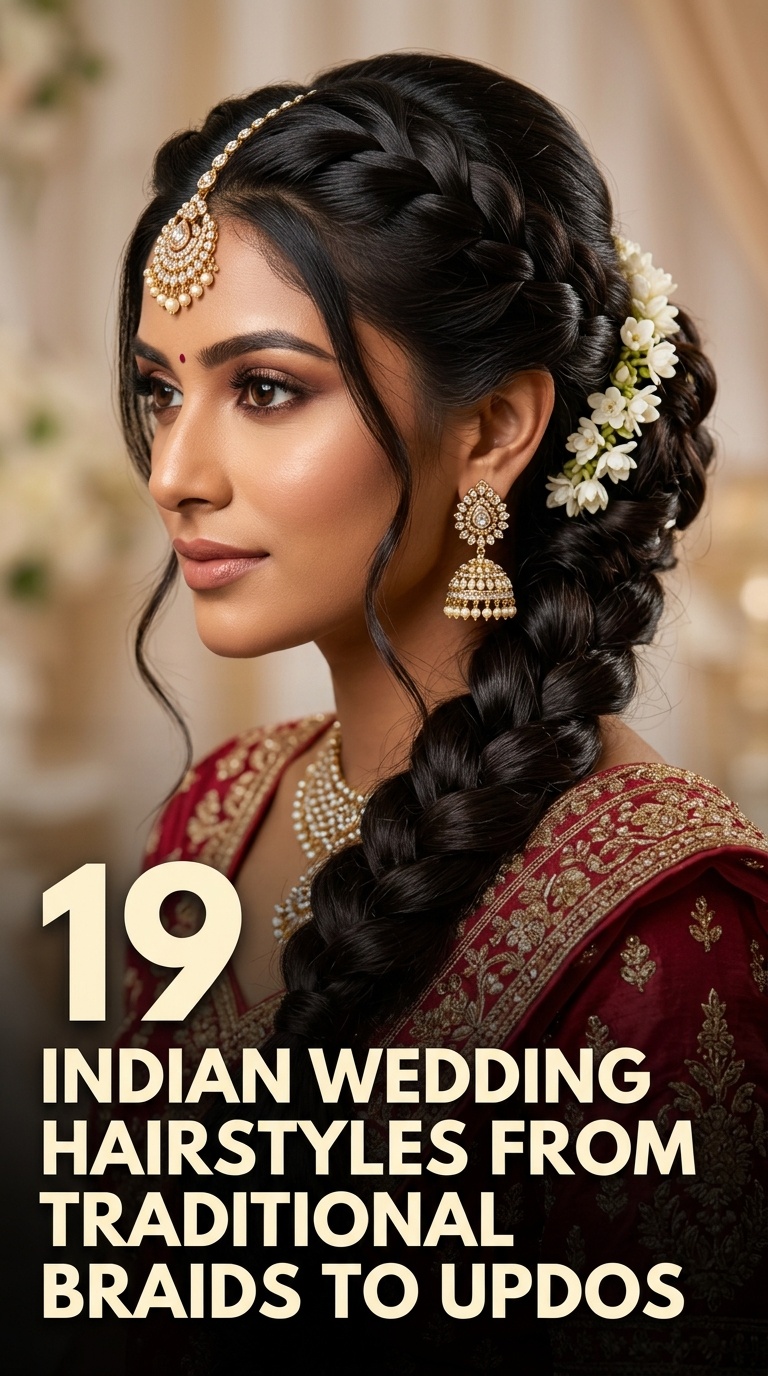
Choosing the perfect look for your big day is a journey through culture and personal style. Your hair serves as the crowning glory of your bridal ensemble.
Indian weddings demand versatility and durability for long ceremonies. From vibrant Mehendi afternoons to grand reception nights, your hair must remain flawless and photogenic.
South Asian hair textures offer incredible volume and strength. This allows for intricate braiding and majestic updos that hold heavy jewelry like matha pattis securely.
Explore our curated selection of 19 Indian Wedding Hairstyles from Traditional Braids to Modern Updos. These styles celebrate your heritage while embracing contemporary aesthetic trends.
1. The Traditional Poo Jadai
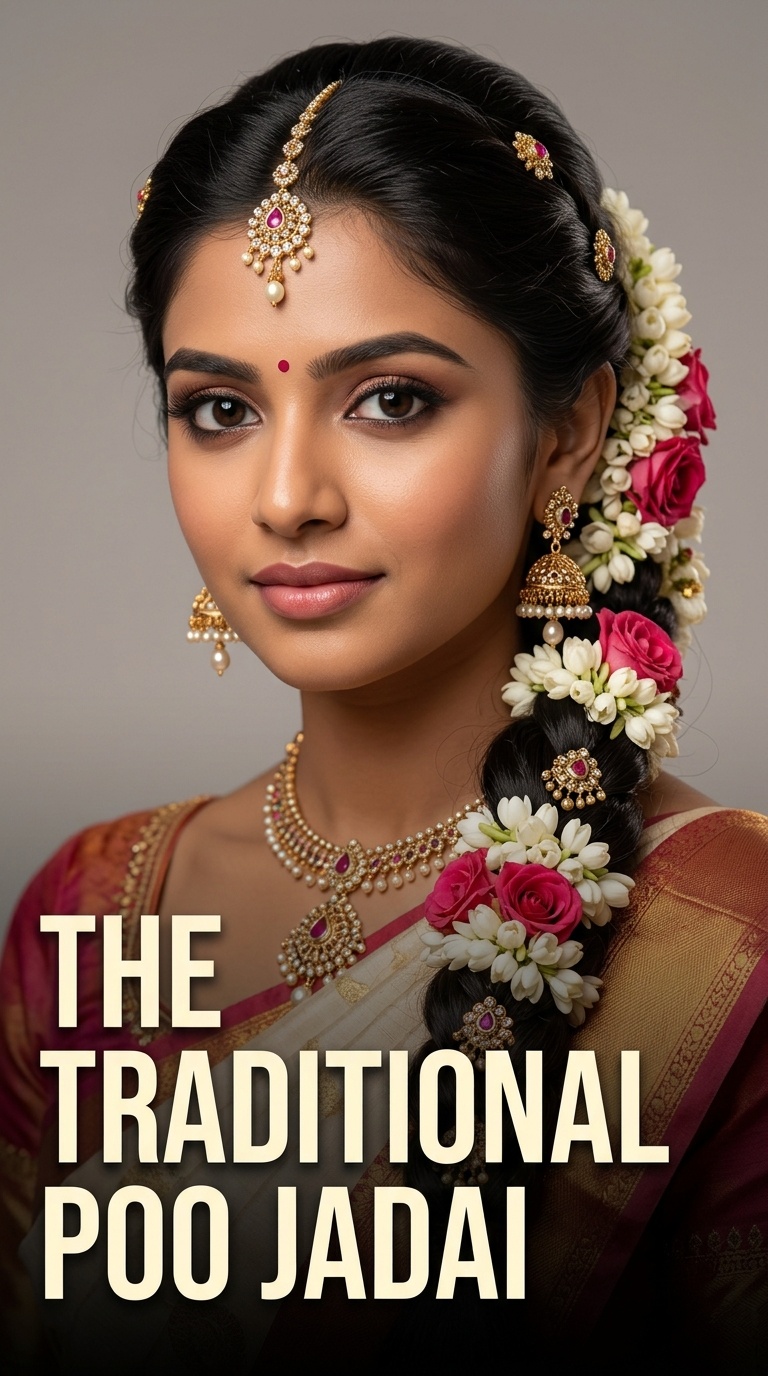
The Poo Jadai is the quintessential South Indian bridal look. This style features a long, thick braid completely encased in fresh flowers like jasmine, crossandra, or roses.
This hairstyle is designed to complement heavy Kanjeevaram silk sarees. It often incorporates gold “Jadai Billa” ornaments placed along the length of the braid for a royal finish.
The weight of the flowers provides a grounded, traditional feel. It is perfect for morning wedding rituals where the scent of fresh blooms adds to the divine atmosphere.
2. Sleek Low Bun with Gota Patti
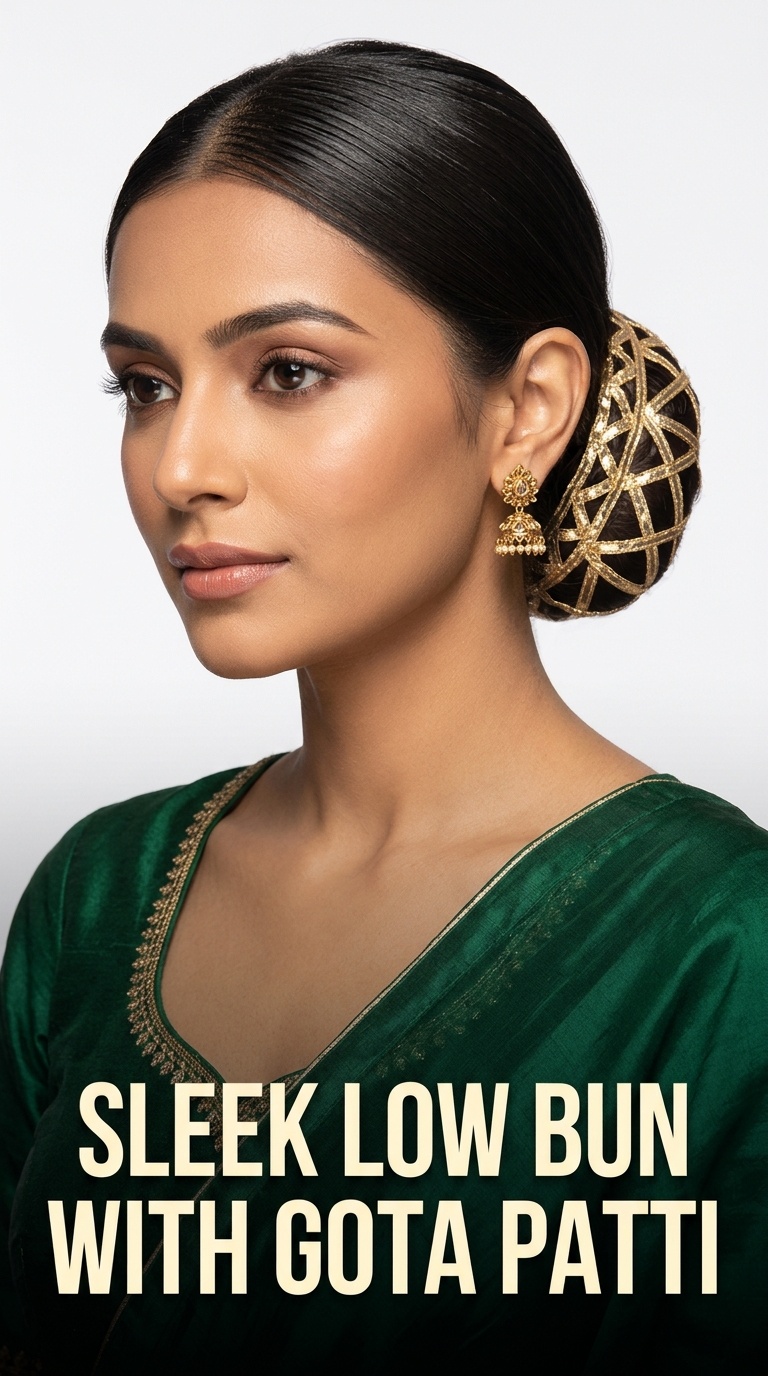
For the bride who loves a clean, polished aesthetic, the sleek low bun is a timeless choice. This style pulls the hair back firmly, highlighting sharp South Asian facial features.
Incorporating Gota Patti ribbons into the wrap adds a modern Rajasthani touch. The gold or silver metallic accents catch the light beautifully during evening reception ceremonies.
This updo is highly functional for brides wearing heavy dupattas. It provides a sturdy base for the fabric to rest on without ruining the structural integrity of the hair.
3. Bohemian Braid with Baby’s Breath
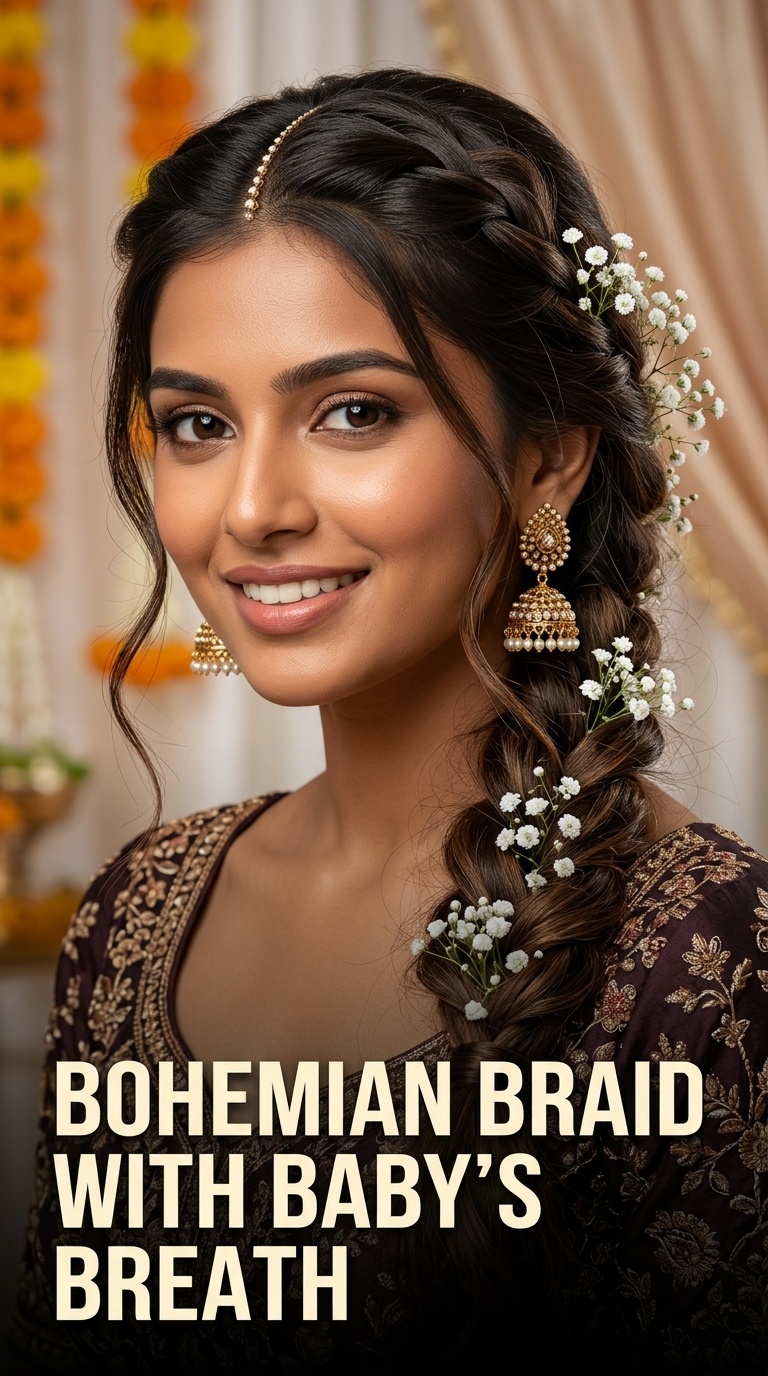
The Bohemian braid offers a relaxed yet sophisticated vibe for pre-wedding events like the Sangeet. It features a loose, voluminous plait with pulled-out sections for a soft, ethereal look.
More Amazing Ideas
 16 Hairstyles for Traditional Wear from Classic Braids to Modern Updos — Read more
 18 Eid Hairstyles from Traditional Updos to Modern Waves — Read more
 19 Indian Hairstyles for Saree Looks from Traditional to Modern — Read more
 18 Hairstyles for Wedding Guests from Updos to Loose Waves — Read more
 18 Wedding Guest Hairstyles for Short Hair from Waves to Updos — Read more
Dainty sprigs of white baby’s breath are tucked throughout the weave. This contrast against dark Indian hair creates a stunning “starry night” effect that looks incredible in close-up photography.
This style works exceptionally well for brides with medium to long hair. It balances the heaviness of lehengas with a light, airy feel that encourages movement and dancing.
4. Royal Mughal Passa Bun
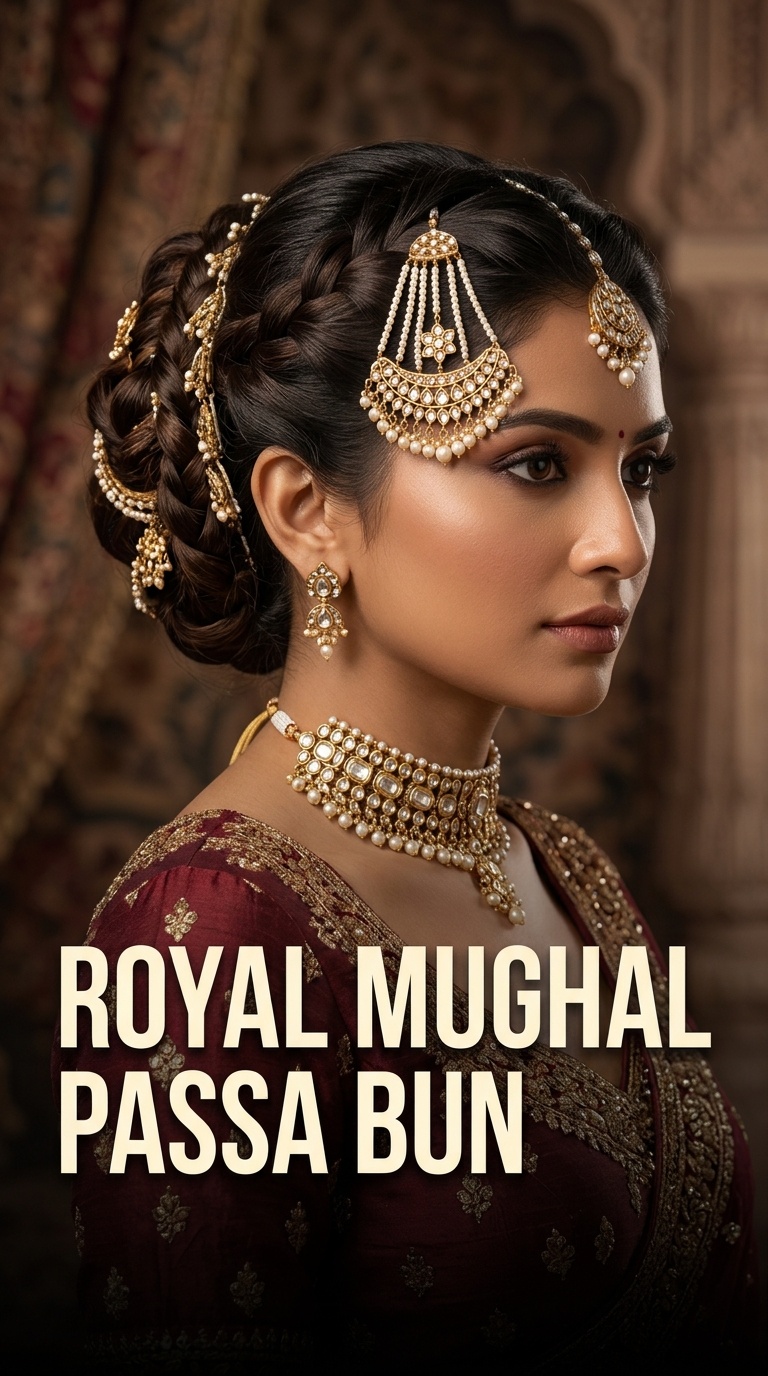
Inspired by the Nawabi culture, this hairstyle focuses on a textured side-parted bun. It is specifically designed to showcase a “Passa” or “Jhumar” side-pendant jewelry piece.
The bun is often constructed with intricate twists or braids to add height and dimension. It frames the face elegantly, drawing attention to the eyes and the traditional nose ring.
This look is ideal for Nikah ceremonies or grand receptions. It exudes an aura of old-world charm and regal sophistication that never goes out of style.
5. Mermaid Braid with Kundan Charms
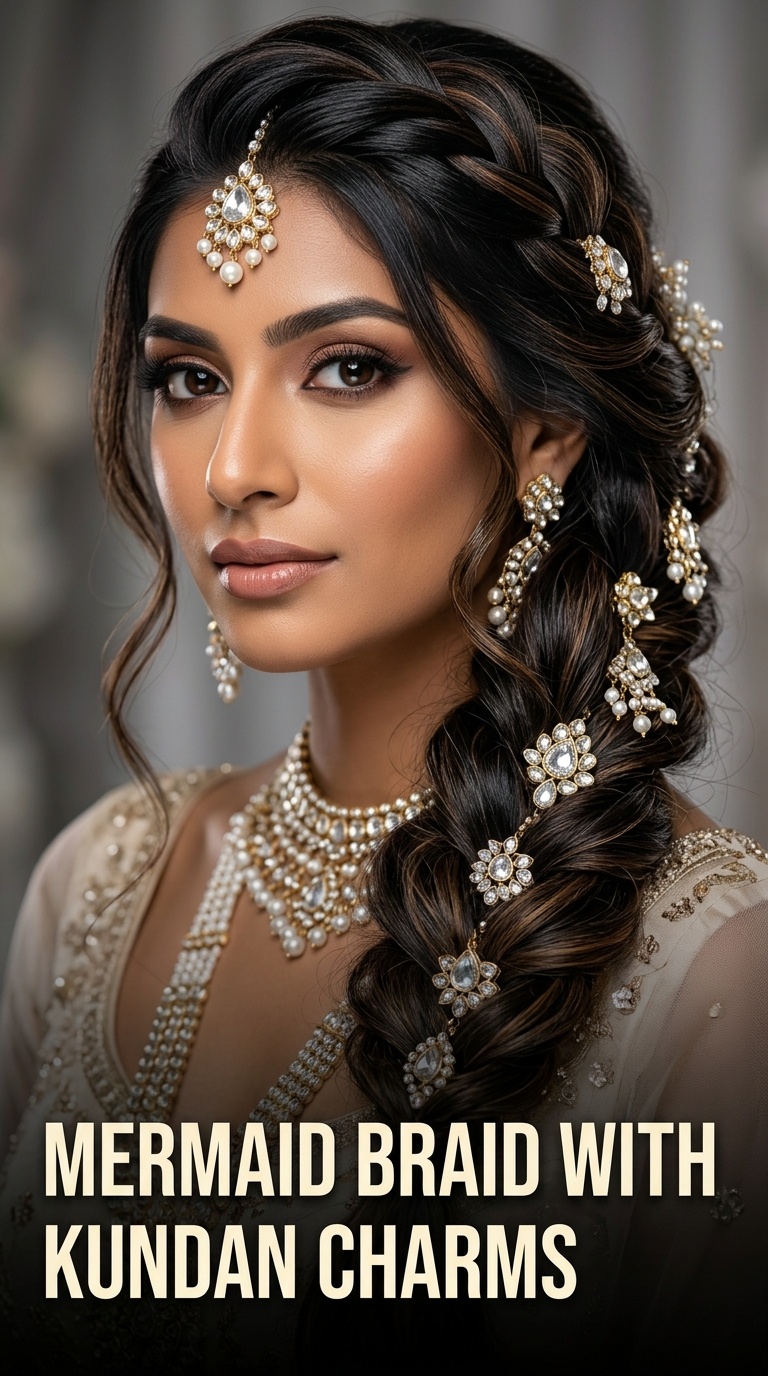
The mermaid braid is a wide, flat plait that maximizes the appearance of hair density. It is a favorite for brides who want the length of a braid with modern texture.
Instead of traditional flowers, small Kundan charms or gold beads are pinned into each intersection. This adds a jewelry-like sparkle to the hair that matches the bridal necklace set.
This style is perfect for an engagement or an outdoor Mehendi. It keeps the hair secure while allowing the bride to showcase her long, luscious tresses in a structured way.
6. Voluminous Hollywood Waves
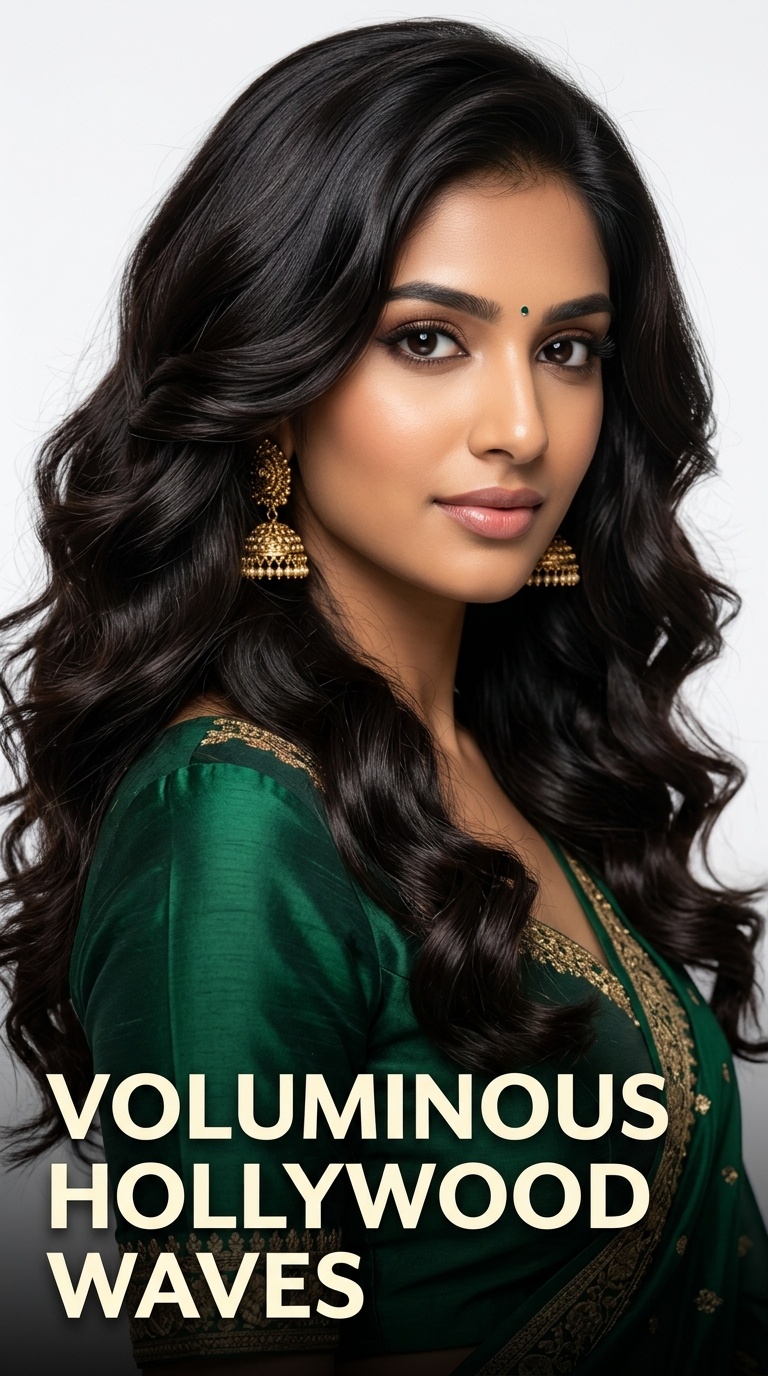
Classic Hollywood waves have been reimagined for the modern Indian bride. This look features deep, rhythmic waves that fall gracefully over one shoulder, exuding red-carpet glamour.
The style requires a high-shine finish to reflect the vibrant colors of bridal attire. It is a popular choice for cocktail parties or modern reception gowns with plunging necklines.
More Amazing Ideas
 18 Wedding Hairstyles for Medium Hair from Soft Waves to Elegant Updos — Read more
 16 Saree Hairstyles for Traditional Looks and Modern Styling — Read more
 18 Hairstyles for Saree Looks from Traditional to Modern — Read more
 19 Work Hairstyles for Long Hair from Sleek Styles to Updos — Read more
 19 Party Hairstyles from Sleek Ponytails to Voluminous Updos — Read more
A statement Maang Tikka can be pinned at the center parting to bridge the gap between Western styling and Indian tradition. It offers a balanced, sophisticated silhouette.
7. The Classic Gajra Bun
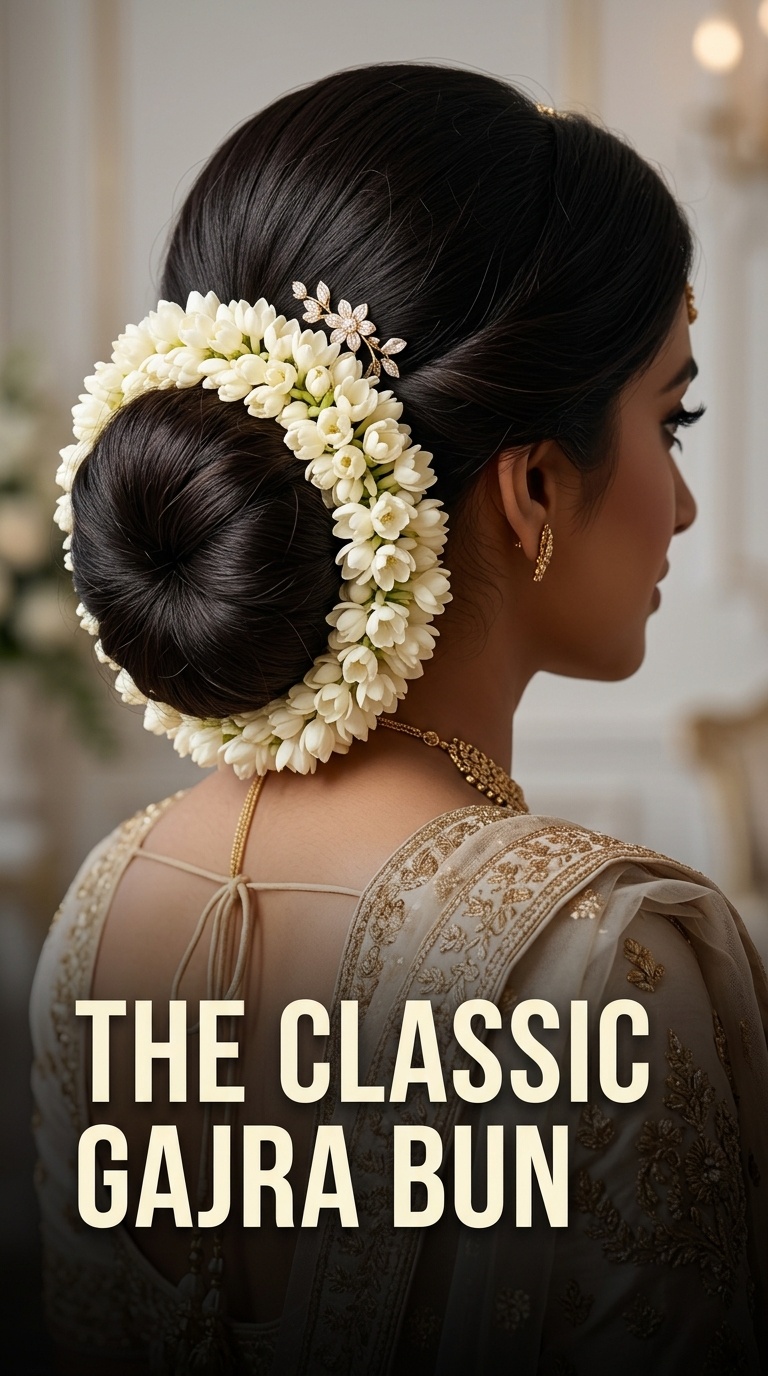
Nothing says “Indian Bride” like a neat donut bun encircled by a thick ring of fragrant jasmine gajras. This look is iconic and transcends regional boundaries across India.
The simplicity of the bun allows the bride’s jewelry and makeup to take center stage. It is a practical choice for long ceremonies involving fire rituals, as it keeps hair safely away.
This hairstyle is versatile enough for both silk sarees and heavy lehengas. It remains the most requested style for traditional Vedic wedding ceremonies due to its cultural significance.
8. Parandi Braid with Mirror Work
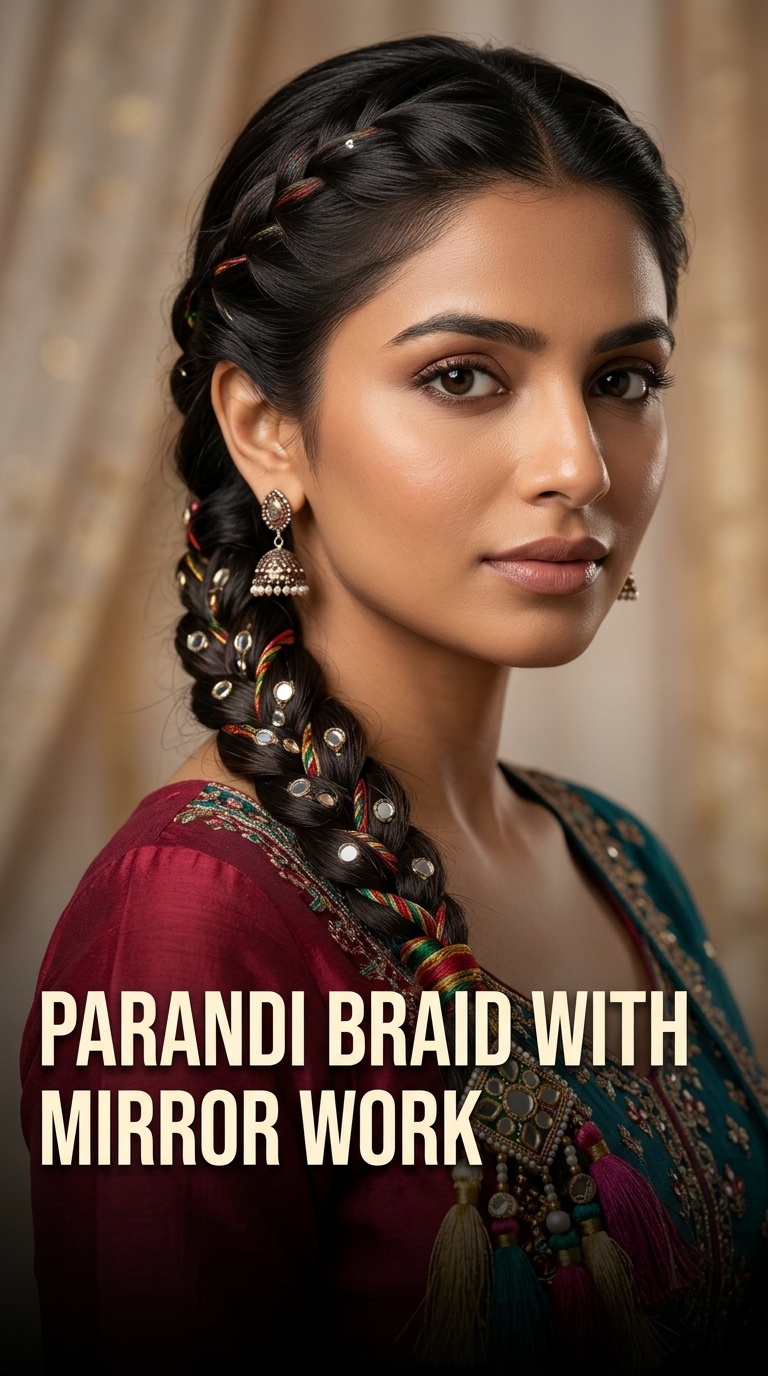
The Parandi is a traditional Punjabi hair accessory made of colorful threads and tassels. It is braided into the hair to add length, volume, and a pop of vibrant color.
Modern versions feature mirror-work tassels that sparkle as the bride moves. This is an excellent choice for festive Haldi or Mehendi ceremonies where playfulness is encouraged.
This style celebrates the “Punjabi Kudi” spirit with boldness and energy. It pairs perfectly with Patiala suits or lightweight lehengas, making a spirited cultural statement.
9. Textured High Updo
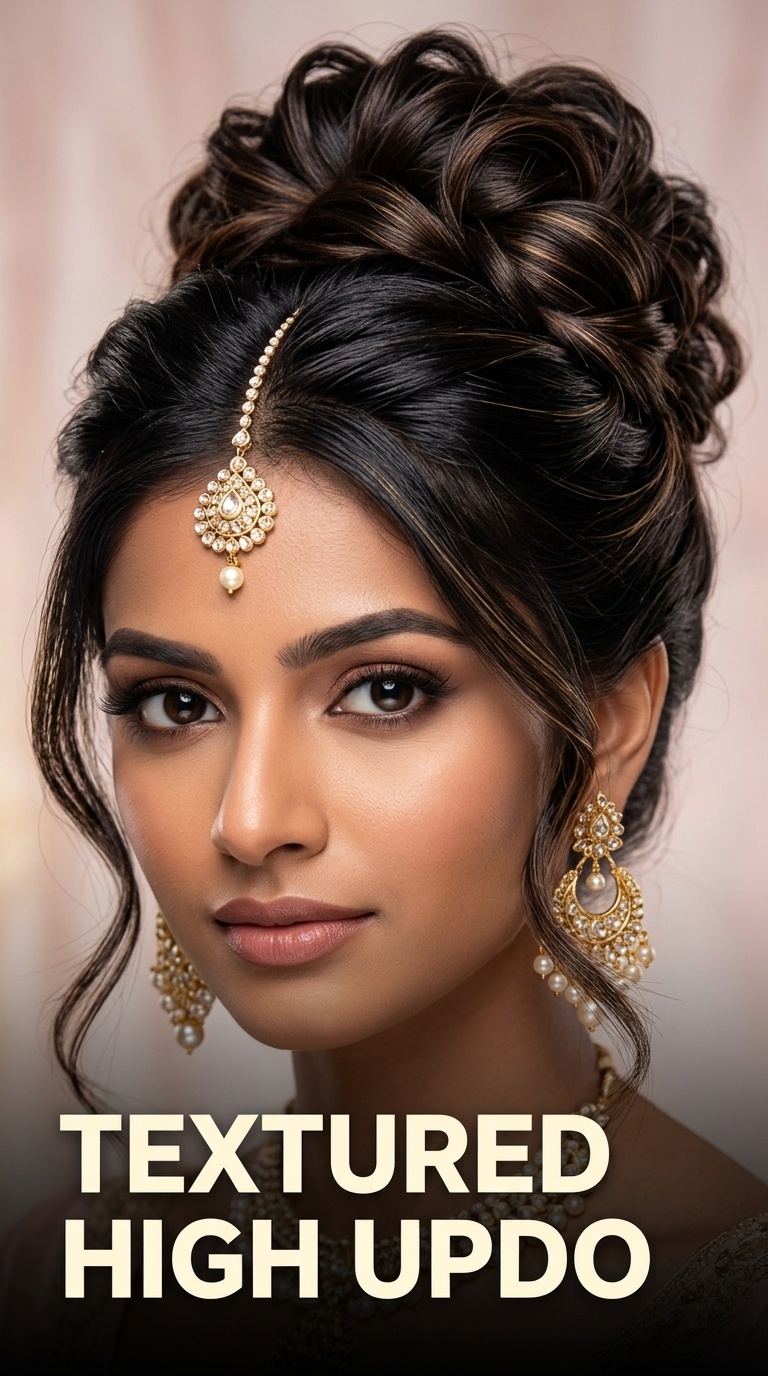
The textured high updo is a contemporary favorite for reception nights. By lifting the hair upward, it creates an elongated silhouette and highlights the neckline and collarbones.
This style uses crimping and backcombing techniques to manage thick South Asian hair. The result is a voluminous, secure structure that lasts through hours of greeting guests.
It is particularly effective for brides wearing high-neck blouses or heavy statement necklaces. The elevation of the hair ensures that the jewelry remains the focal point of the ensemble.
More Amazing Ideas
 18 Bridal Hairstyles from Classic Updos to Soft, Textured Waves — Read more
 17 Party Hairstyles for Long Hair from Waves to Voluminous Updos — Read more
 17 Onam Hairstyles for Women with Traditional and Modern Styling — Read more
 17 Patewo Hairstyles for Ladies with Traditional and Modern Variations — Read more
 19 Christmas Hairstyles from Festive Braids to Elegant Updos — Read more
10. Half-Up Half-Down with Floral Tiara
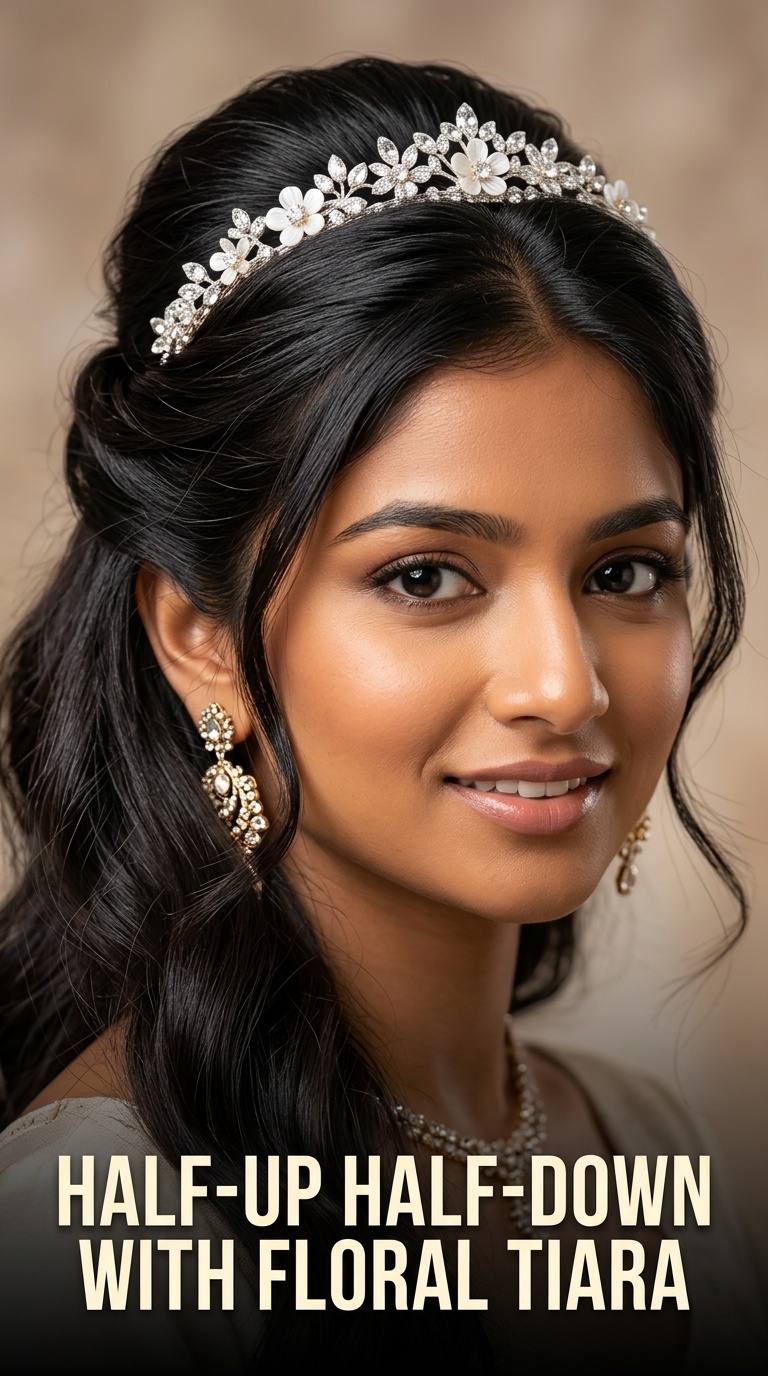
The half-up half-down style offers the best of both worlds: the security of an updo and the romance of open hair. The top section is often teased for crown volume.
Adding a delicate floral tiara or a semi-circular flower arrangement at the back enhances the feminine appeal. This look is highly popular for daytime garden weddings or resort events.
Curls are typically added to the bottom half to provide bounce and movement. It is a youthful, fresh choice that suits brides with heart-shaped or oval faces beautifully.
11. Fishtail Braid with Gold Beads
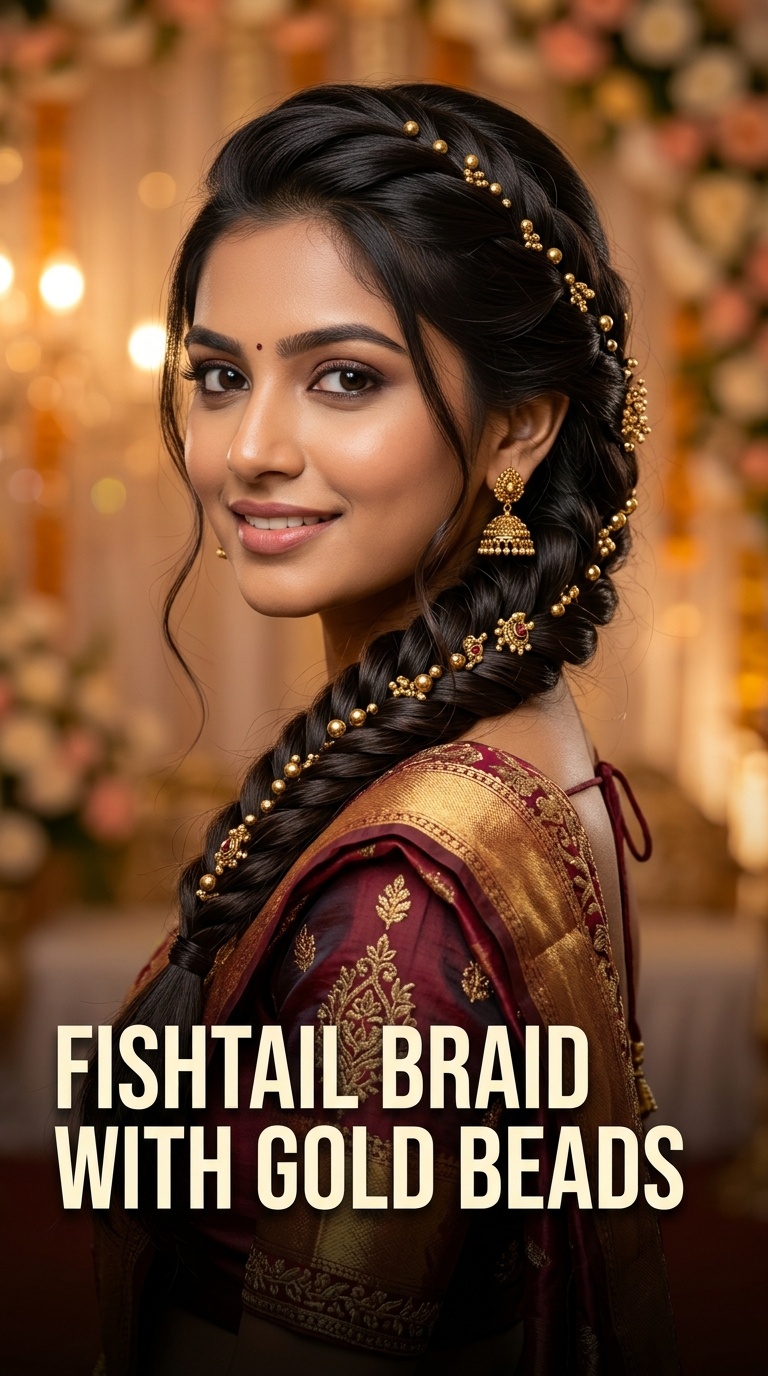
The fishtail braid is an intricate four-strand technique that looks incredibly detailed on dark hair. It provides a more modern, edgy alternative to the traditional three-strand plait.
Interweaving tiny gold beads or a thin gold chain throughout the braid adds a touch of luxury. This creates a shimmering effect that complements gold-bordered sarees or lehengas.
This style is durable and stays neat even in humid conditions. It is an excellent choice for destination weddings where the bride might be moving between indoor and outdoor venues.
12. Messy Low Bun with Matha Patti
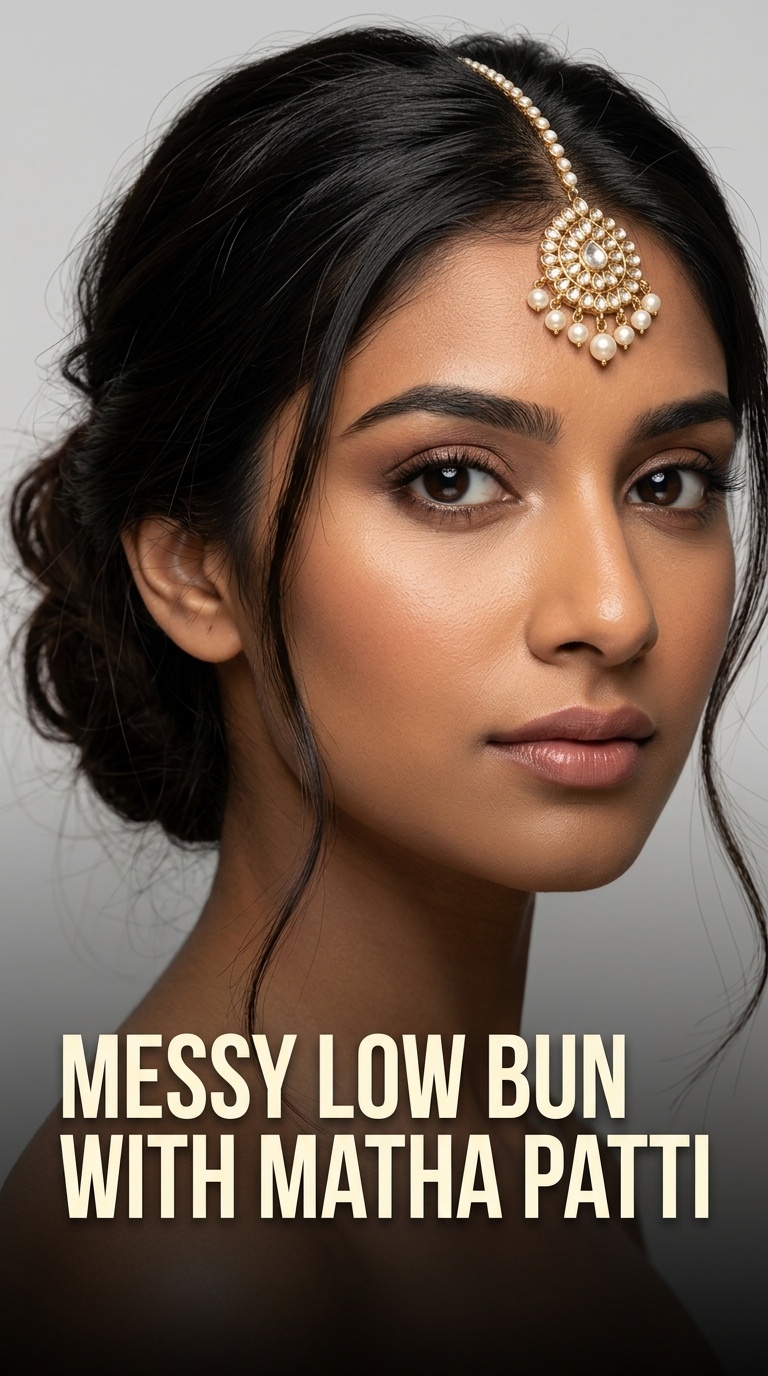
The “messy” bun is actually a carefully constructed style that uses soft tendrils to frame the face. It provides a romantic, effortless look that contrasts with heavy bridal jewelry.
A heavy Matha Patti (headpiece) is the centerpiece of this look. The softness of the bun balances the architectural lines of the jewelry, creating a harmonious and modern bridal aesthetic.
This hairstyle is ideal for brides who want a less “stiff” appearance. It works well with soft pastel lehengas and floral-themed wedding decor, emphasizing a gentle, bridal glow.
13. Bubble Braid with Pearl Pins
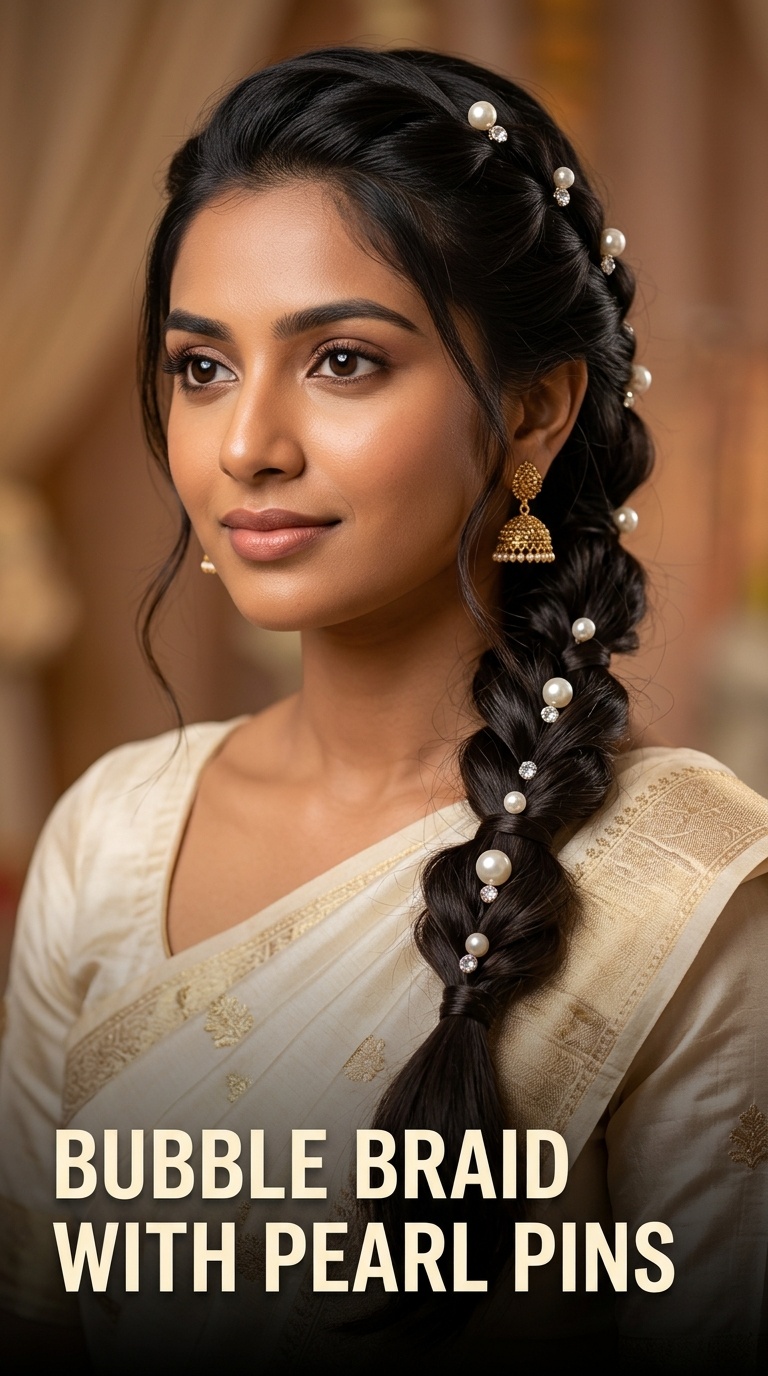
The bubble braid is a trendy, playful option for pre-wedding festivities. It involves creating “bubbles” of hair down the length of a ponytail using clear elastics.
More Amazing Ideas
 17 Wedding Hairstyles for Long Hair from Classic to Romantic — Read more
 19 Short Hairstyles for Men with Classic and Modern Cuts — Read more
 19 Formal Hairstyles for Medium Hair from Soft Waves to Updos — Read more
 19 Prom Hairstyles for Long Hair from Waves to Elegant Updos — Read more
 18 Hairstyles for Graduation from Polished Updos to Loose Waves — Read more
To make it wedding-ready, each elastic section is covered with a pearl-studded pin or a small floral bud. This adds a sophisticated South Asian twist to a very modern silhouette.
This style is incredibly lightweight and comfortable for long days. It is particularly popular for Mehendi ceremonies where the bride needs her hair completely out of the way.
14. Twisted Side Bun
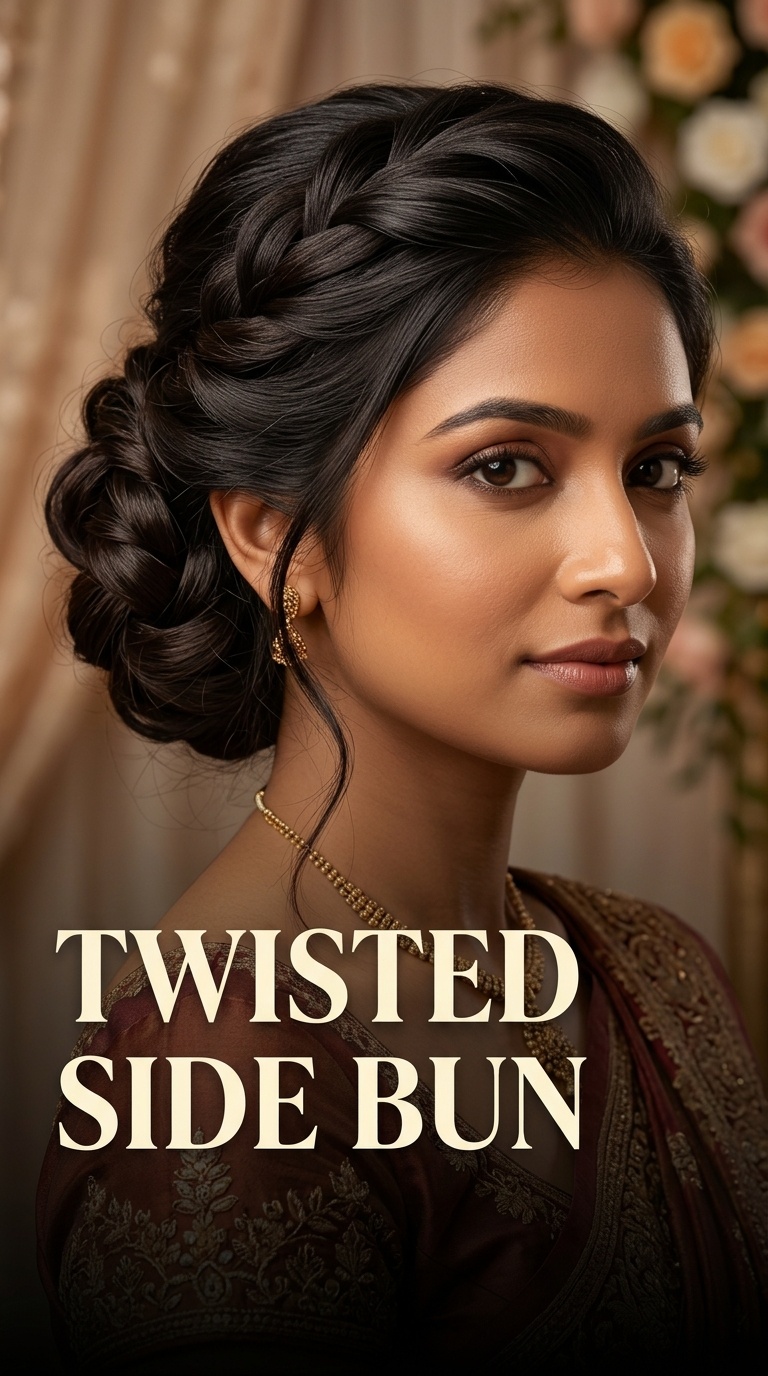
The twisted side bun is an asymmetrical style that adds a modern flair to the bridal look. Hair is gathered to one side and secured in a series of elegant, overlapping loops.
This positioning is perfect for brides who want to showcase a specific side of their face or a unique earring design. It offers a soft, sophisticated profile in wedding portraits.
Embellishing the twists with small crystal pins adds just the right amount of sparkle. It is a preferred choice for reception gowns or Indo-Western fusion outfits.
15. Open Curls with Statement Maang Tikka
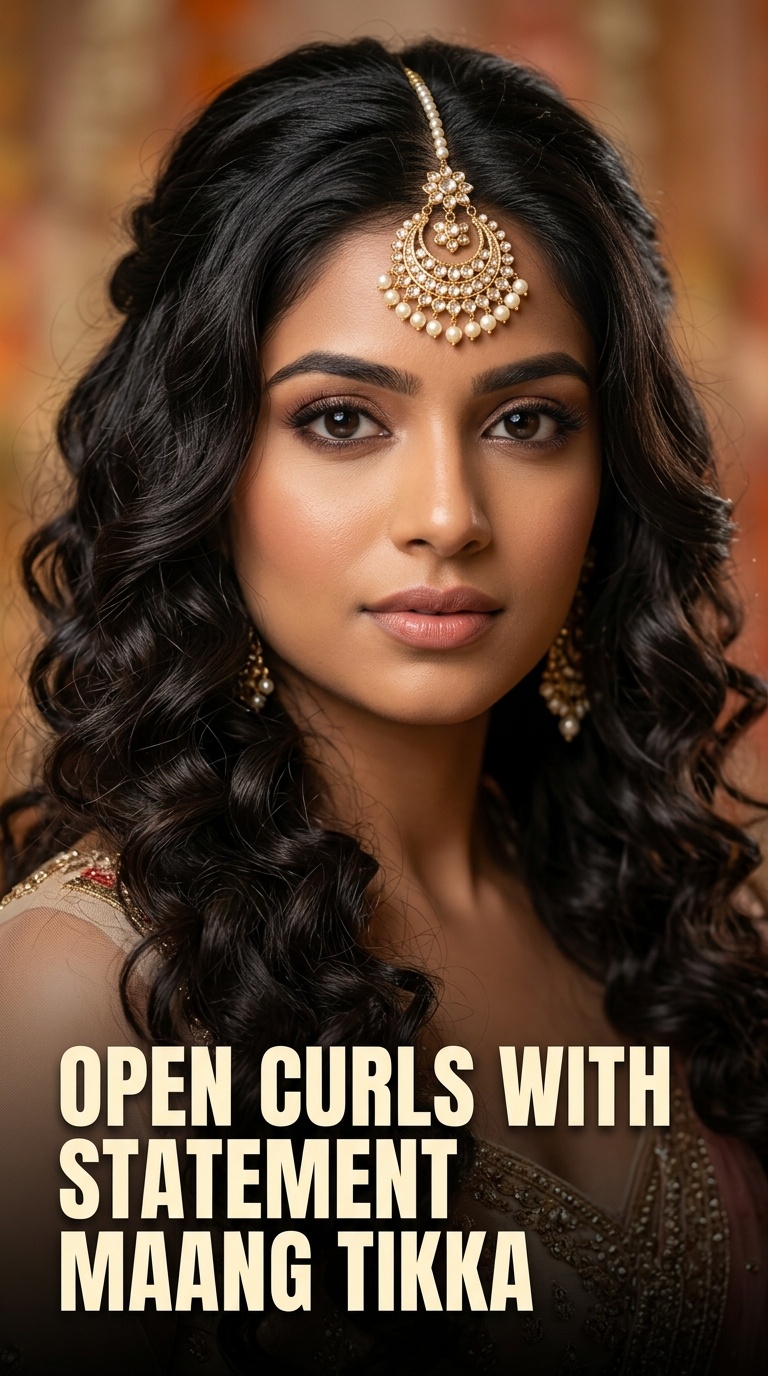
For many brides, nothing beats the beauty of long, flowing curls. This style focuses on healthy, glossy hair that is blown out and curled into large, voluminous rings.
The look is anchored by a large, statement Maang Tikka placed precisely in the center. This draws the eye to the forehead and eyes, creating a classic “Dulhan” (bride) appearance.
This style requires high-quality hair products to combat frizz and maintain the curl shape. It is a stunning, high-impact choice for the main wedding ceremony or the reception.
16. French Braid Fusion Bun
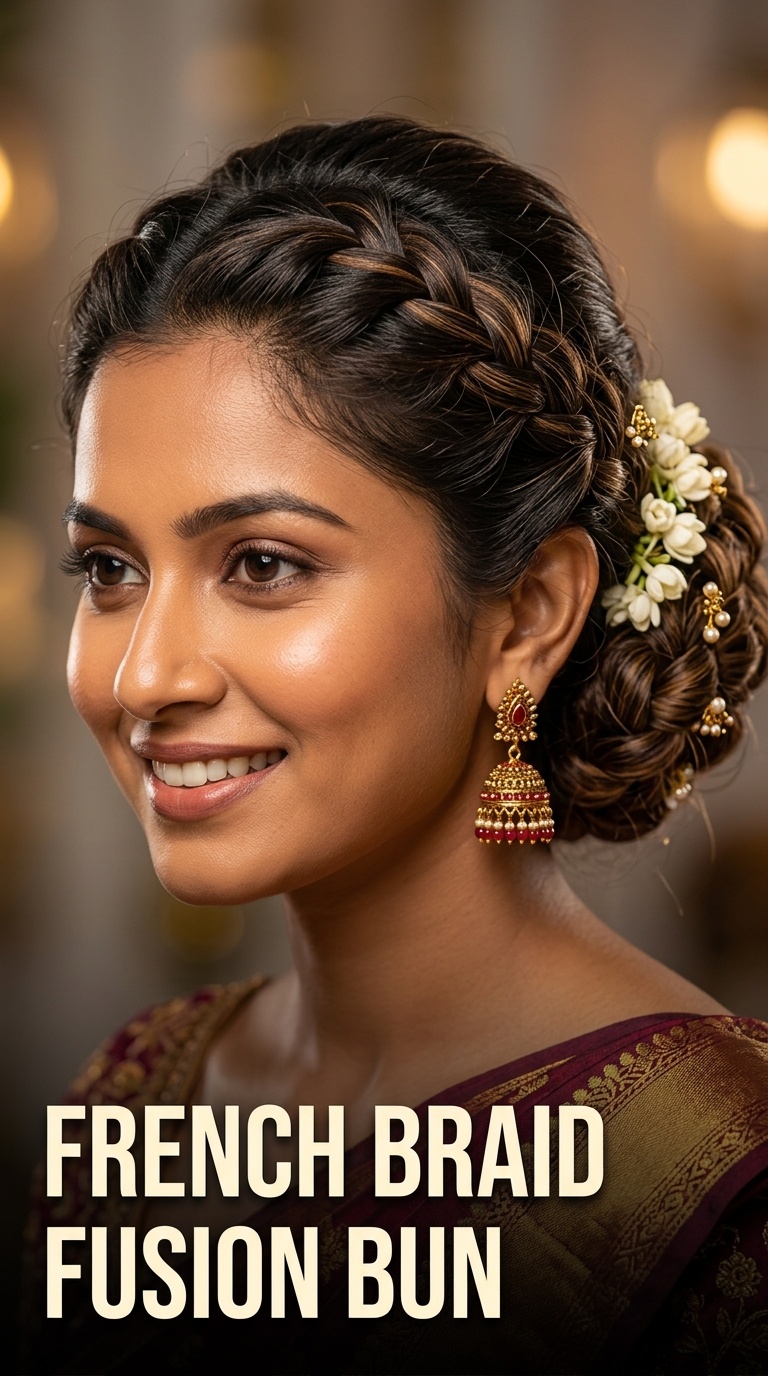
This style merges European braiding techniques with Indian bridal tradition. A French braid starts at the hairline and feeds into a large, decorative bun at the nape of the neck.
The braiding adds beautiful texture to the front and sides of the head, which is visible even when a veil is worn. It provides a multi-dimensional look from every camera angle.
More Amazing Ideas
 19 Hairstyles for Prom from Elegant Updos to Loose Waves — Read more
 18 Prom Hairstyles for Medium Hair from Waves to Updos — Read more
 17 Birthday Hairstyles from Playful Waves to Elegant Updos — Read more
 17 Bun Hairstyles for Long Hair from Sleek to Voluminous Looks — Read more
 19 Engagement Hairstyles for Saree Looks from Classic to Modern — Read more
Small floral accents can be tucked into the ridges of the French braid. This creates a seamless flow of color from the front of the head to the back of the updo.
17. Sleek Middle-Parted Bun
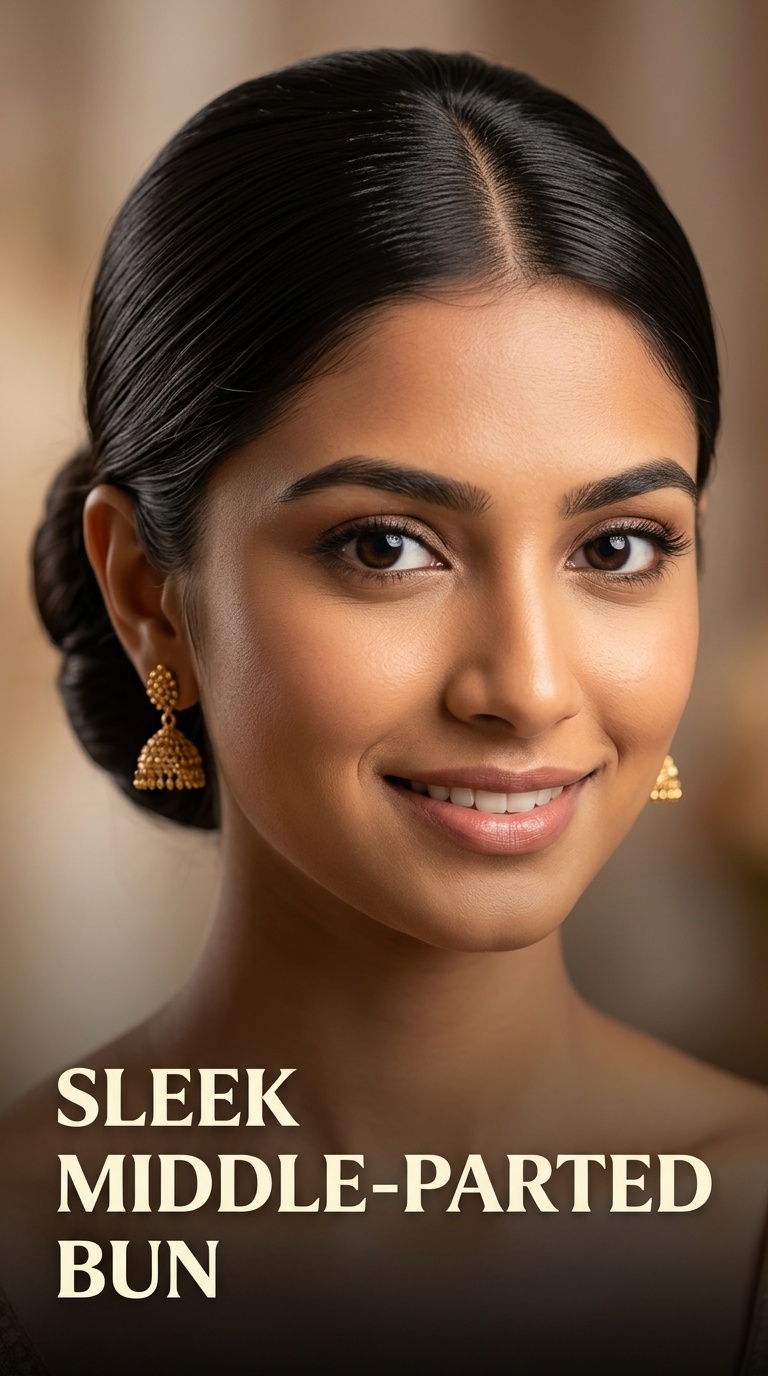
The sleek middle-parted bun is the height of modern Indian minimalism. It features a razor-sharp center part and hair pulled back into a small, tight bun.
This “Sabyasachi-inspired” look is designed to put the focus entirely on the bride’s face and heavy jewelry. It is a bold, high-fashion choice that exudes confidence and grace.
A simple string of jasmine or a metallic hair wrap can be added to the bun for a touch of tradition. It is a sophisticated option for brides who prefer “less is more.”
18. Cascading Waterfall Braid
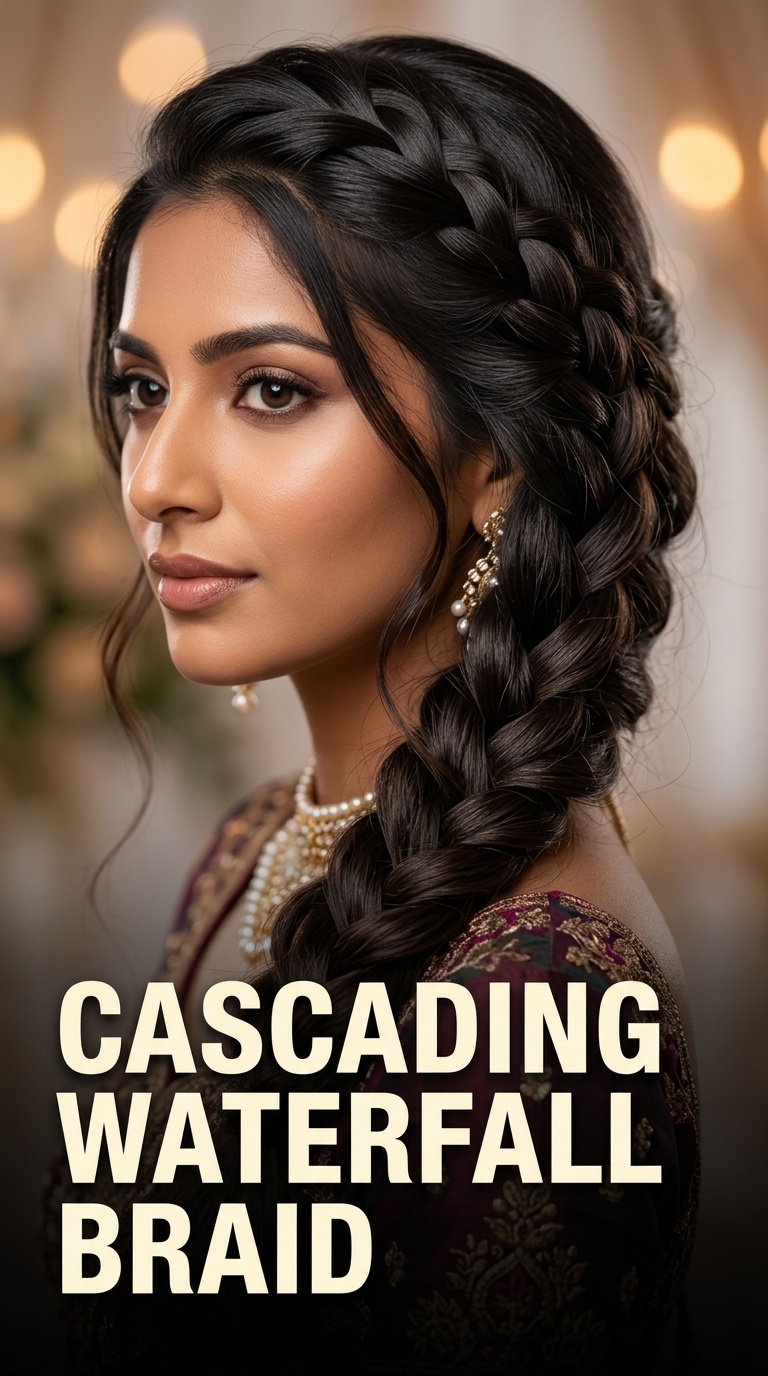
The waterfall braid features strands of hair “falling” through a horizontal braid that wraps around the head. It is a romantic style that showcases both length and texture.
This look is often enhanced with soft waves and tiny floral pins along the braid line. It is a favorite for bridesmaid luncheons or a relaxed, beachside wedding ceremony.
The style works best on hair with highlights or multi-tonal shades, as the braiding highlights the different colors. It offers a whimsical, feminine touch to any bridal look.
19. Modern Sculptural Updo
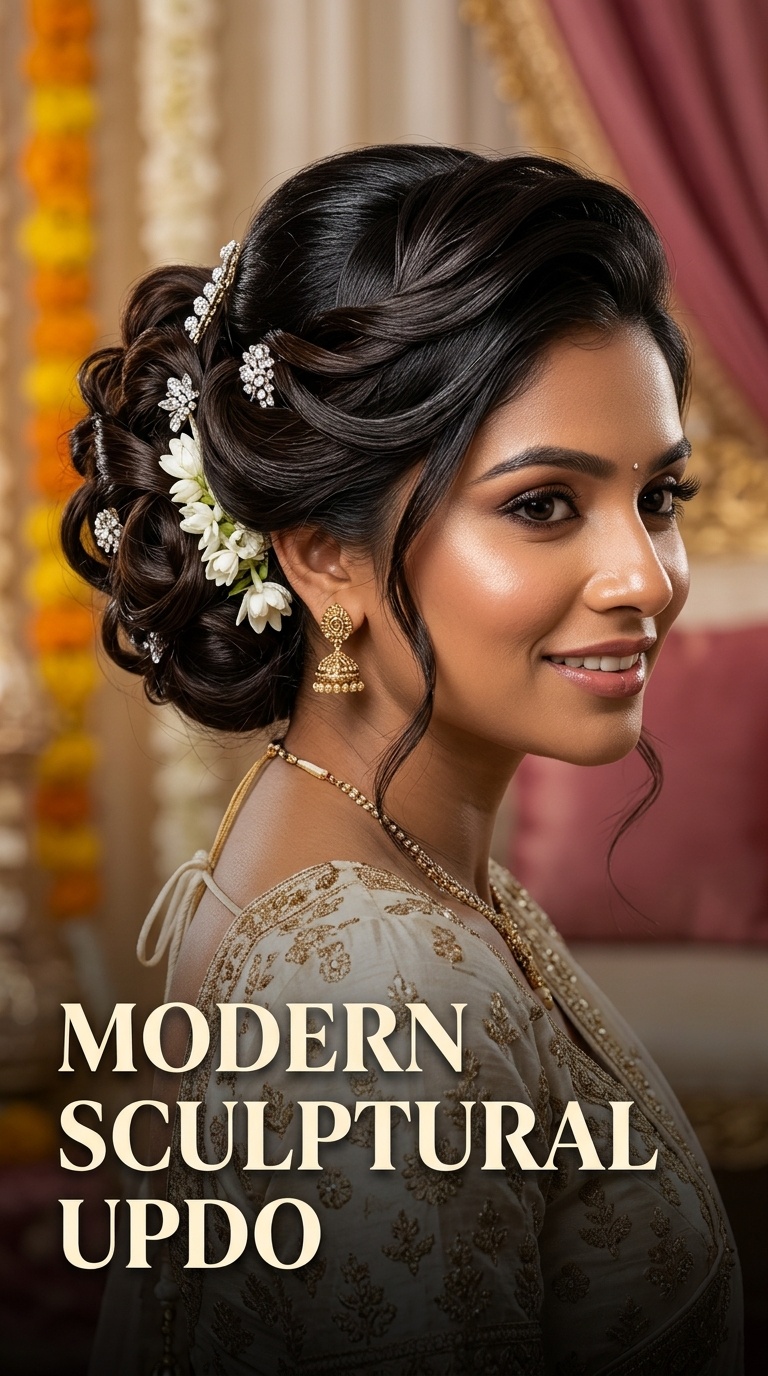
The sculptural updo is for the avant-garde bride who wants her hair to be a work of art. It involves creating unique shapes, loops, and heights using advanced styling techniques.
This style often incorporates hair extensions to achieve dramatic volume and structure. It is a high-drama look perfect for grand ballroom receptions and high-fashion photography.
Minimalist jewelry works best with this style, as the hair itself is the main accessory. It represents the perfect fusion of traditional Indian volume and modern architectural design.
More Amazing Ideas
 18 Church Hairstyles from Classic Updos to Polished Natural Looks — Read more
 19 Up Hairstyles for Long Hair from Sleek Buns to Textured Updos — Read more
 16 Sangeet Hairstyles for Brides from Traditional Looks to Soft Waves — Read more
 19 Hairstyles for Strapless Dresses from Updos to Loose Waves — Read more
 16 Hairstyles for Gowns from Elegant Updos to Soft Waves — Read more
How do I choose between a braid and an updo?
Choosing between a braid and an updo usually depends on your outfit and the ceremony type. Braids are traditional for South Indian weddings and morning events, while updos offer a sophisticated look for evening receptions and allow you to showcase heavy neckwear.
Will these hairstyles hold heavy Indian bridal jewelry?
Yes, these professional styles are designed with structural integrity in mind. Stylists use specific pinning techniques and hair padding to ensure that heavy pieces like matha pattis, mang tikkas, and passa stay securely in place throughout the event.
Can these styles work for brides with short hair?
Absolutely! Most Indian wedding hairstyles can be achieved on shorter hair using high-quality hair extensions or “donuts” for volume. Your stylist can blend extensions seamlessly with your natural hair to create the illusion of length and thickness for any braid or bun.
How can I keep my hair from frizzing in humid wedding climates?
For outdoor or tropical weddings, it is best to opt for a secure updo or a tight braid. Using professional-grade anti-humidity sprays and finishing oils is essential for South Asian hair textures to maintain a smooth, polished look against heat and moisture.
When should I get my hair colored before the wedding?
It is recommended to get your final color or highlights done about 10 to 14 days before the wedding. This allows the color to settle and look more natural, while also ensuring your hair is in peak condition for the intricate styling required on the big day.
Should I wash my hair on the morning of the wedding?
Most stylists prefer “second-day hair” because the natural oils provide a better grip for pins and braids. If you have an oily scalp, wash it the night before; if you must wash it the day of, avoid heavy conditioners that might make the hair too slippery to hold a style.


